Glacier Water on Tap
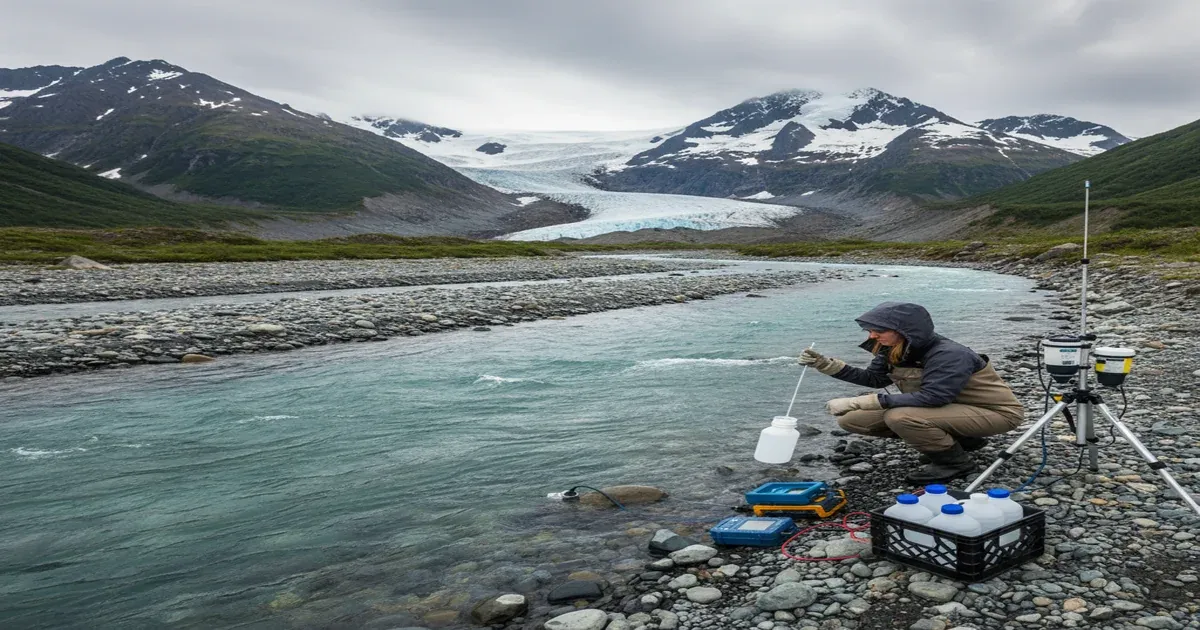
Anchorage Water and Wastewater Utility (AWWU) serves approximately 300,000 people — about 40% of Alaska’s entire population — with water that starts in the Chugach Mountains as snowmelt and glacial runoff.
The city’s two primary sources are Eklutna Lake (a glacier-fed lake 30 miles northeast of the city) and Ship Creek (which flows from the mountains through Anchorage). Eklutna Lake provides roughly 90% of the supply through a gravity-fed system — the water flows downhill through tunnels and pipelines to the treatment plant without pumping, making it one of the most energy-efficient municipal water systems in the country.
The source water quality is exceptional. Glacier-fed mountain water is naturally low in minerals, organic matter, and virtually every contaminant that plagues lower-48 water systems. AWWU’s treatment is correspondingly minimal — chlorination for disinfection and fluoride addition.
Most Anchorage residents are drinking some of the cleanest municipal water in the United States.
Military PFAS: The Exception to the Clean Water Story
Alaska is home to numerous military installations, and several of them have significant PFAS contamination. In the Anchorage area:
Joint Base Elmendorf-Richardson (JBER) — located within the city of Anchorage — has confirmed PFAS contamination from decades of AFFF use at airfield fire training areas. PFOS and PFOA have been detected in groundwater monitoring wells at concentrations well above the EPA’s 2024 Maximum Contaminant Levels.
JBER serves its own water system to on-base residents, separate from AWWU’s municipal system. The Department of Defense has been conducting PFAS investigations and has installed treatment systems for the base water supply. Off-base groundwater monitoring is ongoing to track plume migration.
Eielson Air Force Base (near Fairbanks) and other Alaska military sites have similar PFAS issues, reflecting the nationwide military PFAS contamination problem.
For Anchorage residents on the municipal system, PFAS from JBER is not a direct drinking water concern — AWWU’s surface water sources are geographically separate from the base’s groundwater contamination. But residents on private wells in the vicinity of JBER should be aware of potential contamination.
Earthquake Vulnerability
Anchorage sits in one of the most seismically active regions on Earth. The 1964 Great Alaska Earthquake (magnitude 9.2) devastated the city’s infrastructure, and significant earthquakes continue to occur — including the 7.1 magnitude quake in November 2018 that caused widespread damage.
For the water system, earthquake risk means:
- Pipeline breaks — water mains can rupture during seismic events, causing loss of service and potential contamination from ground infiltration
- Treatment plant damage — structural damage to treatment facilities can disrupt water supply
- Dam and reservoir vulnerability — Eklutna Dam, while engineered for seismic conditions, represents a critical single point of failure
- Extended outages — in a remote state with limited road connectivity, repairing major water infrastructure damage can take longer than in the lower 48
AWWU has invested in seismic upgrades and emergency preparedness, including backup power, redundant supply lines, and mutual aid agreements. But the fundamental vulnerability of a gravity-fed system dependent on a single major source remains.
Private Wells and Rural Alaska
Within the Anchorage municipality and surrounding Matanuska-Susitna Borough, thousands of residents rely on private wells. These wells tap various aquifer systems with varying water quality:
- Arsenic — naturally occurring arsenic in some Alaska geology means certain wells produce water above the EPA’s 10 ppb MCL
- Iron and manganese — common aesthetic issues in Alaska groundwater, causing staining and taste problems
- Bacteria — shallow wells in some areas can be vulnerable to surface water influence, particularly during spring breakup when melting occurs
- Nitrate — in areas with septic systems and dense residential development, nitrate from septic leachate can reach shallow wells
Alaska’s rural and remote communities face even more extreme water quality challenges. Many villages have limited or no piped water systems, and water hauling from rivers and lakes is still common. The Indian Health Service and Alaska Native Tribal Health Consortium have been working to extend water and sewer services to underserved communities, but the scale of the need is enormous.
Climate Change: Alaska’s Multiplier
Alaska is warming roughly twice as fast as the global average, and the effects on water systems are already visible:
- Glacier retreat — the glaciers feeding Eklutna Lake and other water sources are shrinking. Long-term, this could alter the volume and timing of water supply
- Permafrost thaw — melting permafrost can release previously frozen contaminants (including mercury and organic carbon) into waterways and groundwater
- Wildfire — increasing wildfire activity in the boreal forest affects watershed quality, increasing turbidity and organic matter in source water
- Changing precipitation — shifts in rainfall and snowfall patterns affect recharge and water availability
These changes don’t threaten Anchorage’s water supply immediately — the Chugach Mountains have abundant water resources — but they represent long-term challenges that the utility is monitoring.
What Residents Can Do
- If you’re on AWWU water, enjoy some of the best tap water in the country. Review the annual Consumer Confidence Report for current quality data
- If you live on or near JBER, check whether you’re on the base water system or a private well. Private wells near the base should be tested for PFAS
- If you’re on a private well, test annually for bacteria, nitrates, arsenic, and iron/manganese
- Prepare for earthquakes — keep emergency water supply (1 gallon per person per day for at least 3 days). After an earthquake, follow any boil water advisories from AWWU
- Consider a water filter if you want additional protection — activated carbon for chlorine taste, reverse osmosis for comprehensive contaminant reduction
If you’re concerned about your water quality, a certified water treatment professional can test your water and recommend solutions for your specific situation.
Sources
- Anchorage Water and Wastewater Utility, Annual Water Quality Reports
- Department of Defense, JBER PFAS Investigation
- Alaska Department of Environmental Conservation, Drinking Water Program
- USGS, Alaska Water Science Center
- Alaska Earthquake Center, Seismic Hazard Information
- EPA SDWIS, AWWU compliance records