
Atlanta has spent more than 25 years under federal consent decrees requiring the city to repair its crumbling sewer system — one of the longest and most expensive infrastructure overhauls of any American city. The saga is a case study in what happens when decades of deferred maintenance collide with federal environmental enforcement.
For Atlanta’s roughly 500,000 residents — and the millions more in the metro area who depend on the same watersheds — the consequences have been real: raw sewage in creeks and rivers, some of the highest water and sewer bills in the country, and an infrastructure repair program that’s still not fully complete.
How It Got This Bad
Atlanta’s sewer system dates to the late 19th century. Like many cities of that era, large portions were built as combined sewer systems — a single pipe carrying both sewage and stormwater. When it rains, the combined flow can overwhelm the system’s capacity, sending a mixture of raw sewage and stormwater directly into waterways. These events are called combined sewer overflows (CSOs).
By the 1990s, Atlanta’s sewer system was in severe disrepair:
- Aging pipes — some over 100 years old — were cracking, collapsing, and leaking
- CSOs were dumping billions of gallons of diluted raw sewage into the Chattahoochee River, South River, and other waterways annually
- Sanitary sewer overflows (SSOs) — failures in the separate sanitary sewer lines — were occurring hundreds of times per year due to deteriorated pipes, root intrusion, grease blockages, and system failures
- Peachtree Creek, Proctor Creek, and other urban streams ran brown after every significant rainstorm
The Chattahoochee River, which supplies drinking water to much of metro Atlanta, was among the most polluted urban rivers in the country.
The Consent Decrees
Federal and state regulators stepped in with a series of consent decrees:
- 1998: The EPA, Georgia Environmental Protection Division (EPD), and the Chattahoochee Riverkeeper filed a consent decree requiring Atlanta to eliminate CSOs and drastically reduce SSOs. The city committed to a massive infrastructure program to separate combined sewers and rehabilitate deteriorated pipes.
- 1999: A second consent decree addressed additional sanitary sewer system failures.
- 2004-2005: Modified consent decrees extended timelines and adjusted project scopes as the city struggled to meet original deadlines.
The price tag has been staggering. Atlanta has spent over $4 billion on consent decree compliance since 1999, with major projects including:
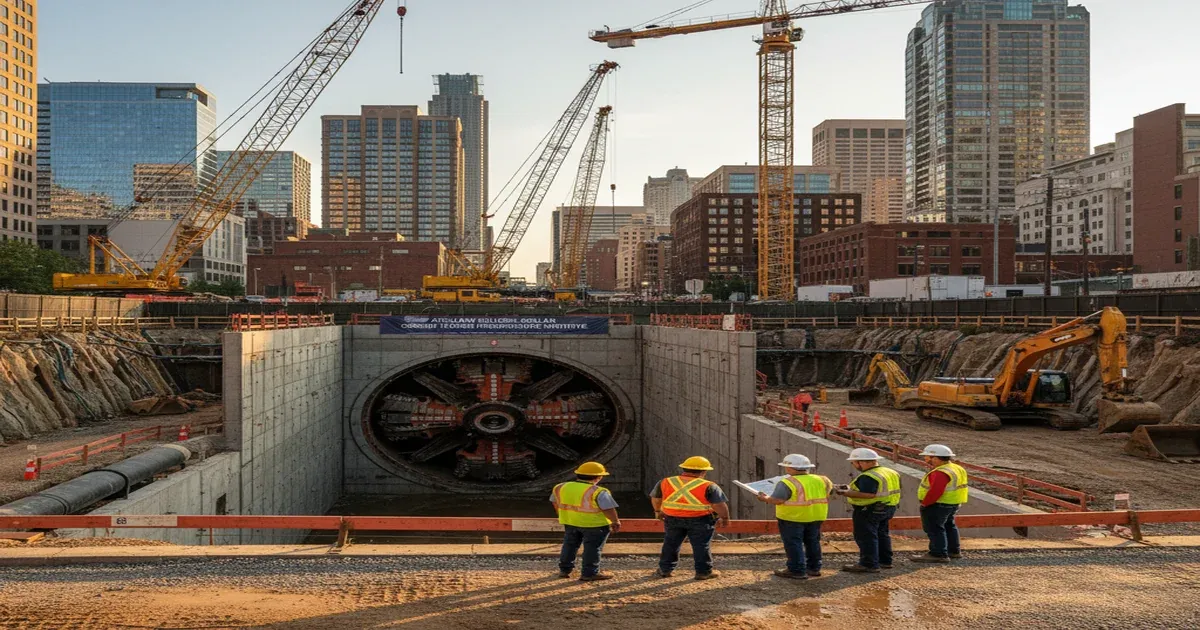
- Deep tunnel storage system: Three massive underground tunnels (up to 28 feet in diameter, 160 feet deep) that capture combined sewer overflow during storms and hold it for later treatment. The West Area CSO Tunnel alone cost over $400 million.
- Pipe rehabilitation and replacement: Thousands of miles of sewer lines inspected, relined, or replaced.
- Pump station upgrades: Modernization of the facilities that move sewage through the system.
- Treatment plant improvements: Upgrades to the R.M. Clayton and Utoy Creek Water Reclamation Centers.
The Rate Impact
Someone has to pay for $4 billion in infrastructure, and in Atlanta, that someone is the ratepayer. Atlanta’s combined water and sewer bills are among the highest in the nation — a burden that falls disproportionately on a city where the median household income is below the national average and poverty rates are well above it.
The typical Atlanta household pays significantly more per month for water and sewer service than households in comparable cities. Rate increases of 10-15% per year were common during peak consent decree spending. The city has implemented assistance programs for low-income residents, but affordability remains a major concern.
The rate impact extends beyond the city limits. The surrounding counties that treat sewage at Atlanta facilities or share watershed infrastructure also face elevated costs.
Drinking Water Quality
While the sewer system has dominated headlines, Atlanta’s drinking water supply faces its own challenges:
Source Water
Metro Atlanta draws drinking water primarily from the Chattahoochee River and its reservoirs (Lake Lanier, Lake Sidney Lanier). The region’s water supply is heavily dependent on this single river system, which also receives treated wastewater discharges from cities and counties upstream.
The “Tri-State Water Wars” between Georgia, Alabama, and Florida — a decades-long legal battle over how much Chattahoochee and Apalachicola River water Georgia can consume — highlight the fragility of metro Atlanta’s water supply. A 2021 Supreme Court ruling largely favored Georgia’s position, but the long-term allocation of this shared water resource remains contentious.
Treatment and Distribution
Atlanta’s water treatment plants (Hemphill and Chattahoochee) produce water that meets all federal drinking water standards. The treated water is generally of good quality, with low turbidity and effective disinfection.
Distribution system challenges include:
- Old pipes in the city core — some dating to the early 1900s — that can contribute to discolored water, pressure issues, and occasional main breaks
- Lead service lines in some older neighborhoods, though Atlanta’s inventory is still being completed under the EPA’s Lead and Copper Rule Revisions
- Disinfection byproducts in areas with longer water residence times, where chlorine reacts with organic matter in the distribution system
Private Wells
Within the Atlanta metro area, some unincorporated areas and outer suburbs rely on private wells rather than municipal water. These wells tap into the Piedmont crystalline rock aquifer system, which is generally clean but can contain naturally occurring radon (a concern in granite geology) and bacteria if wells are improperly constructed or maintained.
Current Status
Atlanta has made significant progress on consent decree compliance. CSOs have been dramatically reduced — the deep tunnel system captures the vast majority of combined sewer overflow that previously went directly into waterways. SSO rates have dropped substantially.
But the work isn’t done:
- Ongoing pipe rehabilitation — the city’s sewer system spans thousands of miles, and deterioration is continuous
- Green infrastructure — Atlanta has increasingly turned to rain gardens, permeable surfaces, and other green infrastructure to reduce stormwater volume entering the system
- Climate adaptation — more intense rainstorms mean the system needs even more capacity than originally designed for
Related Reading
- Charlotte Water: Coal Ash and Duke Energy — Another major Southeast city dealing with industrial contamination legacy.
- Raleigh Water: Falls Lake and PFAS — North Carolina’s capital faces its own water quality challenges.
- Nashville Water: Cumberland River, Lead, and PFAS — A fellow Southern metro navigating aging infrastructure.
- Jackson, Mississippi Water Crisis — When infrastructure neglect reaches crisis proportions in the Southeast.
What Atlanta Residents Should Know
- Your drinking water meets federal standards. Atlanta’s treated water is regularly tested and consistently passes all Safe Drinking Water Act requirements.
- High water/sewer bills are largely driven by infrastructure investment — the $4 billion+ consent decree program is funded through rates. Assistance programs exist for qualifying households.
- If you have an older home (pre-1986), check whether you have lead service lines or lead solder. The city is conducting an inventory under new EPA requirements.
- After heavy rains, avoid contact with water in urban streams and creeks. While CSOs have been reduced, they haven’t been completely eliminated.
- Private well users in the metro area should test annually for bacteria and consider testing for radon, especially in areas with granite bedrock.
If you’re concerned about your water quality in the Atlanta area, a certified water treatment professional can test your water and advise on appropriate filtration or treatment solutions.