
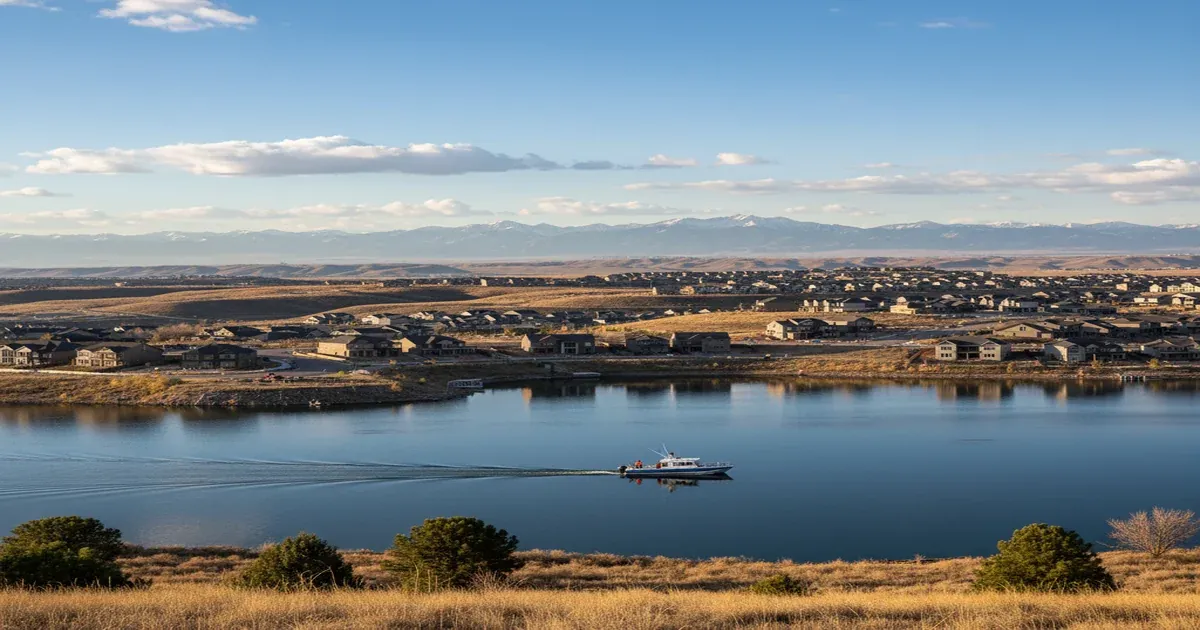
Aurora is Colorado’s third-largest city, with roughly 400,000 residents and one of the most complex water systems in the American West. The city pulls water from three different river basins — the South Platte, the Colorado, and the Arkansas — through a network of reservoirs, pipelines, and treatment plants that spans hundreds of miles.
That water travels a long way to get to your tap. And along the way, it picks up the challenges of a rapidly growing Front Range metro, military contamination, and the West’s perennial water scarcity.
Where Aurora’s Water Comes From
Unlike many cities that draw from a single source, Aurora Water has built a diversified portfolio:
- South Platte River basin — the primary local source, including diversions and storage in the metro area
- Colorado River basin — through transmountain diversions, Aurora brings Western Slope water east through tunnels under the Continental Divide
- Arkansas River basin — additional supplies through exchange agreements and storage projects
This diversification is a strength — Aurora is less vulnerable to drought in any single basin — but it also means the city’s water quality varies depending on which sources are blended at any given time.
Aurora’s treatment plants process surface water from these sources, using conventional treatment plus additional steps like ozonation and granular activated carbon at the Peter D. Binney Water Purification Facility.
PFAS at Buckley Space Force Base
Buckley Space Force Base sits within Aurora’s city limits. Like military installations across the country, Buckley has a history of AFFF firefighting foam use. PFAS contamination has been detected in groundwater near the base.
The Department of Defense has conducted preliminary assessments and is in the investigation phase for PFAS contamination at Buckley. Groundwater monitoring wells near the base have shown PFAS levels that warrant further investigation.
Colorado has been relatively proactive on PFAS. The state set a drinking water standard of 70 ppt combined for PFOS and PFOA, and has been conducting statewide PFAS monitoring. Aurora’s municipal water supply — drawn primarily from surface water rather than groundwater — is less directly affected by the Buckley plume, but the contamination is a concern for anyone using private wells in the area.
Growth and Infrastructure Strain
Aurora has grown by roughly 20% in the last two decades, and the pace isn’t slowing. Every new resident, every new subdivision, every new data center in the metro area draws from the same water system.
The city has invested heavily in “prairie waters,” a groundwater recharge and recovery system that treats South Platte River water to near-drinking quality, injects it into the aquifer, recovers it later, and then treats it again. It’s an innovative approach, but it also means more of Aurora’s drinking water has been through multiple treatment cycles — raising questions about what contaminants accumulate through successive treatments.
Infrastructure age varies widely across the city. Older neighborhoods in central and west Aurora have water mains from the 1960s and 70s. While the city has an active replacement program, some residents in older areas report taste, color, or pressure issues that reflect aging pipes.
Disinfection Byproducts
Aurora’s surface water sources carry organic matter from mountain watersheds, and treatment generates disinfection byproducts. The city’s investment in ozone treatment at the Binney facility helps — ozone produces fewer regulated DBPs than chlorine alone — but TTHMs and HAA5 still require monitoring and management.
Seasonal variation matters. During spring runoff, when mountain snowmelt carries more organic matter into the system, DBP formation potential increases. Aurora’s blending of multiple sources helps manage this, but some distribution system locations see higher DBP levels than others.
Lead Service Lines
Colorado passed legislation requiring utilities to develop lead service line replacement plans. Aurora Water has been inventorying its system and identifying where lead lines exist. The city’s older neighborhoods — particularly those built before the 1960s — are the primary concern.
Aurora Water uses corrosion control treatment to minimize lead leaching, and citywide sampling has generally shown compliance with EPA limits. But as with any city with pre-1986 plumbing, individual homes can have higher levels than the system average.
What Aurora Residents Should Do
- Know your source. Aurora blends water from multiple basins. Your water quality can vary seasonally and by location in the distribution system. The annual water quality report shows averages, but if you want to know what’s at your tap, test it.
- Check for lead. If your home is pre-1986, consider a lead test. The city can tell you whether your service line is on the inventory for potential replacement.
- Watch PFAS developments. If you’re near Buckley SFB or on a private well in the area, stay informed about the DoD investigation and Colorado’s evolving PFAS standards.
- Filter for peace of mind. A quality carbon filter handles taste, odor, and DBPs. Reverse osmosis covers PFAS, lead, and most emerging contaminants. Given the complexity of Aurora’s blended system, filtration is a solid investment.
If you’re concerned about your water quality, a certified water treatment professional can test your tap water and recommend the right system for your home. Aurora’s multi-basin system is well-managed, but the sheer complexity of the supply chain means individual testing is the only way to know exactly what you’re drinking.
Related Reading
- Denver Water: PFAS, Lead, and Drought
- Colorado Springs CO: Military PFAS Contamination
- Colorado PFAS: Military Base Contamination Across the State
- Salt Lake City UT Water Quality: Wasatch Front Challenges
Sources
- Aurora Water annual water quality reports
- Colorado Department of Public Health and Environment PFAS monitoring program
- Department of Defense Buckley SFB preliminary assessment data
- Colorado Water Conservation Board statewide water supply assessments
- EPA Lead and Copper Rule compliance records for Aurora Water