
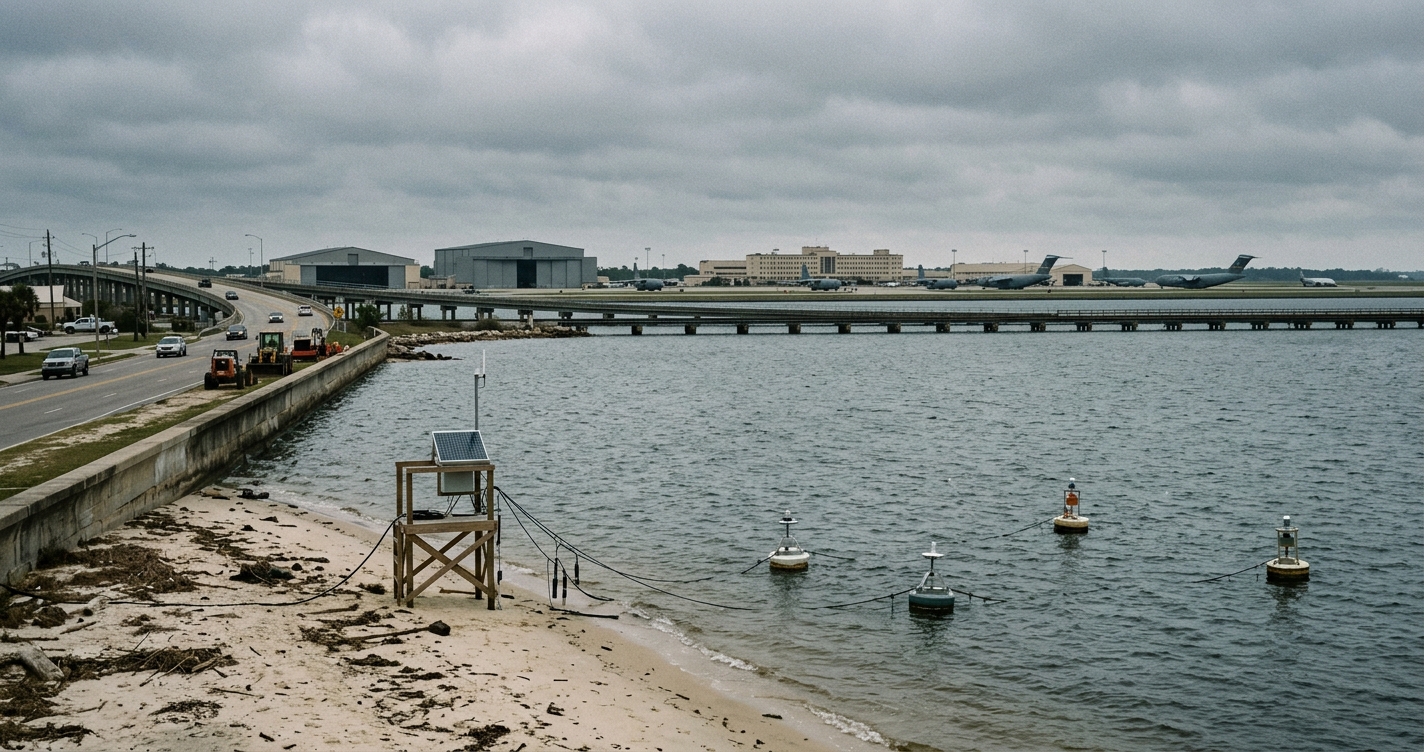
Biloxi, Mississippi — population about 46,000 — sits on a narrow peninsula between the Mississippi Sound and Back Bay of Biloxi. The city’s identity is built around casinos, seafood, and Keesler Air Force Base. It’s also one of the most hurricane-vulnerable cities in America.
That vulnerability extends to its water supply.
Hurricane Katrina: When Everything Failed
On August 29, 2005, Hurricane Katrina’s 28-foot storm surge devastated Biloxi. The impact on water infrastructure was total:
- Water treatment facilities flooded — Raw sewage and floodwater contaminated the entire distribution system
- Water mains breached — Storm surge and debris damaged pipes throughout the city
- Extended boil water advisories — Residents who remained were without safe tap water for weeks
- Wastewater catastrophe — Treatment plants were destroyed, releasing millions of gallons of raw sewage into the Mississippi Sound
Biloxi has rebuilt, but the fundamental vulnerability remains. The city sits at sea level on a coast where major hurricanes are a statistical certainty.
Keesler Air Force Base: PFAS Contamination
Keesler AFB has operated on Biloxi’s eastern edge since 1941. The base is home to the 81st Training Wing and the “Weather Wing” (the Air Force’s meteorological training center). Like every Air Force base of its era, Keesler used AFFF extensively.
PFAS contamination at Keesler:
- Groundwater contamination confirmed through DOD investigations at fire training areas and flight line operations
- Proximity to residential areas — Keesler is surrounded by Biloxi neighborhoods, not buffer zones
- Coastal aquifer vulnerability — The shallow coastal aquifer system beneath Biloxi is both susceptible to PFAS contamination and to saltwater intrusion, complicating remediation
- Multiple PFAS compounds detected in monitoring wells on and near the base
Mississippi has not yet established state-specific PFAS standards, but federal MCLs apply.
Saltwater Intrusion: The Slow Emergency
Biloxi’s coastal aquifers face increasing saltwater intrusion from:
- Sea level rise — The Gulf Coast is experiencing measurable sea level rise that pushes saltwater further into coastal aquifer systems
- Storm surge — Each hurricane or tropical storm event can introduce saltwater into freshwater aquifers, sometimes permanently
- Groundwater pumping — Extraction from coastal wells can lower the freshwater table, allowing saltwater to advance inland
The City of Biloxi draws its water from wells in the coastal aquifer system. Saltwater intrusion monitoring is ongoing, and chloride levels have trended upward in some wells over time.
What the Data Shows
From Biloxi’s most recent Consumer Confidence Report:
- All regulated contaminants within EPA limits
- PFAS testing conducted under new federal requirements — results show low-level detections
- Chloride monitored for saltwater intrusion indicators
- Disinfection byproducts within limits
- Lead at 90th percentile below action level
- No SDWA violations
What Biloxi Residents Should Do
- Hurricane preparedness includes water — Keep at minimum one gallon per person per day for three days. After major storms, expect extended boil water advisories.
- PFAS testing near Keesler — Private well owners near the base should test for PFAS. Contact Keesler’s environmental office for contamination boundary information.
- Water taste changes — If you notice increasing saltiness in tap water, report it to the city. It could indicate saltwater intrusion into your supply well.
- Municipal water is tested — Review the CCR annually. Biloxi’s rebuilt water system is modern, but the threats are ongoing.
- Flood insurance and elevation — If your home is in a flood zone, understand that flooding can contaminate private wells and compromise the municipal system.
Biloxi has rebuilt from Katrina with remarkable determination. The rebuilt infrastructure is better than what came before. But the coastal location, military contamination, and changing climate mean the city’s water challenges are permanent features of living on the Gulf Coast.
If you’re concerned about your water quality, a certified water treatment professional can test your water and recommend appropriate solutions.