
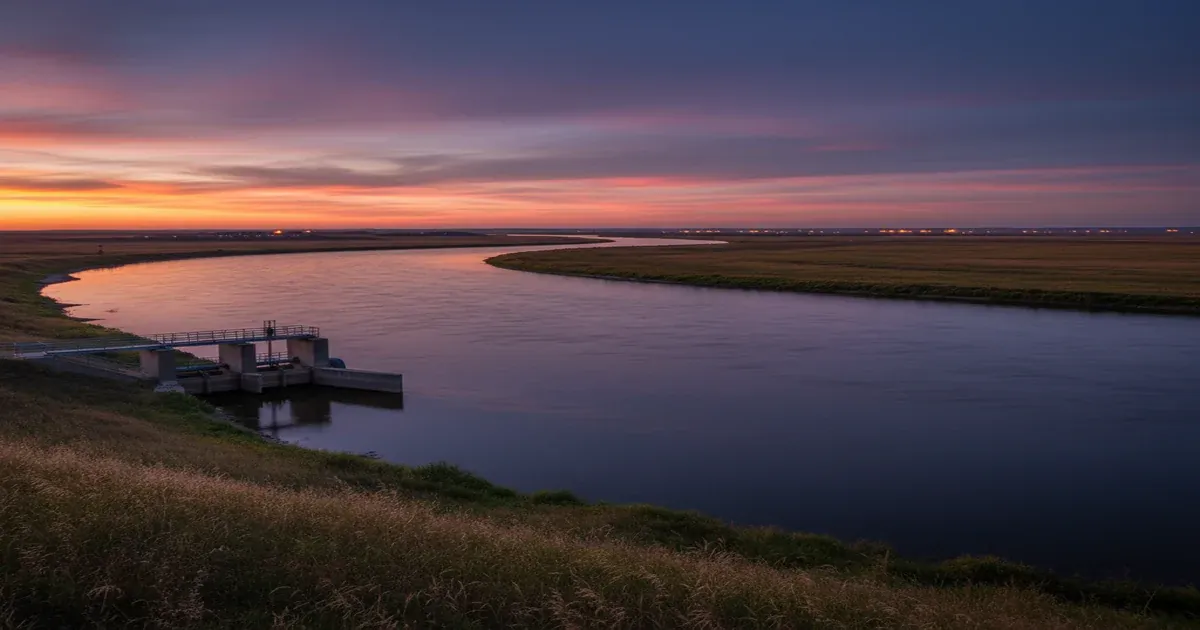
Bismarck, North Dakota’s capital city of about 75,000 people, draws its drinking water from the Missouri River — one of the longest rivers in North America and a waterway that’s been under increasing pressure from the state’s oil boom.
While Bismarck’s treated municipal water meets federal standards, the upstream threats are real and growing.
The Bakken Oil Boom and Water Quality
North Dakota’s Bakken Formation produced over a million barrels of oil per day at its peak. That production comes with a byproduct that’s arguably more problematic than the oil itself: produced water.
For every barrel of oil extracted from the Bakken, roughly two to four barrels of produced water come up with it. This brine is extremely salty (often 10 times saltier than seawater), laced with naturally occurring radioactive materials (NORM), heavy metals, and hydrocarbons.
The water quality impacts ripple across western North Dakota:
- Brine spills — North Dakota has documented thousands of reported brine spills since the boom began. A 2015 pipeline spill in Mountrail County released roughly 3 million gallons of brine into Blacktail Creek, a tributary that feeds into the Missouri River system.
- Saltwater contamination — Brine spills have rendered farmland sterile and contaminated shallow groundwater in the Williston Basin
- Radioactive waste — NORM from produced water has been found illegally dumped at multiple sites across the state
- Legacy wells — North Dakota has over 3,000 orphaned or abandoned oil and gas wells that may be leaking into groundwater
The Missouri River carries runoff from this activity past Bismarck. While the city’s water intake is upstream of some of the worst contamination zones, the cumulative impact of thousands of spills and releases in the watershed is a legitimate concern.
Bismarck’s Municipal Water System
The Bismarck water treatment plant draws from the Missouri River and uses a multi-step treatment process:
- Coagulation and flocculation
- Sedimentation
- Granular media filtration
- Chlorine disinfection
- Fluoride addition
The system serves Bismarck and the neighboring city of Mandan. According to recent Consumer Confidence Reports, the treated water meets all EPA standards consistently.
Detected contaminants (within limits) include:
- Trihalomethanes and haloacetic acids (disinfection byproducts)
- Low levels of naturally occurring barium
- Detectable fluoride (both natural and added)
- Seasonal turbidity fluctuations during spring runoff and ice breakup
PFAS: North Dakota’s Emerging Concern
PFAS contamination is less well-documented in North Dakota than in states like Michigan or New Hampshire, but it’s not absent:
- Military installations — Minot Air Force Base and Grand Forks Air Force Base have both confirmed PFAS contamination from AFFF use. While neither is immediately adjacent to Bismarck, they indicate broader contamination across the state.
- Airports — AFFF use at commercial and military airports is a common PFAS source
- Limited testing — North Dakota has been slower than some states to implement comprehensive PFAS testing of public water supplies
The EPA’s new PFAS MCLs will require all public water systems to test for six PFAS compounds. Bismarck’s results from this mandatory testing will be important data for residents.
Agricultural Contamination
Bismarck sits in the middle of North Dakota’s agricultural heartland. Water quality impacts from farming include:
- Nitrate — From fertilizer application and animal agriculture. While Bismarck’s finished water has nitrate well below the MCL, source water monitoring shows seasonal elevations during spring runoff.
- Pesticides and herbicides — Atrazine and other agricultural chemicals are detected in Missouri River water, though at very low levels after treatment.
- Sediment — Agricultural runoff contributes to turbidity in the Missouri River, which complicates treatment during high-runoff periods.
What Bismarck Residents Should Know
- Municipal water is well-treated — Bismarck’s water plant is modern and well-operated. The treated water consistently meets EPA standards.
- Source water matters — The Missouri River carries the cumulative impact of upstream oil and gas activity, agriculture, and urban runoff. Support for watershed protection benefits everyone downstream.
- Ask about PFAS — Contact the city’s water utility and ask for PFAS testing results, especially as new federal requirements take effect.
- Private well owners — If you’re on a private well in Burleigh or Morton County, test for nitrate, bacteria, and (depending on location) oil and gas-related contaminants.
- Lead in older homes — Bismarck has older neighborhoods with potential lead service lines. Run the tap before drinking if your home was built before 1986.
Bismarck’s water is safe to drink. But the pressures on North Dakota’s water resources — from oil and gas, agriculture, and climate — aren’t going away. Vigilance and investment in water infrastructure are the cost of keeping it that way.
Water quality challenges like these aren’t unique to this area. Residents in Fargo ND Water Quality and Sioux City, Iowa Water Quality face similar contamination concerns, while Casper, Wyoming Water Quality deals with its own set of water infrastructure and quality issues.
If you’re concerned about your water quality, a certified water treatment professional can test your water and advise on solutions for your specific situation.