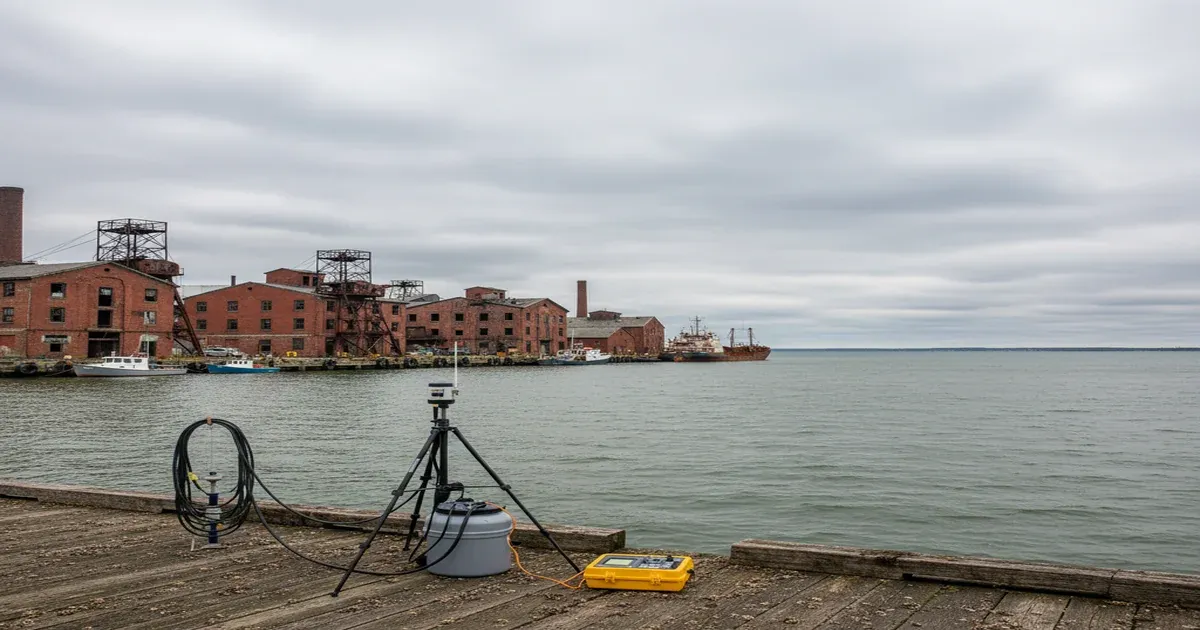
Bridgeport is Connecticut’s largest city, with about 148,000 residents packed into 16 square miles on the north shore of Long Island Sound. For most of the 19th and 20th centuries, Bridgeport was an industrial powerhouse — home to ammunition factories, brass foundries, machine shops, and a working harbor that processed everything from coal to chemicals.
That industrial heritage left contamination in the soil, groundwater, and sediments that the city is still managing today. And while Bridgeport’s drinking water comes from reservoirs outside the most contaminated areas, the city’s aging distribution system presents its own challenges.
Aquarion Water Company
Bridgeport’s drinking water is supplied by Aquarion Water Company, the largest investor-owned water utility in New England. The system draws from a network of reservoirs in the Fairfield County highlands:
- Easton Reservoir (primary)
- Saugatuck Reservoir
- Hemlocks Reservoir
These surface water sources are located in the relatively rural and forested upper watersheds north of Bridgeport, giving them better source water quality than the urbanized coastal zone would provide. Aquarion’s treatment includes conventional filtration, ozonation, and chloramine disinfection.
The treated water consistently meets EPA and Connecticut Department of Public Health standards. Aquarion’s annual Consumer Confidence Reports show contaminant levels well within regulatory limits.
Lead Service Lines and Aging Distribution
Bridgeport’s water quality challenge isn’t primarily at the treatment plant — it’s between the plant and the tap. The city’s housing stock is among the oldest in Connecticut, with significant construction from the late 1800s through the early 1900s. This means:
- Lead service lines connecting water mains to homes are common in older neighborhoods
- Lead solder in copper plumbing (used before the 1986 federal ban) is widespread
- Lead-containing brass fixtures may still be in use in older buildings
Connecticut’s 2016 testing of school drinking water found elevated lead levels in multiple Bridgeport schools, prompting fixture replacement and remediation. Residential testing has shown similar patterns — while the system’s 90th percentile lead level has generally been at or near the EPA action level of 15 ppb, individual homes can show much higher readings.
Aquarion uses corrosion control treatment (orthophosphate) to reduce lead leaching, and the utility is conducting the service line inventory required by the EPA’s revised Lead and Copper Rule. Given Bridgeport’s age and density, this inventory is a major undertaking.
Industrial Contamination Legacy
Bridgeport’s industrial past has left numerous contaminated sites that affect soil and groundwater, even if they don’t directly threaten the reservoir-based drinking water supply:
Raymark Industries Superfund site: This former brake and clutch manufacturer operated in Stratford, adjacent to Bridgeport, from the 1930s to 1989. The company used asbestos in its products and disposed of waste material across multiple locations. Asbestos-containing waste was used as fill throughout parts of Bridgeport and Stratford. While the contamination is primarily a soil and air quality concern, groundwater monitoring around disposal areas continues.
Harbor sediments: Bridgeport Harbor and the adjacent Pequonnock River contain contaminated sediments from over a century of industrial discharge. Metals (lead, mercury, copper, zinc), PCBs, PAHs, and petroleum compounds have been documented in harbor sediments. While not a drinking water source, harbor contamination affects the broader environmental health of the community.
Former manufacturing sites: Dozens of former factory sites in Bridgeport’s East Side, West Side, and downtown carry soil and groundwater contamination from their industrial tenants. Connecticut’s brownfield remediation program has been working through these sites, but the pace of cleanup is limited by funding and the sheer number of sites.
PFAS: An Emerging Concern
Connecticut has been relatively proactive on PFAS, setting an action level of 70 parts per trillion for the sum of five PFAS compounds in drinking water (PFOA, PFOS, PFNA, PFHxS, and PFHpA). This is more protective than the former EPA advisory but less stringent than some neighboring states.
For Bridgeport’s water supply, PFAS sources of concern include:
- Sikorsky Memorial Airport in Stratford, which used AFFF firefighting foam
- Industrial operations in the watershed that may have used PFAS-containing products
- Upstream wastewater discharges that collect PFAS from consumer products
Aquarion has conducted PFAS testing across its system. Results for the Bridgeport service area have shown detectable but low-level PFAS, below Connecticut’s action level. However, as federal and state standards tighten, additional treatment investment may become necessary.
Environmental Justice Dimensions
Bridgeport consistently ranks among the most environmentally burdened communities in Connecticut. The convergence of industrial contamination, aging infrastructure, dense housing, and demographics creates significant environmental justice concerns:
- Poverty rate in Bridgeport is roughly three times the Connecticut state average
- Housing age means lead exposure risk is concentrated in low-income neighborhoods
- Proximity to contaminated sites — former industrial areas overlap with residential neighborhoods
- Cumulative environmental burden from air quality (I-95, industrial emissions), soil contamination, and water quality issues
Connecticut’s GC3 Environmental Justice Screening Tool identifies large portions of Bridgeport as environmental justice priority areas. State and federal programs have directed additional resources to the city, but the scale of need remains significant.
Stormwater and Combined Sewers
Like most older northeastern cities, Bridgeport has a combined sewer system that handles both sewage and stormwater in the same pipes. During heavy rain events, the system overflows, discharging untreated wastewater directly into Long Island Sound and the Pequonnock River.
The city has been working on long-term control plans for CSOs, including:
- Green infrastructure (rain gardens, permeable pavement, bioswales)
- Sewer separation in targeted areas
- Storage facilities to hold overflow during peak events
While CSOs don’t directly affect drinking water quality, they’re an indicator of overall infrastructure stress and affect the environmental quality of Bridgeport’s waterways.
What Bridgeport Residents Should Know
- Your tap water from Aquarion meets standards, but lead risk comes from your home’s plumbing, not the treatment plant. If your home was built before 1986 — which covers most of Bridgeport — you should take precautions.
- Flush before drinking. Run cold water for 30 seconds to 2 minutes after periods of non-use. Never use hot tap water for cooking or drinking — hot water leaches more lead from pipes.
- Get a free lead test. Aquarion and the City of Bridgeport periodically offer free lead testing. Take advantage of it, especially if you have young children.
- NSF/ANSI 53 certified filters remove lead effectively. Pitcher filters, faucet-mount filters, and under-sink systems are all available options. Reverse osmosis systems provide the most comprehensive protection.
If you’re concerned about your water quality, a certified water treatment professional can test your water and recommend the right system. In a city with Bridgeport’s combination of old housing and environmental legacy, knowing what’s in your water matters.
Related Reading
- Hartford CT Water Quality: Lead and Industrial Legacy
- New Haven Water Quality: Lead and PFAS Concerns
- Providence Water Quality: Lead and PFAS
- Newark New Jersey Lead Water Crisis
Sources
- Aquarion Water Company Annual Consumer Confidence Reports
- Connecticut Department of Public Health school water testing results (2016)
- EPA Raymark Industries Superfund site records
- Connecticut DEEP brownfield and contaminated site database
- Connecticut GC3 Environmental Justice Screening Tool
- EPA Lead and Copper Rule compliance data for Bridgeport