
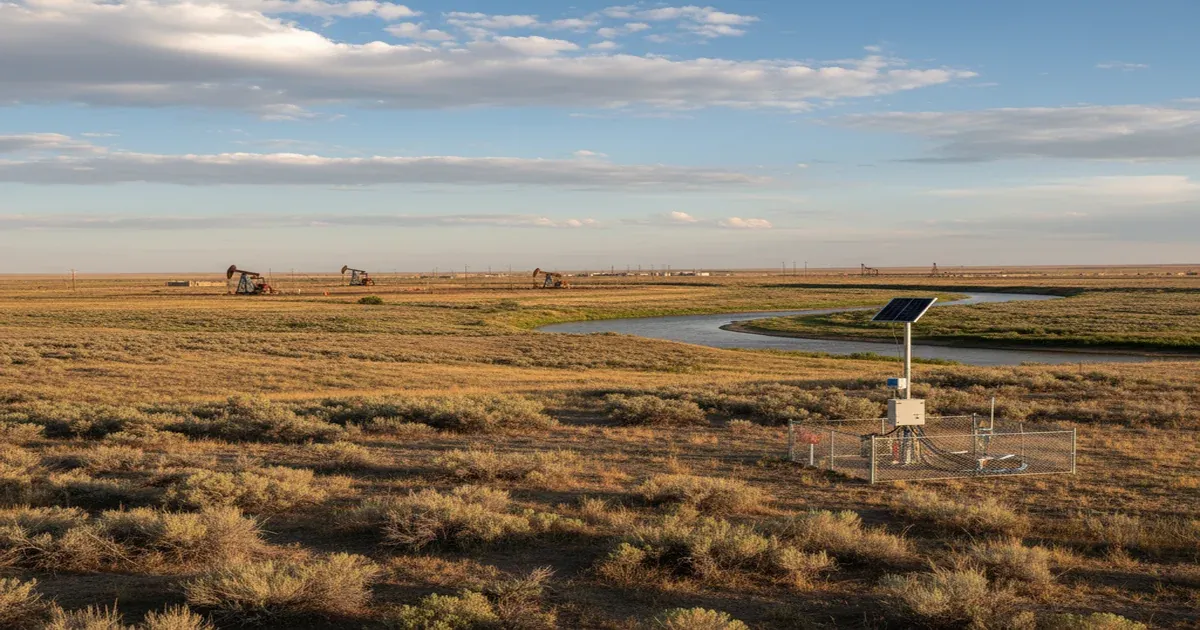
Casper, Wyoming — population roughly 59,000 — sits at the intersection of two industries that have shaped the state’s economy and its water quality challenges: uranium mining and oil and gas production.
The city draws its drinking water primarily from surface sources (the North Platte River and several reservoirs), but the groundwater beneath Casper and the surrounding Natrona County tells a more complicated story.
The Uranium Mining Legacy
Wyoming is the nation’s largest uranium-producing state, and the Casper area sits within the broader Powder River Basin and Wind River region where in-situ recovery (ISR) uranium mining has been active for decades.
ISR mining works by injecting a solution (typically oxygen and bicarbonate-laced water) into underground uranium-bearing formations to dissolve the uranium, then pumping the solution back to the surface for processing. The process is supposed to be contained, but:
- Excursions — instances where mining fluids migrate beyond the permitted mining zone — have been documented at multiple ISR sites in Wyoming
- The Nuclear Regulatory Commission (NRC) has cited several Wyoming ISR operations for groundwater monitoring deficiencies
- Post-mining aquifer restoration often fails to return groundwater to pre-mining quality, leaving elevated levels of uranium, radium, selenium, and other metals
While active ISR mines aren’t directly adjacent to Casper’s municipal water supply, the broader contamination of Wyoming’s aquifers from decades of uranium extraction is a legitimate concern for private well owners in Natrona County.
Oil and Gas: Everywhere You Look
Natrona County has over 10,000 oil and gas wells — active, idle, and abandoned. The Salt Creek Oil Field, one of the most productive fields in Wyoming’s history, sits just north of Casper.
Water quality impacts from oil and gas operations include:
- Produced water — Oil and gas extraction brings enormous volumes of salty, often radioactive water to the surface. Historically, this water was disposed of in unlined pits or discharged to streams. Modern regulations require injection well disposal, but legacy contamination persists.
- Abandoned wells — Wyoming has thousands of orphaned and abandoned wells that were never properly plugged. These serve as conduits for oil, gas, and brine to migrate into shallow groundwater.
- Spills and releases — The Wyoming Department of Environmental Quality (DEQ) tracks hundreds of reported spills per year statewide. Natrona County, given its dense oil and gas activity, sees its share.
The Wyoming DEQ’s Water Quality Division monitors surface and groundwater in active oil and gas areas, but the sheer number of legacy sites makes comprehensive oversight difficult.
Naturally Occurring Contaminants
Even without industrial activity, Wyoming’s geology produces water quality challenges:
- Uranium — Naturally present in the sandstone formations that make up many of Wyoming’s aquifers. The EPA MCL for uranium is 30 µg/L, and some private wells in Natrona County have tested above that level.
- Radium-226 and Radium-228 — Radioactive elements that occur naturally in Wyoming’s groundwater, particularly in formations associated with uranium deposits.
- Selenium — Common in the shale formations of central Wyoming. Selenium is essential in small amounts but toxic at higher concentrations.
- Arsenic — Found in some Wyoming groundwater at levels approaching or exceeding the EPA MCL of 10 µg/L.
These naturally occurring contaminants are particularly relevant for the estimated 25-30% of Wyoming residents who rely on private wells, which aren’t subject to EPA monitoring requirements.
Casper’s Municipal Water System
The Central Wyoming Regional Water System (CWRWS) serves Casper and surrounding communities. The system draws from:
- North Platte River via the Dave Johnston Power Plant intake
- Alcova and Pathfinder Reservoirs on the North Platte
- Groundwater wells as supplemental sources
According to the most recent water quality reports, Casper’s treated municipal water meets all EPA standards. The system uses conventional treatment including coagulation, sedimentation, filtration, and chlorine disinfection.
However, the reports do show detectable levels of:
- Trihalomethanes and haloacetic acids (disinfection byproducts) within EPA limits
- Detectable but compliant levels of barium and fluoride
- Nitrate levels well below the EPA MCL but present from agricultural runoff
What Casper Residents Should Know
- Private well owners need regular testing — If you’re on a private well in Natrona County, test annually for uranium, radium, selenium, arsenic, nitrate, and bacteria. Wyoming DEQ offers guidance on recommended testing.
- Check for nearby oil and gas activity — The Wyoming Oil and Gas Conservation Commission maintains a database of all wells. Know what’s operating (or abandoned) near your property.
- Understand your water source — Municipal customers can request their annual Consumer Confidence Report from the water utility. Well owners should have their water tested by a certified lab.
- Consider treatment for specific contaminants — Reverse osmosis systems effectively remove uranium, radium, and arsenic. Whole-house systems may be warranted for well water with multiple contaminants.
Wyoming’s wide-open spaces can create a false sense of environmental purity. The reality is that Casper sits atop decades of industrial activity and naturally challenging geology. Knowing what’s in your water is the first step.
Water quality challenges like these aren’t unique to this area. Residents in Cheyenne, Wyoming Water Quality and Bismarck, North Dakota Water Quality face similar contamination concerns, while Midland-Odessa, Texas Water Quality deals with its own set of water infrastructure and quality issues.
If you’re concerned about your water quality, a certified water treatment professional can test your water and advise on solutions tailored to your specific situation.