
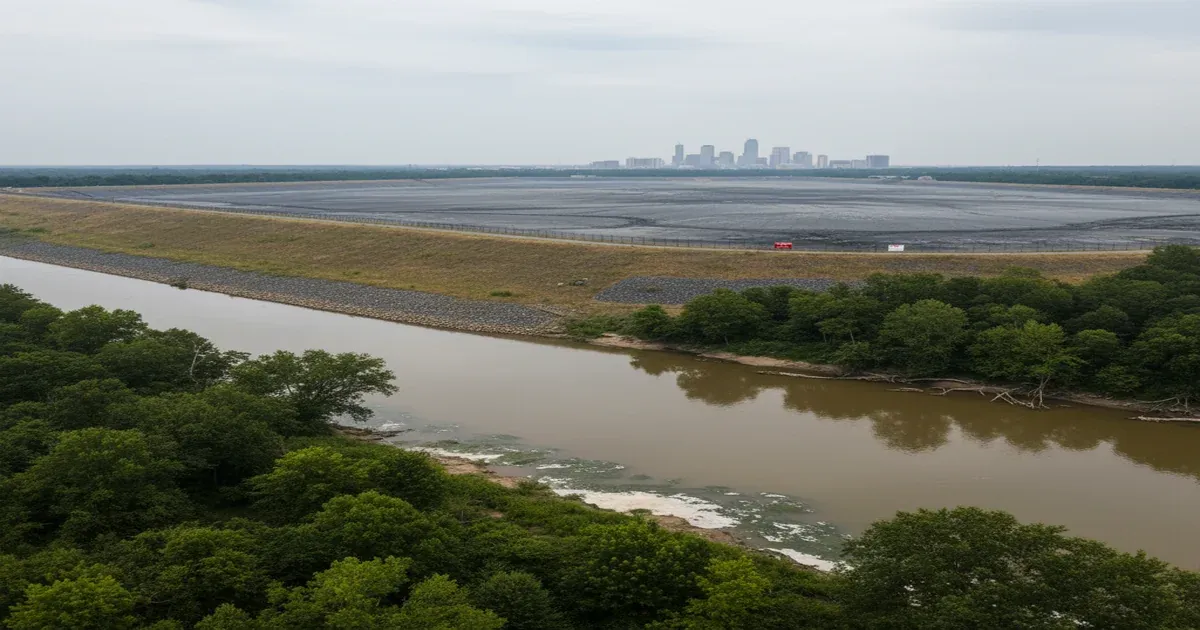
Charlotte, North Carolina, sits at the heart of one of the most complex water quality stories in the American Southeast — a story shaped by Duke Energy’s coal ash legacy, the state’s GenX/PFAS contamination crisis, and the pressures of being one of the fastest-growing metros in the country.
Charlotte Water serves approximately 1 million people in Mecklenburg County and surrounding areas. The utility draws from the Catawba River — a 225-mile river that flows from the Blue Ridge Mountains through the Piedmont to South Carolina, where it becomes the Wateree River.
The Catawba is dammed into a series of reservoirs managed by Duke Energy for hydropower: Lake James, Lake Rhodhiss, Lake Hickory, Lookout Shoals, Lake Norman, Mountain Island Lake, and Lake Wylie. Charlotte’s primary intake is on Mountain Island Lake, with additional supply from Lake Norman.
Coal Ash: Duke Energy’s Legacy
North Carolina’s coal ash problem is inseparable from Charlotte’s water story. Duke Energy — headquartered in Charlotte — operated coal-fired power plants along the Catawba River system for decades, producing millions of tons of coal ash stored in unlined impoundments along river banks and lakeshores.
Coal ash contains heavy metals including arsenic, selenium, mercury, lead, cadmium, and hexavalent chromium. When stored in unlined pits near water bodies, these contaminants can leach into groundwater and surface water.
The crisis came into sharp focus in 2014, when a Duke Energy coal ash impoundment at the Dan River Steam Station in Eden, NC, ruptured and spilled 39,000 tons of toxic coal ash and 27 million gallons of contaminated water into the Dan River. While the Dan River spill was 130 miles from Charlotte, it exposed the systemic risk of Duke Energy’s coal ash storage practices statewide.
On the Catawba system specifically:
- Riverbend Coal Ash Site — Located on Mountain Island Lake, directly upstream of Charlotte’s primary water intake. Coal ash was stored in unlined basins along the lake for decades. Groundwater monitoring showed contamination migrating toward the lake. Duke Energy has been conducting excavation and cleanup under state oversight.
- Marshall Steam Station — Located on Lake Norman with coal ash stored in unlined impoundments. Selenium and other contaminants have been detected in groundwater and seeps near the lake.
- Allen Steam Station — On Lake Wylie, downstream of Charlotte, with similar coal ash contamination issues.
North Carolina’s Coal Ash Management Act (2014) and subsequent amendments have required Duke Energy to excavate and properly close many of its coal ash impoundments — but the process takes years, and contamination that already reached groundwater doesn’t disappear when the ash is removed.
PFAS: North Carolina’s GenX Story
North Carolina has been at the center of the national PFAS contamination story, primarily through the GenX chemical contamination of the Cape Fear River near Fayetteville and Wilmington. While that contamination is concentrated in the southeastern part of the state, PFAS is a statewide issue.
Charlotte-area PFAS concerns include:
- Military installations — Fort Liberty (formerly Fort Bragg) in the central part of the state has extensive PFAS contamination that affects regional groundwater. Closer to Charlotte, smaller military facilities and National Guard sites have also used AFFF.
- Charlotte Douglas International Airport — AFFF use at the airport has been a source of PFAS in local groundwater.
- Industrial sources — Charlotte’s manufacturing sector includes operations that use or have used PFAS compounds.
- Wastewater treatment — PFAS that enters the wastewater system passes through treatment plants and is discharged into the Catawba, potentially affecting downstream water intakes.
North Carolina’s Department of Environmental Quality (DEQ) has been more aggressive than many states on PFAS investigation and enforcement — driven in part by the GenX scandal that put the state in the national spotlight.
Rapid Growth and Infrastructure
The Charlotte metro area has added over a million residents in the past two decades and shows no signs of slowing down. That growth creates direct water quality and supply challenges:
- Increased demand on the Catawba River, which also supplies communities in South Carolina. Interstate water allocation disputes have been ongoing for years.
- Development in the watershed reduces natural filtering and increases stormwater runoff into reservoirs.
- Infrastructure expansion — New water mains, pump stations, and treatment capacity to serve growing suburbs, while older parts of Charlotte need pipe replacement and system upgrades.
- Sewer capacity — Charlotte-Mecklenburg’s sewer system faces capacity constraints, and sanitary sewer overflows during heavy rain have been a persistent issue.
What Charlotte Residents Should Know
- Your water is treated and tested. Charlotte Water meets all federal standards and publishes annual water quality reports. Read them — especially the sections on regulated and unregulated contaminant monitoring.
- Mountain Island Lake is monitored. Charlotte Water and state regulators monitor the Riverbend coal ash site and its potential impact on source water quality. Treatment processes are designed to handle the contaminants of concern from coal ash.
- Consider filtration. A carbon filter or reverse osmosis system at the point of use provides additional protection against trace contaminants including PFAS and DBPs.
- Check for lead. Older homes in Charlotte (pre-1986) may have lead solder. While Charlotte doesn’t have the same concentration of lead service lines as northern cities, building plumbing can still be a source.
- Private well owners — especially in areas near coal ash sites, military installations, or industrial facilities — should test for heavy metals, PFAS, and VOCs in addition to standard bacteria and nitrate testing.
- Support watershed protection. Development decisions in the Catawba watershed directly affect Charlotte’s source water quality. Zoning, stormwater management, and green infrastructure all matter.
Related Reading
- Raleigh Water: Falls Lake and PFAS — North Carolina’s other major metro faces different water quality challenges.
- Atlanta Water and Sewer Consent Decree — The Southeast’s infrastructure upgrade pressures extend beyond North Carolina.
- Louisville Water: Ohio River and Chemical Valley — Industrial contamination impacts on drinking water sources.
- Virginia Beach Water: PFAS and Military Contamination — Another Southeast city dealing with contamination from non-municipal sources.
The Bottom Line
Charlotte’s water quality is shaped by the legacy of North Carolina’s coal-powered past and the pressures of its booming present. The Catawba River is a heavily managed, multi-use waterway, and the decisions made about coal ash cleanup, PFAS regulation, and growth management will determine water quality for generations.
Duke Energy’s coal ash remediation is progressing but far from complete. The proximity of the Riverbend site to Charlotte’s primary water intake is a reminder that past industrial decisions can create present-day public health risk — and that vigilant monitoring and treatment are non-negotiable.
If you’re concerned about your water quality, a certified water treatment professional can test your water and recommend solutions tailored to Charlotte’s specific water chemistry and contamination profile.