
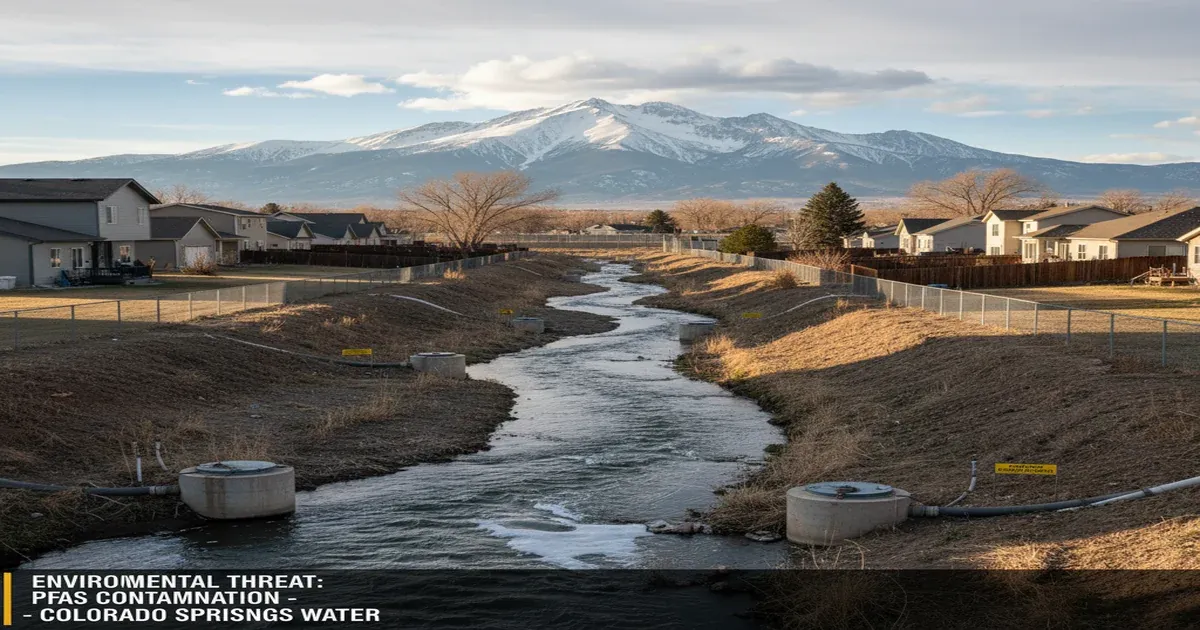
Colorado Springs, Colorado sits at the foot of Pikes Peak and drinks from the mountains. Colorado Springs Utilities draws water from multiple mountain watersheds and reservoirs on the western slope of the Front Range, supplemented by groundwater and purchased water from other systems. The utility serves about 480,000 people.
The source water is mountain snowmelt — naturally clean, low in minerals, and requiring minimal treatment. It’s the kind of water supply that most cities can only envy. But Colorado Springs has complications that other mountain-water cities don’t: it’s surrounded by military bases, it’s been through a catastrophic wildfire, and it’s growing fast on the semi-arid Front Range.
Five Military Bases, Five PFAS Problems
Colorado Springs is the most military-concentrated city in Colorado. Fort Carson (Army), Peterson Space Force Base, Schriever Space Force Base, Cheyenne Mountain Space Force Station, and the Air Force Academy all operate in or near the city. Every one of these installations used AFFF firefighting foam, and every one has documented PFAS contamination.
The contamination is not theoretical. Monitoring wells around Peterson SFB and the Air Force Academy have shown PFOS and PFOA levels significantly above the EPA’s 4 ppt MCLs. The Security/Widefield area south of Colorado Springs — where groundwater from the Peterson/Fort Carson area flows — has been particularly affected. The Air Force has been providing alternative water supplies and bottled water to affected communities.
Colorado Springs Utilities’ mountain surface water supply is geographically separated from the military groundwater contamination. But some of the utility’s supplemental groundwater wells draw from aquifer systems that could be affected. The utility has installed PFAS treatment at vulnerable well sites and conducts extensive monitoring.
Colorado has adopted state PFAS standards that are among the stricter in the West, with drinking water standards of 70 ppt for combined PFOA/PFOS (being revised downward to align with federal limits).
Waldo Canyon Fire: Watershed Recovery
In June 2012, the Waldo Canyon fire burned 18,000 acres on the western edge of Colorado Springs, destroying 347 homes and killing two people. Beyond the immediate devastation, the fire burned portions of the watershed that feeds the city’s drinking water.
Burned watersheds shed enormous amounts of sediment, ash, and fire-mobilized contaminants during rain events. In the years following Waldo Canyon, Colorado Springs experienced turbidity spikes, debris flows, and water quality challenges as the burned landscape recovered. The city had to modify treatment processes and invest in watershed restoration.
The 2013 Black Forest fire added another burned area northeast of the city. Together, these fires demonstrated the vulnerability of mountain water supplies to wildfire — a risk that climate change is intensifying.
Colorado Springs has since invested in pre-fire watershed management, including forest thinning and defensible space around critical water infrastructure. But the underlying risk remains: the forests that protect the water supply are stressed by drought, beetle kill, and warming temperatures.
Growth on the Front Range
Colorado Springs has been one of the fastest-growing large cities in the West. The metro area has added more than 100,000 people since 2010. All that growth demands more water from a supply that’s constrained by geography and climate.
The city’s water supply portfolio includes transmountain diversions — water piped from the western slope of the Continental Divide through tunnels and pipelines. These diversions are politically contentious and ecologically impactful. As Front Range cities grow, the pressure to divert more western slope water intensifies.
Conservation has been a major focus. Colorado Springs has reduced per-capita water use significantly through efficiency programs, tiered pricing, and xeriscaping incentives. But total demand continues to rise with population.
Water Quality at the Tap
Colorado Springs’ mountain water is naturally soft and low in dissolved minerals. The utility adds chlorine for disinfection and fluoride. Disinfection byproduct levels are typically low due to the low organic matter content of the source water.
The main water quality concern for most residents is the PFAS issue in areas served by groundwater rather than surface water. If your water comes from mountain reservoirs (which most city water does), the quality is excellent. If you’re in an area that may be served by supplemental groundwater, check with the utility about PFAS testing for your zone.
What Residents Can Do
- Know your water source. Ask Colorado Springs Utilities whether your area is served by mountain surface water, groundwater, or a blend. This determines your PFAS exposure risk.
- If you’re near a military base: Request PFAS testing for your tap water. The utility has data and can tell you whether your supply area is affected.
- Support watershed protection. Fire prevention and forest management in the mountains directly protect your drinking water.
- Private well owners in El Paso County: Test for PFAS immediately if you’re downgradient of any military installation. Also test for nitrate and bacteria.
- Filter if concerned. Reverse osmosis removes PFAS and essentially everything else. Carbon filters with sufficient contact time also reduce PFAS.
If you’re concerned about your water quality, a certified water treatment professional can test your water and recommend the right treatment approach.
See also our coverage of Salt Lake City water quality and how PFAS treatment works.
Sources: Colorado Springs Utilities, Colorado DPHE, EPA SDWIS, USGS, El Paso County Public Health, US Air Force PFAS Response