
Columbia, Missouri — home to the University of Missouri and one of the state’s fastest-growing cities at about 130,000 people — sources its drinking water from three reservoirs: Hinkson Creek, Perche Creek, and the Columbia Regional Airport area wells.
The city’s water quality is generally good by federal standards, but several emerging challenges deserve attention.
Karst Geology: Columbia’s Vulnerable Foundation
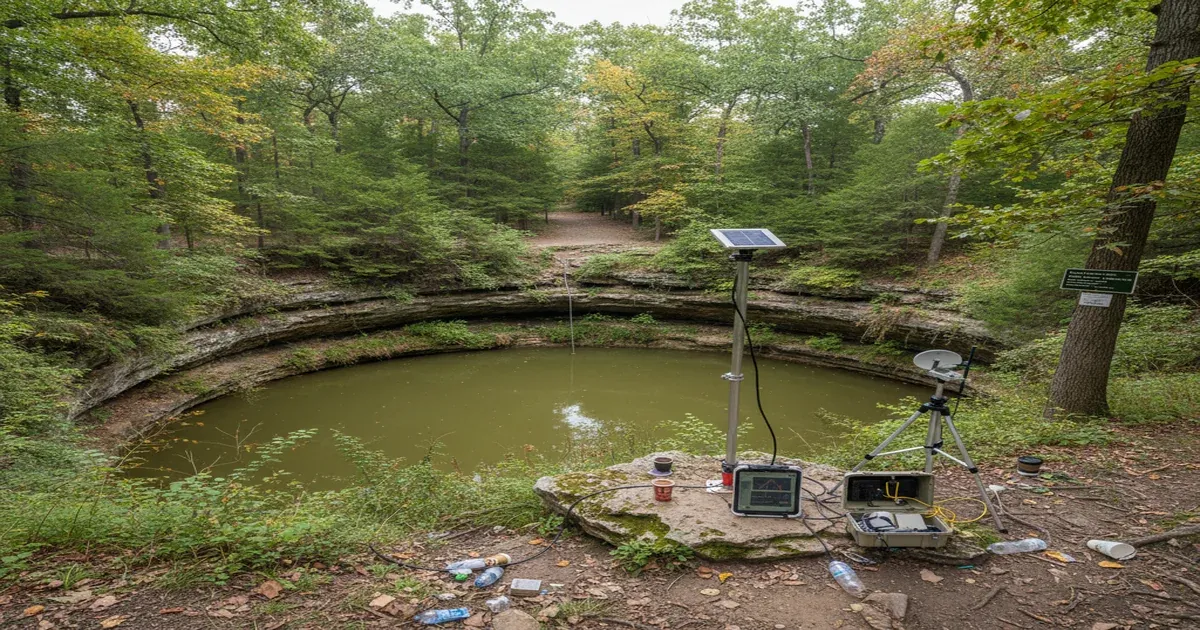
Mid-Missouri sits on extensive karst limestone terrain — the same geology that created the state’s famous caves and springs. Karst creates spectacular natural features but makes groundwater exceptionally vulnerable:
- Rapid transport — Contamination can move from the surface to aquifers in hours, with minimal natural filtration
- Sinkholes — Columbia and surrounding Boone County have numerous sinkholes, some documented and many undiscovered. Each is a potential direct injection point for contamination.
- Spring connections — Many of Missouri’s springs are directly connected to agricultural and urban surface areas through the karst system
- Unpredictable flow — Groundwater in karst doesn’t behave like groundwater in porous rock or gravel. Contaminants can move erratically and show up where expected least.
The Columbia area has experienced several sinkhole events that raised contamination concerns, and the city’s source watersheds include karst terrain that makes protecting water quality challenging.
PFAS: Missouri’s Growing Concern
Missouri has been slower than some states to address PFAS contamination, but the problem is significant:
- Missouri National Guard bases — Multiple Guard installations across Missouri have confirmed PFAS contamination from AFFF use. Whiteman Air Force Base, about 70 miles west of Columbia, has documented PFAS contamination.
- Columbia Regional Airport — Columbia’s airport uses AFFF, and the airport area wells that supplement the city’s water supply are in proximity to potential PFAS sources. The city has tested these wells for PFAS.
- University laboratories — The University of Missouri conducts research involving various chemicals, and while laboratory operations are regulated, the cumulative impact of a major research university on local groundwater is worth monitoring.
- Biosolid application — Missouri has extensive agricultural use of sewage biosolids, which can contain PFAS and distribute contamination across wide areas.
Columbia Water has conducted PFAS testing of its finished water. Results have shown low-level detections, and the city has stated compliance with current regulations. As EPA’s new PFAS MCLs take effect, continued monitoring will be critical.
Hinkson Creek: A Troubled Tributary
Hinkson Creek, one of Columbia’s primary water sources, has been the subject of ongoing water quality concern:
- The city faced Clean Water Act consent orders related to Hinkson Creek water quality in past decades
- Urban runoff from Columbia’s rapid growth increases pollutant loads to the creek
- Combined sewer overflows from older parts of Columbia’s system discharge to Hinkson Creek during heavy rain events
- E. coli exceedances have been documented in Hinkson Creek, though the city’s treatment processes address microbial contamination before water reaches taps
The city has invested in watershed protection and stormwater management, but the tension between rapid growth and water quality protection is ongoing.
Nitrate from Agriculture
Columbia sits in the middle of Missouri’s agricultural heartland. Boone County has extensive row crop and livestock agriculture, and nitrate runoff is a persistent issue:
- Source water testing shows nitrate levels that, while below the EPA MCL of 10 mg/L, are measurably elevated compared to pristine water
- Karst connectivity means nitrate from farm fields can reach source water quickly after heavy rain
- The city adjusts treatment processes seasonally to account for nitrate variations
What the Data Shows
From Columbia Water’s most recent CCR:
- All regulated contaminants within EPA limits
- No SDWA violations
- Trihalomethanes and haloacetic acids from chlorine disinfection — within limits
- Lead at 90th percentile below action level
- Turbidity managed through treatment adjustments
What Columbia Residents Should Do
- Review Columbia Water’s PFAS results — Request the most recent testing data specifically for PFAS compounds, including the six compounds regulated under new EPA rules
- Sinkhole awareness — Don’t dump chemicals, motor oil, or other materials into sinkholes. Report new sinkholes to the city — they’re potential direct pathways to the water supply.
- Private well owners in Boone County — Karst vulnerability makes well testing critical. Test at minimum for bacteria, nitrate, and coliform annually; after heavy rain events for a more complete picture.
- Lead service lines — Columbia has older neighborhoods with potential lead connections. Contact Columbia Water about service line status for your address.
- Stormwater responsibility — In a rapidly growing city, every resident’s choices about fertilizer use, pet waste, car washing, and landscaping affect the quality of stormwater that enters the karst system.
Columbia’s growth is a story of success for the city. But fast growth comes with fast water quality challenges, and staying ahead of them requires ongoing attention and investment.
Water quality challenges like these aren’t unique to this area. Residents in Joplin, Missouri Water Quality and Springfield MO Water Quality face similar contamination concerns, while Kansas City Water Quality deals with its own set of water infrastructure and quality issues.
If you’re concerned about your water quality, a certified water treatment professional can test your water and recommend solutions appropriate for your home.