Columbus, Ohio, is the 14th-largest city in the United States and one of the few major Midwest cities that’s still growing rapidly. That growth — the metro area has added hundreds of thousands of residents in the past two decades — is testing a water system that draws from central Ohio rivers surrounded by some of the most intensive farmland in the country.
The City of Columbus Division of Water operates three water treatment plants drawing from the Scioto River, Big Walnut Creek, and Hoover Reservoir. Together, they serve approximately 1.2 million people in the Columbus metro area.
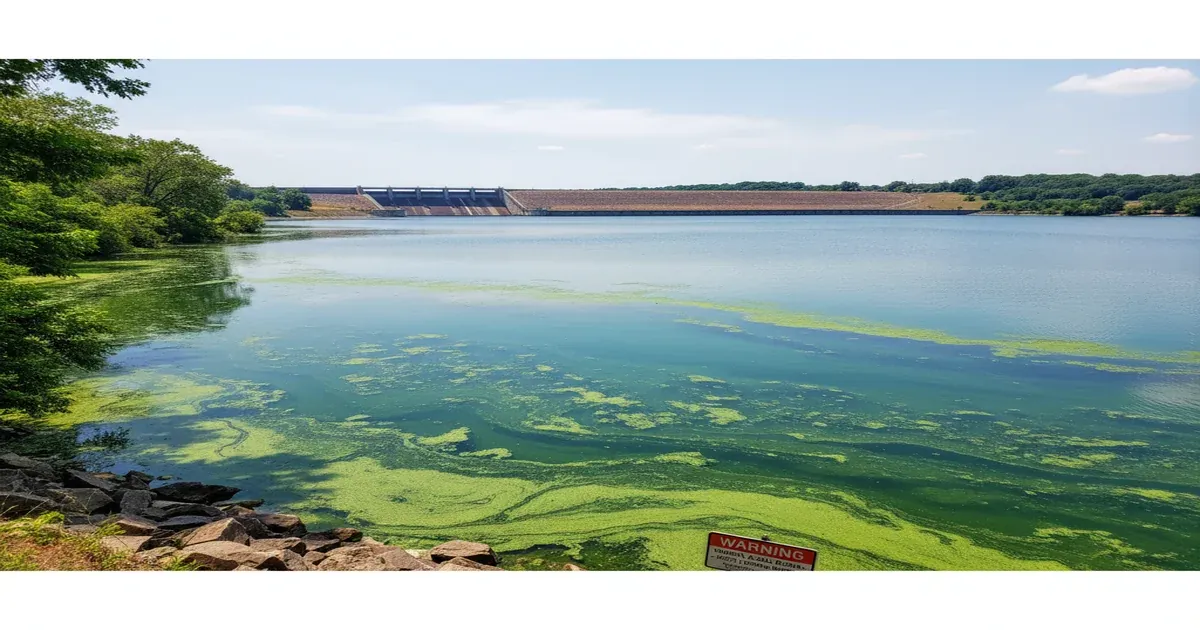
Harmful Algal Blooms: The Farm Runoff Problem
Ohio sits at the epicenter of the Midwest’s harmful algal bloom (HAB) crisis. While Toledo’s 2014 water emergency — when microcystin from a Lake Erie bloom shut down the drinking water supply for 500,000 people — made national headlines, the same agricultural runoff that feeds Lake Erie blooms affects water bodies throughout Ohio, including Columbus’s source water.
The Scioto River watershed drains heavily farmed land in central and western Ohio. Phosphorus and nitrogen from fertilizer application, manure from concentrated animal feeding operations (CAFOs), and agricultural tile drainage all flow into the Scioto and its tributaries.
During warm months, these nutrients fuel algal growth in reservoirs and slow-moving stretches of the river. Cyanobacterial blooms produce:
- Microcystin — a liver toxin that can cause illness at elevated levels. Ohio EPA has established recreational advisory thresholds and drinking water alert levels for microcystin.
- Taste and odor compounds (geosmin and MIB) — not harmful but create earthy, musty taste in treated water that drives consumer complaints.
- Increased treatment cost — Utilities must add powdered activated carbon, adjust chemical dosing, and potentially use advanced oxidation to manage bloom-related contamination.
Columbus Water monitors source water closely during bloom season and adjusts treatment accordingly. The utility has invested in upgraded monitoring and treatment capabilities, including activated carbon systems. But the fundamental driver — agricultural nutrient loading — is a watershed-wide problem that treatment plants can manage but not solve.
Lead Service Lines
Columbus has an estimated 23,000 to 35,000 lead service lines in its distribution system — a legacy of construction practices from the late 1800s through the mid-1900s. Neighborhoods with the highest concentrations include:
- Near East Side and Olde Towne East — Dense pre-war housing stock
- Franklinton — One of the oldest neighborhoods in Columbus
- Clintonville and Old North Columbus — Early 20th century development
- South Side and German Village — Historic neighborhoods with aging infrastructure
Columbus Water uses orthophosphate corrosion control to minimize lead leaching and has maintained compliance with EPA’s Lead and Copper Rule. Under the LCRI mandate, the city must inventory and replace all lead service lines within 10 years.
The city launched a lead service line replacement program and has been accelerating the pace of replacement. But at the current scale, meeting the 10-year deadline will require significant additional investment and construction capacity.
PFAS: Defense and Industrial Sources
Central Ohio has several PFAS contamination sources:
- Rickenbacker International Airport/former Air Force Base — Located south of Columbus, the former Rickenbacker Air Force Base has documented PFAS contamination from AFFF use. The site is now a logistics and cargo hub, but the contamination persists.
- Defense Supply Center Columbus — A major military logistics facility with documented PFAS in monitoring wells.
- Industrial sources — Columbus’s manufacturing sector includes operations that have used PFAS compounds.
Columbus Water’s surface water supply is less directly affected than groundwater near these sources, but UCMR 5 testing has detected PFAS at low levels in treated water. The utility is evaluating treatment options to meet EPA’s 2024 MCLs by the 2029 deadline.
Growth and Infrastructure
Columbus is growing faster than most Midwest cities, which creates infrastructure challenges:
- Treatment capacity — The three water plants are being expanded and upgraded, but capital projects take years while new developments come online continuously.
- Distribution system expansion — New suburbs require new water mains and pump stations, while older parts of the system need replacement.
- Sewer capacity — Columbus’s combined sewer system produces overflows during heavy rain. The city has been investing in sewer separation and green infrastructure under regulatory requirements, but the work is decades from completion.
- Water rates — The cost of infrastructure investment is reflected in rising water and sewer bills, which disproportionately affects lower-income residents.
What Columbus Residents Should Know
- Taste and odor events are seasonal and not harmful. If your water tastes earthy or musty during summer, it’s likely algae-related compounds. A carbon filter handles it.
- Check for lead. If your home was built before 1986, contact Columbus Water to check your service line status. Use cold water for drinking and cooking, and flush the tap after the water has been sitting.
- Get your water tested if you have specific concerns. Columbus Water offers lead testing, and private labs can test for a broader range of contaminants.
- Private well owners in Franklin County and surrounding areas — test annually at minimum. Central Ohio’s agricultural landscape means nitrate contamination is a real risk for shallow wells.
- Consider a filter. NSF/ANSI 53 for lead, carbon block for taste/odor, and reverse osmosis for the broadest contaminant removal.
Related Reading
- Cleveland’s Water: Lead and Lake Erie — Ohio’s lakefront city faces different source water challenges.
- Cincinnati Water: Ohio River and PFAS — Ohio’s three major cities each have distinct water quality issues.
- Ohio Data Center Wastewater Permit — Industrial growth puts new pressure on Ohio’s water resources.
- Indianapolis Water Quality: PFAS and Lead — Neighboring Indiana faces similar Midwest water challenges.
The Bottom Line
Columbus has a well-run water utility facing the classic Midwest combination of agricultural source water impacts, aging lead infrastructure, and growth pressure. The algal bloom threat is real and worsening as climate change extends warm seasons and intensifies storms that flush nutrients into waterways.
The lead replacement mandate will cost hundreds of millions of dollars, and the PFAS regulatory ramp-up adds another layer of treatment cost. Columbus is positioned to handle these challenges, but ratepayers will bear the cost.
If you’re concerned about your water quality, a certified water treatment professional can test your water and recommend the right treatment for your home.