
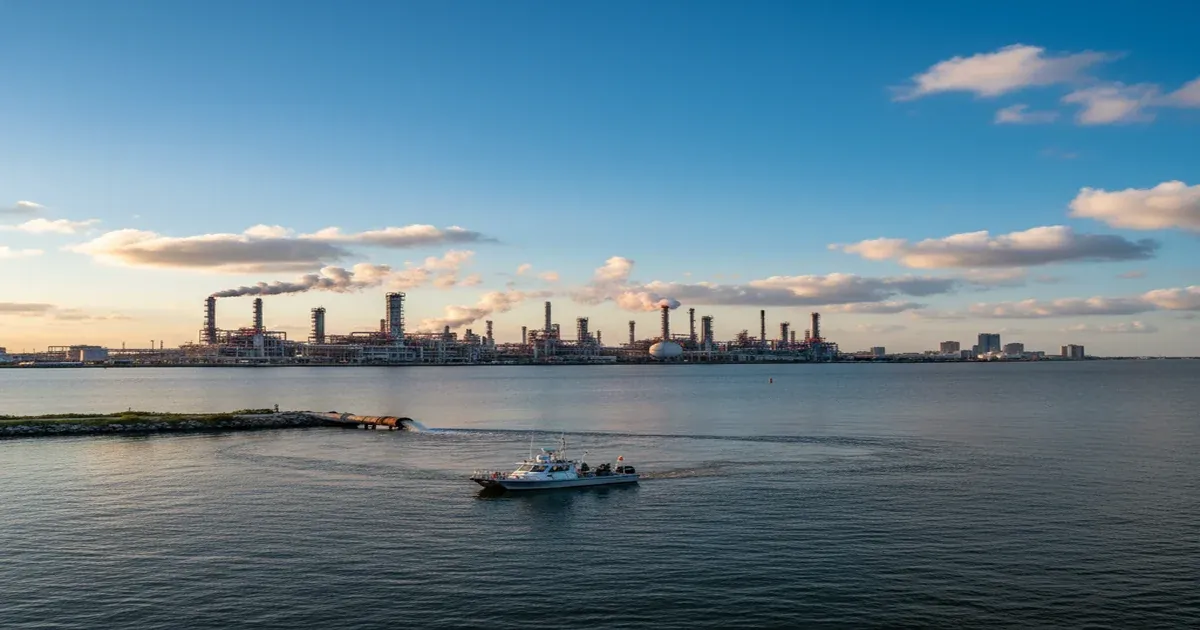
Corpus Christi, Texas has had more high-profile drinking water crises than most American cities. Boil water advisories, chemical contamination events, and supply shortages have made local headlines multiple times in the past decade. For a city of 325,000 people on the Texas Gulf Coast, water quality isn’t an abstract concern — it’s a recurring headline.
The city draws its drinking water from Lake Corpus Christi, Choke Canyon Reservoir, and the Mary Rhodes Pipeline (which brings water from Lake Texana). The surface water supply is adequate in normal years but precarious during drought — and drought is a regular feature of South Texas climate.
The 2016 Chemical Contamination Event
In December 2016, Corpus Christi issued an emergency water advisory after an asphalt chemical (Indulin AA-86) backflowed into the city’s water supply at a industrial district near the O.N. Stevens Water Treatment Plant. Residents were told not to use tap water for any purpose — not even boiling would make it safe.
The incident exposed vulnerabilities in the city’s industrial corridor and its proximity to the water treatment infrastructure. Investigations revealed that an improperly maintained backflow prevention device allowed industrial chemicals to enter the water supply. The event lasted several days and shook public confidence in the water system.
Since then, the city has invested in backflow prevention upgrades and enhanced monitoring at industrial connections. But the fundamental geography — a water treatment plant surrounded by petrochemical and industrial operations — hasn’t changed.
Petrochemical Corridor
Corpus Christi is the heart of Texas’s refining and petrochemical industry along the Gulf Coast. Multiple refineries, chemical plants, and petroleum storage facilities operate in and around the city. Flint Hills Resources, CITGO, and Valero all have major facilities in the area.
Industrial discharges, air emissions, and accidental releases contribute to the environmental burden. While these facilities have National Pollutant Discharge Elimination System (NPDES) permits that limit direct water discharges, cumulative contamination of soil and groundwater in the industrial corridor is documented. Several sites are under state cleanup oversight.
For the municipal water supply, the surface water sources are upstream and somewhat removed from the coastal industrial area. But the 2016 event showed that proximity matters in ways that aren’t always anticipated.
Harmful Algal Blooms
South Texas reservoirs are susceptible to harmful algal blooms (HABs), particularly during hot summers with low water levels. Lake Corpus Christi and Choke Canyon have experienced algal blooms that produce taste and odor compounds (geosmin and MIB) and, in some cases, cyanotoxins like microcystin.
The city’s treatment plant can handle most algal-related water quality issues, but severe blooms stress the treatment process and can lead to taste complaints. Climate change — hotter temperatures, longer droughts, more nutrient-rich runoff when rains do come — is expected to make HABs more frequent and severe.
Saltwater Intrusion and Drought
Corpus Christi Bay is an estuary where freshwater from the Nueces River meets Gulf of Mexico saltwater. During drought, reduced freshwater inflow allows salt water to push further upstream, potentially affecting water quality in lower reaches of the river system.
The city’s reservoirs provide buffer from direct saltwater intrusion, but the broader water supply picture is fragile. During the 2011-2014 Texas drought, combined reservoir levels dropped below 40% capacity. Water restrictions were implemented, and the city accelerated plans for diversification — including the Mary Rhodes Pipeline expansion and desalination feasibility studies.
Aging Infrastructure
Corpus Christi’s water distribution system has aging pipes, with some sections dating to the 1940s and 1950s. Water main breaks and line leaks are common. The city has been working through a capital improvement program but faces the same deferred-maintenance challenges as many Texas cities.
Lead service lines are less prevalent in Corpus Christi than in older Northern cities, but galvanized steel pipes with lead solder connections exist in mid-century housing. The city monitors lead levels under the Lead and Copper Rule.
What Residents Can Do
- Keep emergency water. Corpus Christi’s history of water advisories means having bottled water on hand isn’t paranoia — it’s preparation.
- Filter your water. Activated carbon handles taste, odor, and most organic contaminants. For broader protection, reverse osmosis covers nearly everything.
- Follow advisories immediately. When the city issues water warnings, take them seriously — the 2016 event showed that industrial contamination can happen suddenly.
- Conserve during drought. Every gallon saved extends the reservoir supply.
- Private well owners in Nueces County: Test for bacteria, nitrates, and petroleum compounds. Industrial contamination and agricultural runoff are both present.
If you’re concerned about your water quality, a certified water treatment professional can test your water and recommend the right solution.
See also our coverage of El Paso water quality and Lubbock water quality.
Sources: City of Corpus Christi Water Utilities, Texas CEQ, EPA SDWIS, USGS, Nueces County Health Department