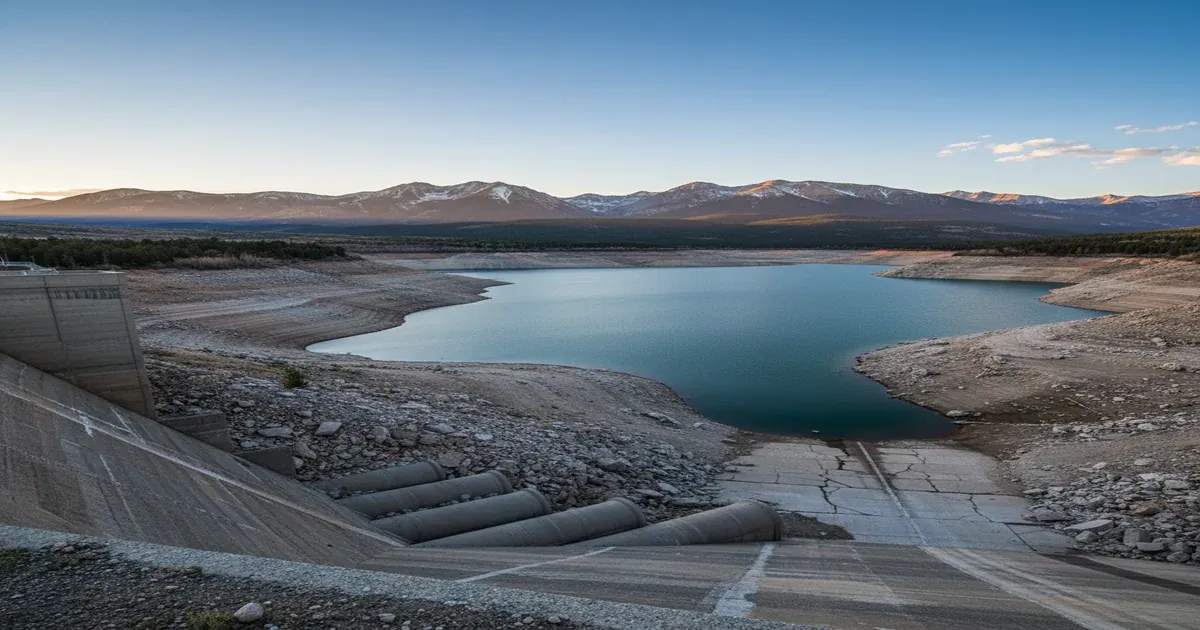
Denver Water is one of the oldest and largest water utilities in the western United States, serving 1.5 million people across the Denver metro area. The utility draws from a mountain collection system that spans hundreds of square miles across the Continental Divide — reservoirs, tunnels, and pipelines that capture snowmelt from the Rockies and deliver it to the Front Range.
It’s an engineering marvel. It’s also a system under growing pressure from contamination, aging infrastructure, and climate change.
PFAS: Military Bases and Firefighting Foam
Colorado’s PFAS problem is concentrated around military installations along the Front Range. We covered the Buckley Space Force Base and Peterson Space Force Base contamination in our Colorado PFAS article. Denver shares the same Colorado River supply that Las Vegas depends on, but Denver residents face direct exposure risks from several sources:
- Buckley Space Force Base (Aurora) — Adjacent to Denver’s eastern suburbs, Buckley has confirmed PFAS groundwater contamination from decades of AFFF firefighting foam use. The contamination plume extends into residential areas, and the Department of Defense has provided bottled water and treatment systems to some affected properties.
- Former Lowry Air Force Base — Now the Lowry neighborhood in Denver, this former military installation is a Superfund site with known groundwater contamination including PFAS, solvents, and other compounds. Cleanup has been ongoing for decades.
- Denver International Airport (DIA) — Like most major airports, DIA has a history of AFFF use for firefighting training and emergency response. PFAS has been detected in groundwater near the airport.
Denver Water’s primary supply comes from mountain surface water, which is generally less affected by PFAS than groundwater. But the utility also operates groundwater wells for supplemental supply, and the metro area’s aquifers are interconnected with contamination sources.
Colorado has established its own PFAS standards that are among the most protective in the nation. The Colorado Department of Public Health and Environment (CDPHE) set a groundwater standard of 70 parts per trillion for combined PFOA and PFOS — though EPA’s 2024 federal MCLs of 4 ppt each are now the enforceable standard for public water systems.
Lead Service Lines: A $500 Million Challenge
Denver Water launched one of the most ambitious lead service line replacement programs in the country in 2020. The utility estimated approximately 64,000 to 84,000 lead service lines in its system — mainly in older neighborhoods built before the 1950s.
What sets Denver’s program apart: the utility is replacing lead lines at no direct cost to homeowners. Denver Water committed to covering the full cost — both the utility-side and customer-side portions of the service line — funded through a combination of rate increases and bond financing.
The total estimated cost exceeds $500 million over the 15-year program. Under EPA’s LCRI, the 10-year replacement mandate will require Denver Water to accelerate its timeline.
Priority replacement areas include:
- Capitol Hill and Congress Park — Dense older housing stock with high concentrations of lead lines
- West Denver neighborhoods (Barnum, Valverde, Villa Park) — Environmental justice communities with older homes and infrastructure
- Park Hill and City Park — Pre-war housing with documented lead service connections
Denver Water also provides free water testing and pitcher filters to customers with known or suspected lead service lines during the replacement rollout.
Drought and Climate Pressure
Denver’s water supply depends on mountain snowpack — and climate change is reshaping the hydrology of the Colorado Rockies in real time.
Key concerns:
- Declining snowpack — Average snowpack in the Colorado River basin has decreased by approximately 20% since the 1950s. Earlier spring melt means less water stored naturally as snow during the summer demand peak.
- Hotter, drier conditions — Higher temperatures increase evaporation from reservoirs and reduce streamflows, even in years with near-normal precipitation.
- Colorado River compact obligations — Denver Water must manage its supplies within the framework of the Colorado River Compact and various interstate agreements. As the entire basin faces shortage conditions, upstream users face increasing scrutiny and potential curtailment.
- Population growth — The Denver metro area has been one of the fastest-growing regions in the country for over a decade. More people means more demand on a finite supply.
Denver Water has invested heavily in diversification — including recycled water, conservation programs, and the Gross Reservoir expansion project — but the long-term math is challenging. The utility’s Integrated Resource Plan projects potential supply-demand gaps under drought scenarios that could require significant additional conservation or supply development.
Source Water Quality
Because Denver’s primary supply comes from relatively pristine mountain watersheds, source water quality is generally good. But it’s not without issues:
- Post-wildfire contamination — Major wildfires in the Front Range watershed (including the 2020 Cameron Peak and East Troublesome fires) send sediment, ash, and nutrients into reservoirs during subsequent rainstorms. This can spike turbidity, manganese, and organic carbon levels, making treatment more difficult and expensive.
- Mining legacy — Historic mining operations in the mountains have left acid mine drainage and heavy metals in some tributaries. Denver Water’s mountain collection system is designed to avoid the worst of these, but legacy contamination persists in parts of the watershed.
- Emerging contaminants — Like all surface water systems, Denver’s source water contains trace levels of pharmaceuticals, microplastics, and other compounds that conventional treatment wasn’t specifically designed to address.
What Denver Residents Can Do
- Check your lead service line status. Denver Water’s online Lead Reduction Program portal shows whether your address has a known lead service line and your replacement timeline.
- Request a free water test. Denver Water offers free lead testing to customers.
- Use a certified filter if you have a lead service line awaiting replacement. Denver Water distributes free pitcher filters to eligible customers.
- Conserve water. Denver’s supply future depends partly on how efficiently residents use what’s available. The utility offers rebates for high-efficiency fixtures, smart irrigation controllers, and xeriscaping.
- Private well owners in the Denver metro — especially near Buckley SFB, Lowry, or DIA — should test for PFAS. CDPHE maintains a map of known contamination areas.
Related Reading
- Salt Lake City Water and Great Salt Lake Drought — Another Mountain West city facing drought and infrastructure challenges.
- Colorado PFAS Military Base Contamination — PFAS contamination from Colorado military installations affects Front Range water.
- Las Vegas Water: Drought and the Colorado River — Colorado River headwaters in Denver’s backyard supply cities across the West.
- Pittsburgh’s Lead Service Line Replacement — How another city is tackling legacy lead infrastructure.
The Bottom Line
Denver’s water system is well-managed and the city has been a national leader in proactive lead service line replacement. But the convergence of PFAS contamination from military sites, climate-driven supply uncertainty, and the sheer cost of infrastructure replacement creates a level of complexity that will define Denver’s water future for decades.
Mountain snowmelt is no longer the guaranteed, abundant resource it once was. And the contaminants left behind by military and industrial operations aren’t going away on their own.
If you’re concerned about your water quality, a certified water treatment professional can test your water and help you understand what treatment options make sense for your home.