
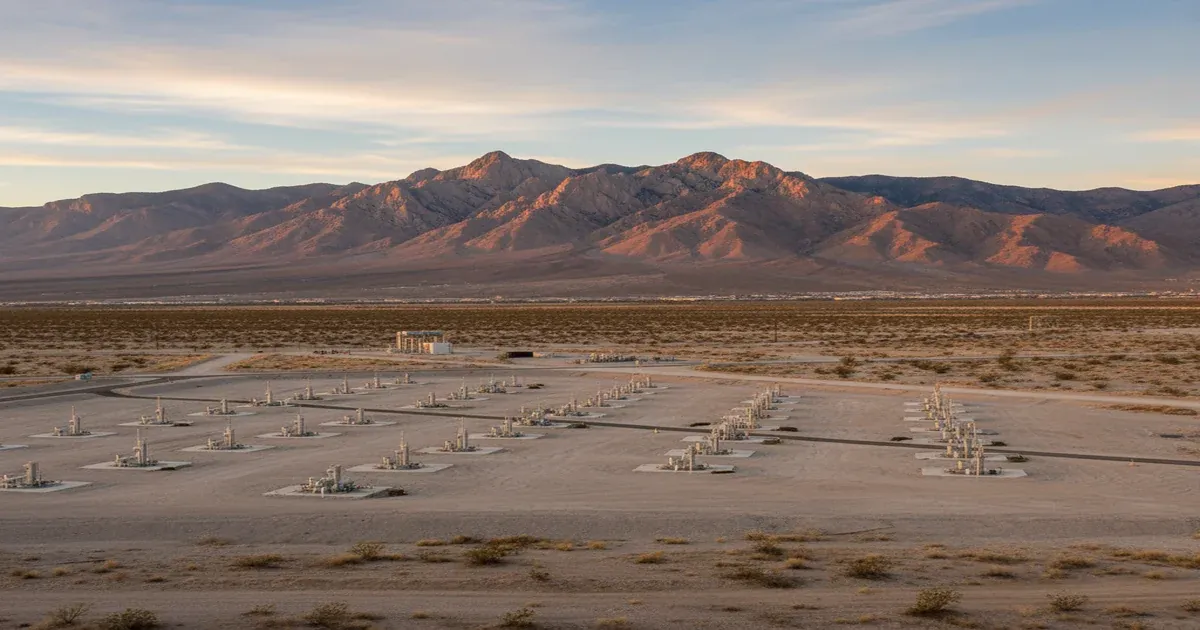
El Paso, Texas, exists in a place where water scarcity isn’t a future threat — it’s the baseline condition. Sitting on the Chihuahuan Desert at the western tip of Texas, receiving about 9 inches of rain per year, sharing a border and a water supply with Ciudad Juárez, Mexico (population 1.5 million), El Paso has been forced to innovate on water in ways that most American cities haven’t even contemplated.
El Paso Water (EPWater) serves approximately 685,000 people. The utility has transformed itself from a groundwater-dependent system headed toward depletion into one of the most diversified and forward-thinking water utilities in the American West.
The Hueco Bolson: A Depleting Aquifer
For most of the 20th century, El Paso relied almost exclusively on the Hueco Bolson — a deep basin-fill aquifer underlying El Paso and Ciudad Juárez. Both cities pumped from the same aquifer, and by the 1990s, the math was unmistakable: the Hueco Bolson was being depleted far faster than it could recharge naturally.
Projections warned that the freshwater portion of the Hueco Bolson could be effectively exhausted by 2025 at then-current pumping rates. That prediction galvanized El Paso into action.
The response included:
- Dramatic conservation — Per capita water use dropped from about 200 gallons per day in 1980 to under 130 gallons by the 2020s
- Diversification away from the Hueco — Shifting to surface water from the Rio Grande and developing alternative groundwater sources
- Aquifer storage and recovery (ASR) — Injecting treated surface water into the Hueco Bolson during wet years for later retrieval
- Desalination — Building the largest inland desalination plant in the Western Hemisphere
The Kay Bailey Hutchison Desalination Plant
Opened in 2007, El Paso’s desalination plant treats brackish groundwater from the Hueco Bolson’s deeper, saline zones using reverse osmosis. The plant can produce up to 27.5 million gallons per day of fresh drinking water from water that would otherwise be unusable.
The desalination plant was a game-changer for El Paso — effectively expanding the city’s usable water supply by tapping water that had been considered too salty. The concentrate (reject brine) is disposed of through deep well injection.
Operating costs are higher than conventional treatment, but for a desert city with a depleting freshwater aquifer, the economics of desalination make sense when the alternative is running out of water.
The Rio Grande: A Shared and Diminishing Resource
El Paso sits on the Rio Grande — but “sits on” is generous. By the time the Rio Grande reaches El Paso, it’s been heavily diverted for agriculture in New Mexico and southern Colorado. In many years, the river runs dry through parts of its course.
EPWater draws surface water from the Rio Grande under allocations managed by the Bureau of Reclamation and the International Boundary and Water Commission (IBWC). The allocations are based on treaty obligations between the US and Mexico and interstate compact agreements.
Key challenges:
- Drought — The upper Rio Grande basin has experienced severe drought, reducing flows to El Paso
- Upstream competition — New Mexico irrigators and the City of Albuquerque compete for the same water. A Supreme Court case (Texas v. New Mexico) over Rio Grande water allocation has been ongoing for years.
- International obligations — The 1906 convention requires the US to deliver 60,000 acre-feet annually to Mexico at the El Paso/Juárez border. In dry years, meeting this obligation while serving El Paso’s needs is challenging.
- Water quality — Agricultural return flows and wastewater discharges upstream degrade Rio Grande water quality, increasing treatment costs.
Water Reuse: El Paso’s Next Frontier
El Paso is developing one of the most ambitious direct potable reuse programs in the country. The Advanced Water Purification Facility, when operational, will treat wastewater through a multi-step process — including membrane bioreactor, reverse osmosis, UV advanced oxidation, and granular activated carbon — to drinking water standards, then blend it with other treated water for distribution.
This isn’t “toilet to tap” scare language — it’s engineering reality. The treated water will exceed EPA drinking water standards for purity. El Paso’s program is modeled on successful operations in Orange County, California, and Singapore, adapted for a smaller, desert-environment system.
For El Paso, potable reuse isn’t a choice — it’s a necessity. The aquifer is depleting, the river is unreliable, and the population isn’t shrinking. Using every drop multiple times is the only sustainable path forward.
PFAS and Contamination
El Paso’s PFAS picture includes:
- Fort Bliss — One of the largest military installations in the country, located in northeast El Paso. AFFF use has contaminated groundwater in areas on and near the base.
- El Paso International Airport — AFFF use creates potential PFAS contamination of local groundwater.
- Industrial sources — Manufacturing and industrial operations in El Paso and across the border in Juárez contribute various contaminants to the shared environment.
EPWater monitors for PFAS under federal requirements. The desalination plant’s reverse osmosis process is effective at removing PFAS, providing an added treatment benefit.
What El Paso Residents Should Know
- Your water utility is nationally recognized for innovation. EPWater has won multiple awards for its conservation, desalination, and reuse programs.
- Conserve water. El Paso’s supply depends on it. The city’s conservation programs, tiered pricing, and rebate programs are among the most aggressive in the country. Participate.
- Private well owners — if you’re near Fort Bliss or the airport, test for PFAS. Also test for TDS (total dissolved solids), nitrates, and arsenic, which can be elevated in local groundwater.
- Support water reuse. Public acceptance of potable reuse is essential for El Paso’s water future. The technology is proven and the water exceeds conventional drinking water standards.
- Consider a filter if you want extra protection. RO systems are popular in El Paso for good reason — they address hardness, TDS, and trace contaminants.
Related Reading
- Tucson’s Water: CAP, PFAS, and Water Reuse — A fellow desert city advancing water recycling technology.
- San Antonio Water System Infrastructure — Texas’s other major aquifer-dependent city.
- Phoenix Water Supply Challenges — Desert water management at a massive scale.
- Houston Water Problems: Subsidence and Flooding — Texas water infrastructure challenges take different forms across the state.
The Bottom Line
El Paso is proof that a desert city can sustain itself with smart water management. The combination of aggressive conservation, aquifer storage and recovery, the largest inland desalination plant in the hemisphere, and pioneering potable reuse puts El Paso ahead of most American cities on water innovation.
But the fundamental challenge remains: a growing city in a desert with a depleting aquifer, a shared and diminishing river, and climate change pushing everything toward drier. El Paso has done the hard work of planning. The question is whether the regional water politics — interstate, international, and agricultural — will cooperate.
If you’re concerned about your water quality, a certified water treatment professional can test your water and recommend the right treatment for your home.