
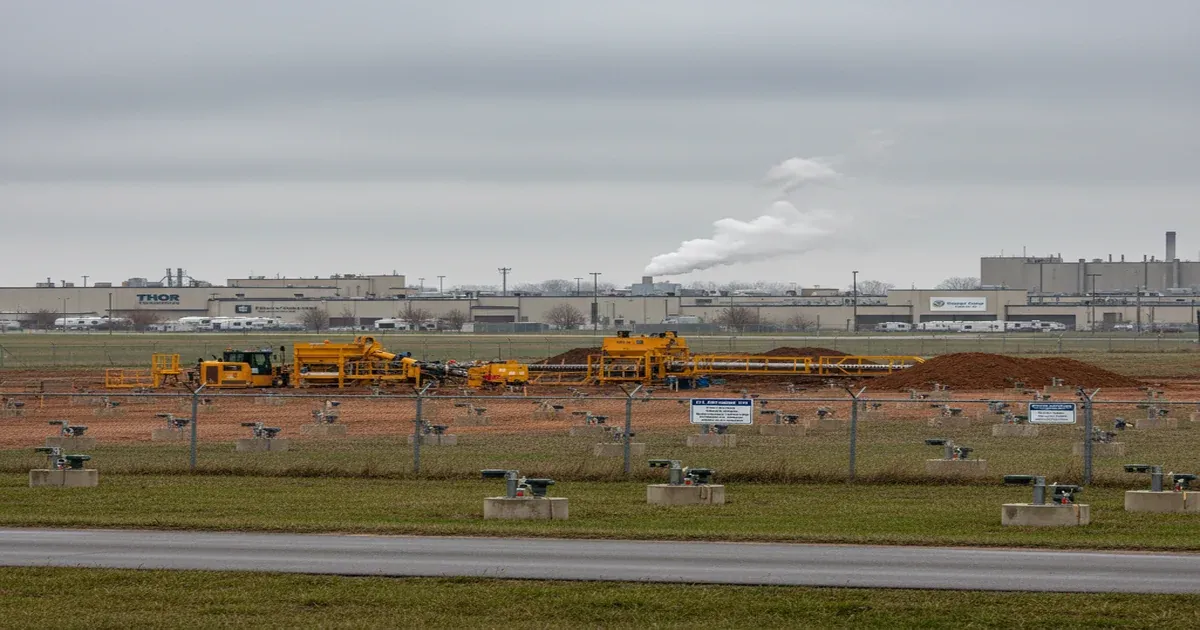
Elkhart, Indiana — population roughly 54,000 — sits at the confluence of the Elkhart and St. Joseph Rivers in the northern part of the state. The city’s economy has long been built on manufacturing, first musical instruments and pharmaceuticals, then the recreational vehicle industry that gave it the “RV Capital of the World” nickname.
That manufacturing legacy comes with consequences. Elkhart County has some of the most significant groundwater contamination in Indiana — rivaling Fort Wayne in the scope of challenges, with multiple EPA investigations spanning decades.
The Continental Steel Superfund Site
The most prominent contamination in the Elkhart area is the Continental Steel Superfund Site, listed on the EPA’s National Priorities List. The former Continental Steel Corporation operated in nearby Kokomo and other Indiana locations, but Elkhart County has its own cluster of contaminated industrial sites from decades of metalworking, plating, and chemical use.
In the Elkhart area specifically, the Main Street Well Field Superfund Site drew EPA attention in the 1980s when volatile organic compounds (VOCs) — particularly trichloroethylene (TCE) and tetrachloroethylene (PCE) — were detected in municipal well water. These industrial solvents had been used extensively for degreasing metal parts at manufacturing facilities across the city.
TCE is a known carcinogen. The EPA’s maximum contaminant level for TCE in drinking water is 5 parts per billion. When levels above this threshold were found in Elkhart’s wells, the city had to take contaminated wells offline and shift to alternative water sources.
Multiple Sites, Overlapping Plumes
What makes Elkhart’s situation particularly challenging is the density of contamination sources. This wasn’t one factory causing one problem — it was dozens of manufacturers over decades creating overlapping plumes of groundwater contamination.
The Elkhart area’s geology contributes to the problem. The region sits on glacial deposits — sand and gravel formations that are excellent aquifers but also allow contaminants to move relatively quickly through the subsurface. Unlike clay-rich soils that can slow or contain contamination, Elkhart’s sandy aquifer materials give solvents and other chemicals a fast path to the water table.
EPA investigations have identified multiple responsible parties across various sites. Some have been cooperative in cleanup efforts. Others have resisted, leading to enforcement actions. The cleanup process for industrial solvent contamination in porous aquifer materials is expensive and slow — pump-and-treat systems can run for decades before contamination levels drop to acceptable thresholds.
Current Water Supply
The City of Elkhart’s water utility currently serves about 54,000 residents using groundwater from deep wells. After the contamination discoveries of the 1980s and 1990s, the city invested in treatment upgrades and relocated some production wells to avoid the worst contamination plumes.
The utility regularly tests for VOCs, heavy metals, and other contaminants. Recent Consumer Confidence Reports show the water meeting all federal standards at the tap. But “meeting standards” and “free of concern” aren’t the same thing — trace detections of TCE and other industrial chemicals continue to appear in monitoring data, even if below regulatory limits.
Indiana’s Department of Environmental Management (IDEM) monitors both the municipal wells and the contamination plumes. The ongoing remediation work at Superfund and state cleanup sites aims to reduce the contamination source over time. But groundwater cleanup timelines in porous formations like Elkhart’s are measured in decades, not years.
PFAS: The Next Wave
Like many Indiana communities with manufacturing and military history, Elkhart faces emerging PFAS concerns. PFAS compounds — the “forever chemicals” — have been found in groundwater across the state, and Elkhart County’s industrial profile makes it a likely area for elevated levels.
The EPA’s enforceable PFAS limits (4 parts per trillion for PFOA and PFOS) have pushed utilities nationwide to test and disclose. Elkhart’s water utility has been monitoring for PFAS, though detailed results are still emerging as testing protocols improve.
Elkhart County also has significant rural well use. Homeowners on private wells in the county may face PFAS exposure without the regular testing and treatment that municipal systems provide. The Elkhart County Health Department has encouraged well testing, but private well monitoring is voluntary in Indiana — most homeowners don’t test unless there’s a specific concern.
The St. Joseph River Factor
The St. Joseph River flows through Elkhart before continuing west to South Bend. While Elkhart primarily relies on groundwater rather than surface water, the river’s health matters. Industrial discharges, agricultural runoff from upstream, and stormwater from the city itself affect river water quality.
Combined sewer overflows (CSOs) have historically been a problem in Elkhart. During heavy rain, the city’s older combined sewer system can overflow, sending untreated wastewater and stormwater directly into the rivers. Federal consent decrees have required Indiana cities, including Elkhart, to invest in separating sewers and reducing overflow events.
These overflows don’t directly affect the drinking water supply, but they degrade the rivers that recharge the shallow aquifer — and in a region where groundwater contamination is already a concern, every additional source matters.
What Elkhart Residents Can Do
If you’re on Elkhart city water, the system is monitored and treated. Review the annual Consumer Confidence Report for specific contaminant levels. Pay attention to any notices about well changes or treatment upgrades.
If you’re on a private well in Elkhart County, get it tested. At minimum, test for VOCs (especially TCE and PCE), nitrates, coliform bacteria, and — if you can afford the additional testing — PFAS. The Elkhart County Health Department can point you to certified labs.
For anyone concerned about trace contaminants passing through treatment, a point-of-use activated carbon filter or reverse osmosis system can provide an extra layer of protection. Make sure any filter you buy is certified for the specific contaminants you’re concerned about — not all filters are equal.
If you’re concerned about your water quality, a certified water treatment professional can test your water and advise on solutions tailored to Elkhart’s specific contamination profile.
Looking Forward
Elkhart’s water story is one of industrial legacy meeting modern accountability, similar to what Ann Arbor and other Midwest manufacturing cities face. The manufacturing economy that built the city also left chemicals in the ground that will take years to fully address. EPA investigations continue, cleanup systems run around the clock, and the utility works to stay ahead of both legacy contamination and emerging threats like PFAS.
The transparency of the process matters. Elkhart residents should stay engaged — attend public meetings on Superfund cleanup progress, read the annual water quality reports, and hold both the city and responsible parties accountable for cleanup timelines.
For a manufacturing city of its size, Elkhart has significant water quality challenges. But the fact that those challenges are identified, monitored, and actively being addressed puts it ahead of communities where contamination exists but nobody’s looking.