Groundwater City
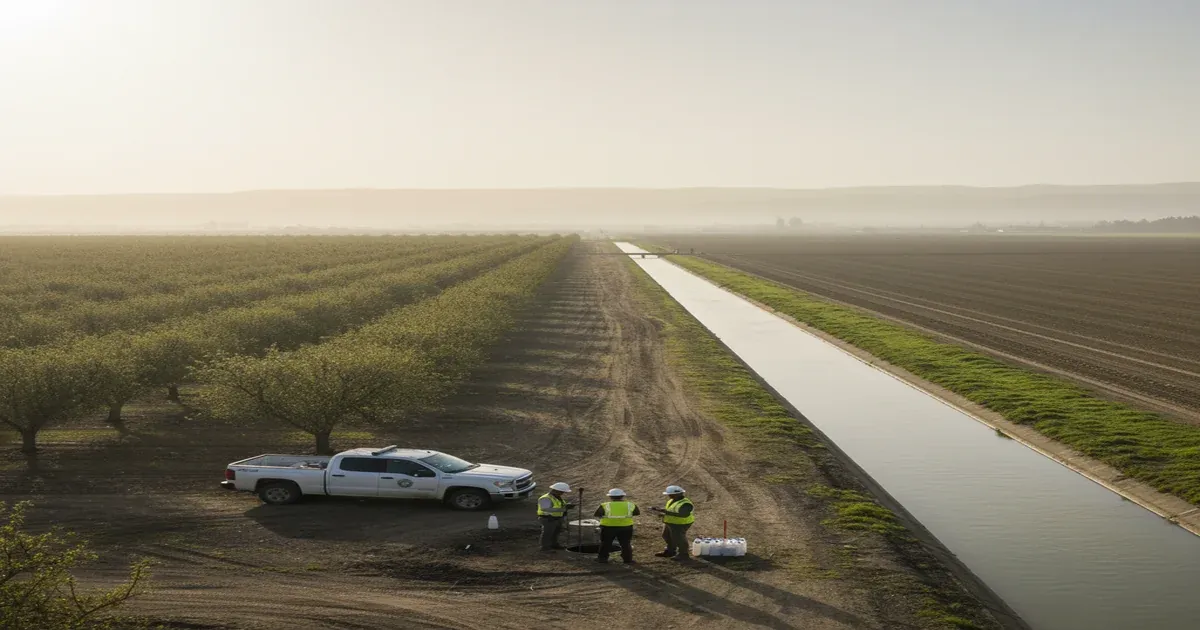
Unlike most major California cities that rely primarily on imported surface water, Fresno gets the vast majority of its drinking water from groundwater. The City of Fresno operates roughly 260 wells drawing from the Kings subbasin of the San Joaquin Valley aquifer — one of the most productive and most contaminated aquifers in the state.
This dependence on groundwater means Fresno’s water quality is directly tied to what happens on the land above: decades of intensive agriculture, pesticide application, dairy operations, and industrial activity have left a contamination legacy that the city is still working to address.
Nitrates: Agriculture’s Footprint
Nitrate contamination is Fresno’s most widespread water quality challenge. The San Joaquin Valley’s agricultural economy — dairy farms, feedlots, fertilizer-intensive crops — generates enormous quantities of nitrogen that percolate into the groundwater over time.
The EPA’s Maximum Contaminant Level for nitrate is 10 mg/L (measured as nitrogen), and multiple Fresno wells have exceeded this limit. The city has had to take contaminated wells offline, install blending stations to mix high-nitrate water with cleaner sources, and invest in treatment infrastructure.
The problem isn’t getting better. A 2012 UC Davis study estimated that nitrate contamination affects the drinking water of more than 250,000 people in the Tulare Lake Basin and Salinas Valley — with the San Joaquin Valley as the epicenter. Fresno sits squarely in the most affected zone.
For residents on private wells outside the city system, the situation is often worse. The State Water Resources Control Board estimates that hundreds of thousands of Californians in the Central Valley drink nitrate-contaminated water from unregulated private wells. Nitrate exposure is particularly dangerous for infants, where it can cause methemoglobinemia (blue baby syndrome).
1,2,3-TCP: A Uniquely California Problem
Fresno has some of the highest levels of 1,2,3-trichloropropane (TCP) contamination in the country. TCP is a byproduct of a soil fumigant called D-D (1,3-dichloropropene) that was widely used in Central Valley agriculture from the 1950s through the 1980s. The chemical is classified as a likely human carcinogen.
California set a Maximum Contaminant Level for TCP at 5 parts per trillion (ppt) in 2017 — a remarkably low standard that reflects the chemical’s potency. There is no federal MCL for TCP. Dozens of Fresno wells have detected TCP above California’s limit, forcing the city to install granular activated carbon (GAC) treatment systems or take wells offline.
The treatment costs are staggering. Fresno has spent hundreds of millions of dollars on TCP treatment — costs that are ultimately passed to ratepayers. The city has pursued legal action against Shell Oil and Dow Chemical, arguing that the companies knew TCP was a contaminant in their soil fumigant products and failed to remove it.
DBCP: The Pesticide That Won’t Go Away
Dibromochloropropane (DBCP) is another agricultural pesticide contaminant found in Fresno’s groundwater. DBCP was used as a soil fumigant for nematode control in fruit and nut orchards until it was banned in 1977 after being linked to sterility in male workers and cancer in laboratory animals.
Nearly 50 years after the ban, DBCP persists in the San Joaquin Valley’s groundwater. The EPA’s MCL for DBCP is 0.2 ppb, and several Fresno wells have required treatment or closure due to DBCP detections.
Arsenic
Like much of the western San Joaquin Valley, Fresno’s aquifer contains naturally occurring arsenic from the volcanic and sedimentary geology of the Sierra Nevada foothills. Some wells produce water with arsenic concentrations approaching or exceeding the EPA’s MCL of 10 ppb.
The city manages arsenic through well selection, blending, and in some cases treatment. But as other contaminants force the closure of cleaner wells, the remaining available wells may have higher arsenic levels — creating a cascading water quality challenge.
Disadvantaged Communities
Fresno’s water quality issues intersect with environmental justice concerns. The city has a higher poverty rate than the California average, and the most contaminated wells tend to serve lower-income neighborhoods and surrounding unincorporated communities.
Small community water systems and private wells in the rural areas around Fresno — in communities like Lanare, Seville, and East Orosi — face even more severe contamination with fewer resources to address it. California’s SAFER (Safe and Affordable Funding for Equity and Resilience) program has directed funding to some of these communities, but the scale of the problem dwarfs available resources.
What’s Being Done
The City of Fresno has invested heavily in water quality infrastructure:
- TCP treatment: Granular activated carbon systems installed at dozens of wells
- Nitrate management: Blending stations, well closures, and treatment plants
- Recharge Fresno: A program to capture stormwater and recharge the aquifer with clean water
- Surface water project: Fresno has been developing surface water from the Kings River to diversify its supply and reduce groundwater dependence
The Southeast Surface Water Treatment Facility, which came online in recent years, brings treated Kings River water into the system — reducing the city’s reliance on contaminated wells.
What Residents Can Do
- Check your water quality report — the City of Fresno publishes annual Consumer Confidence Reports detailing contaminant levels by zone
- If you’re on a private well, test for nitrates, TCP, DBCP, arsenic, and bacteria — contamination is widespread in the Central Valley aquifer
- Consider a certified water filter — reverse osmosis systems are the most effective for the range of contaminants found in Fresno’s water
- For families with infants, be especially vigilant about nitrate levels — babies under 6 months are most vulnerable to nitrate exposure
- Stay informed about Fresno’s water supply projects and any advisories from the California State Water Board
If you’re concerned about your water quality, a certified water treatment professional can test your water and advise on treatment solutions appropriate for the Central Valley’s specific contamination profile.
Sources
- City of Fresno, Annual Water Quality Reports
- California State Water Resources Control Board, GAMA Groundwater Information System
- UC Davis Center for Watershed Sciences, Nitrate Contamination Studies
- EPA SDWIS, City of Fresno compliance records
- California Department of Pesticide Regulation, TCP and DBCP Information
- Environmental Working Group, Tap Water Database