
Gainesville is best known as home to the University of Florida, but beneath the college town’s surface lies something arguably more important: the Floridan Aquifer System. This massive limestone aquifer stretches across most of Florida and into parts of Georgia, Alabama, and South Carolina. It’s one of the most productive aquifer systems on the planet, and Gainesville depends on it entirely for drinking water.
That dependence makes the aquifer’s health a direct concern for the city’s 145,000 residents — and for the thousands more in surrounding Alachua County who draw from the same source.
Gainesville Regional Utilities
Gainesville Regional Utilities (GRU) operates the city’s water system, drawing groundwater from the Upper Floridan Aquifer through a network of production wells. The aquifer delivers naturally filtered water through limestone formations, which gives it several advantages:
- Consistent temperature and quality year-round
- Natural filtration through karst limestone
- Generally low turbidity
- Moderate mineral content
GRU treats the water with chloramines for disinfection and adds fluoride. The utility has maintained compliance with EPA drinking water standards, and its annual Consumer Confidence Reports show contaminant levels well within regulatory limits.
But the regulatory limits don’t tell the whole story.
Nitrate: The Creeping Threat
Nitrate contamination is the Floridan Aquifer’s most widespread and persistent problem in the Gainesville area. Sources include:
Septic systems: Alachua County has tens of thousands of septic systems, particularly in unincorporated areas surrounding Gainesville. Each one releases nitrogen compounds into the shallow soil, which percolate down to the aquifer. A 2020 study by the Florida Department of Environmental Protection estimated that septic systems contribute approximately 28% of the nitrogen loading to springs in the Suwannee River basin — and the dynamics are similar in the Alachua County portion of the Floridan Aquifer.
Agriculture: Row crop farming and livestock operations in rural Alachua County and neighboring counties contribute additional nitrate through fertilizer application and manure management. The flat, sandy soils overlying the Floridan Aquifer in this region provide minimal barriers to nitrogen transport.
Urban stormwater: Even within Gainesville’s city limits, stormwater carries fertilizers from lawns, parks, and golf courses into sinkholes and other karst features that connect directly to the aquifer.
GRU’s production wells have not exceeded the EPA’s nitrate maximum contaminant level of 10 mg/L. However, monitoring wells in the broader region show rising trends, and several of Florida’s major springs — which are windows into the Floridan Aquifer’s health — have shown steadily increasing nitrate concentrations over the past three decades.
Karst Geology: A Double-Edged Sword
Gainesville sits on karst terrain — limestone that dissolves over time to create sinkholes, caves, underground rivers, and springs. This geology is why the Floridan Aquifer is so productive: water moves relatively freely through dissolved channels in the rock.
But it’s also why the aquifer is so vulnerable. In areas with thick clay layers above the limestone, contaminants move slowly downward and have time to degrade or be absorbed. In Alachua County, those protective layers are often thin or absent. Sinkholes provide direct conduits from the surface to the aquifer, meaning:
- A chemical spill near a sinkhole can reach drinking water quickly
- Stormwater carrying pollutants drains directly into the aquifer through karst features
- Septic system effluent can travel faster and farther than in non-karst areas
The Florida Geological Survey has mapped thousands of sinkholes in Alachua County. Each one is a potential pathway for contamination.
The Cabot Carbon Superfund Site
Gainesville’s most significant historical contamination event centers on the Cabot Carbon/Koppers Superfund site in the city’s downtown-adjacent Stephens Park neighborhood. The site operated as a wood treatment facility from the 1910s through the 1990s, using creosote and other chemicals that contaminated soil and groundwater.
Contaminants of concern include:
- Polycyclic aromatic hydrocarbons (PAHs) from creosote
- Dioxins and furans
- Arsenic
- Pentachlorophenol
EPA placed the site on the National Priorities List in 1983. Remediation has involved soil excavation, groundwater pump-and-treat systems, and long-term monitoring. A groundwater contamination plume extends from the site, though it’s contained and doesn’t currently threaten GRU’s production wells.
The site’s proximity to residential neighborhoods and the University of Florida campus has made it a high-profile environmental justice concern. Community health studies have examined cancer clusters in surrounding neighborhoods, though establishing direct causal links has been complex.
Emerging Contaminants
Like water systems across the country, GRU is beginning to grapple with contaminants that weren’t regulated — or even widely recognized — a generation ago.
PFAS: Testing of GRU’s water supply has detected PFAS at levels below current EPA advisory limits. However, Gainesville’s proximity to military installations (notably Gainesville Regional Airport, which was a WWII-era Army airfield) and industrial operations means the area isn’t free from PFAS sources. The Florida DEP has been expanding its PFAS monitoring across the state.
Pharmaceuticals and personal care products: Wastewater recharge and septic system effluent introduce trace levels of pharmaceuticals, hormones, and other compounds into the aquifer. Research at the University of Florida has detected these compounds in springs fed by the Floridan Aquifer, raising questions about long-term aquifer quality.
Springs as Aquifer Health Indicators
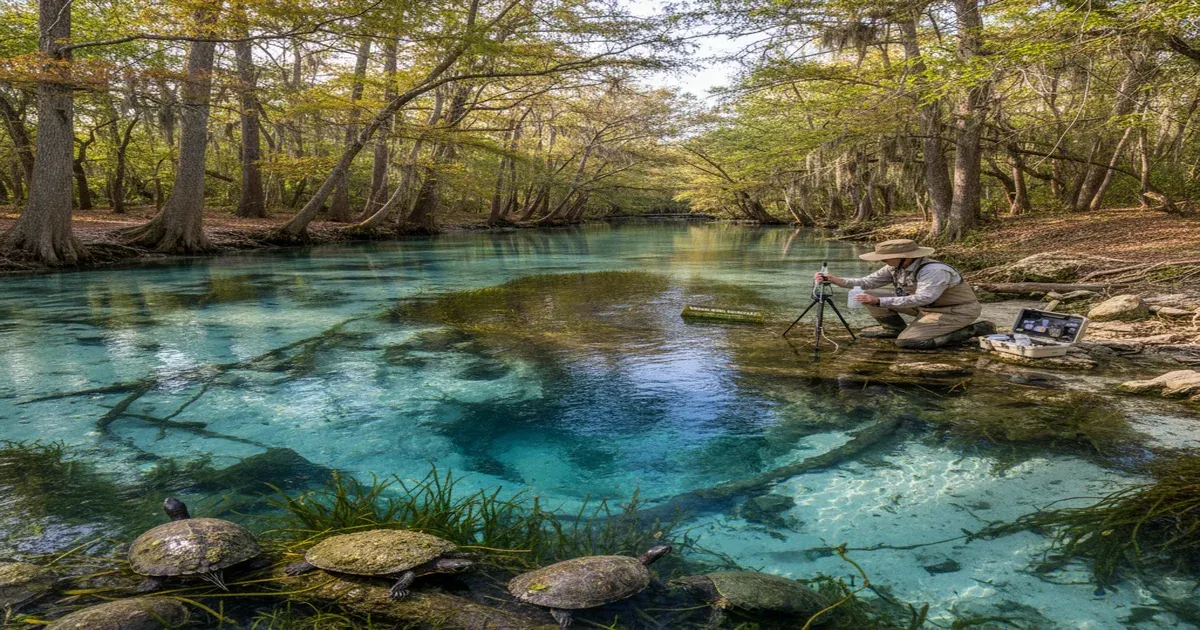
One of the unique aspects of living in North-Central Florida is the presence of major springs that provide real-time windows into aquifer health. Springs near Gainesville — including Poe Springs, Hornsby Spring, and the springs along the Santa Fe River — discharge water that’s been circulating through the Floridan Aquifer for years to decades.
These springs have shown:
- Rising nitrate levels over the past 30+ years
- Detection of trace pesticides and personal care products
- Declining flow rates during droughts, reflecting aquifer stress
- Temperature increases potentially linked to climate patterns
Spring monitoring data is publicly available through the Florida Springs Institute and the Suwannee River Water Management District, and it provides Gainesville-area residents with leading indicators of changes in their drinking water source.
What Gainesville Residents Should Know
- GRU’s treated water meets standards, but if you’re in unincorporated Alachua County on a private well, regular testing is critical. Test annually for bacteria, nitrate, and general chemistry. The Alachua County Health Department offers testing resources.
- If you’re near the Cabot Carbon/Koppers site, follow EPA’s remediation updates and attend community meetings. The contamination plume is monitored, but awareness matters.
- Understand your karst landscape. Don’t dump chemicals near sinkholes or use excessive lawn fertilizer — it’s going straight to your aquifer.
- Consider supplemental filtration. An activated carbon filter removes chloramine taste, many organic compounds, and provides an additional barrier against trace contaminants. Reverse osmosis provides the most comprehensive protection.
If you’re concerned about your water quality, a certified water treatment professional can test your water and recommend the right approach. In Gainesville’s karst environment, where what’s on the surface today can be in the aquifer tomorrow, knowing your water is worth the effort.
Related Reading
- Tallahassee FL Water Quality: Springs and the Floridan Aquifer
- Orlando FL Water Quality: The Floridan Aquifer and PFAS
- Jacksonville FL: Naval Station PFAS Contamination
- Savannah GA Water Quality: Floridan Aquifer Concerns
Sources
- GRU Annual Consumer Confidence Reports
- EPA Cabot Carbon/Koppers Superfund site record of decision and five-year reviews
- Florida Department of Environmental Protection nitrogen source attribution study (2020)
- Florida Geological Survey sinkhole database
- University of Florida Water Institute emerging contaminant research
- Suwannee River Water Management District spring monitoring data