Greenville, North Carolina — population about 93,000, home to East Carolina University — sits on the Tar River in the Coastal Plain of eastern North Carolina. The region faces a combination of water quality challenges that are nationally significant and locally devastating.
GenX and PFAS: North Carolina’s Chemical Corridor
North Carolina made national news when GenX — a replacement PFAS chemical manufactured by Chemours (a DuPont spinoff) at its Fayetteville Works plant — was discovered in the Cape Fear River at levels that alarmed public health officials. While the Chemours plant is southwest of Greenville, the PFAS contamination story extends across eastern NC:
- GenX in surface water — The Cape Fear River system, which doesn’t directly serve Greenville, contains some of the highest GenX levels documented in U.S. drinking water
- Broader PFAS contamination — PFAS compounds from multiple sources (military bases, industrial sites, biosolids) have been detected across eastern North Carolina’s waterways and groundwater
- North Carolina has been studying PFAS extensively — The NC DEQ has conducted statewide PFAS sampling, and results show widespread low-level contamination
- The Tar River — Greenville’s source water from the Tar River has been tested for PFAS, with low-level detections
Greenville Utilities Commission (GUC) has been testing its drinking water for PFAS and reports compliance with current standards. But the evolving regulatory landscape means continued monitoring is essential.
Hog Farms: The Lagoon Problem
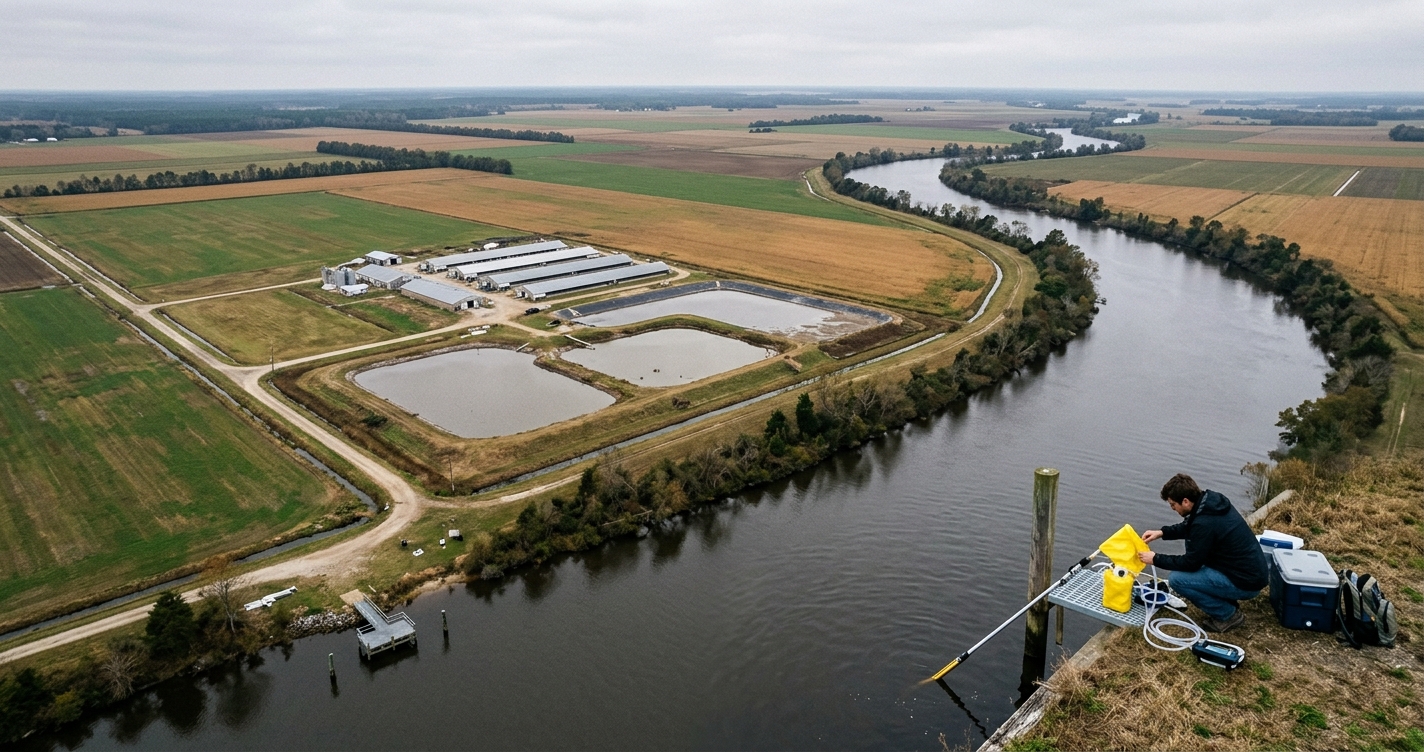
Eastern North Carolina has the densest concentration of industrial hog farms in the United States. Sampson, Duplin, and surrounding counties — within the Tar River and Neuse River watersheds that affect Greenville’s region — are home to roughly 9 million hogs.
The waste management system:
- Open-air lagoons — Hog waste is collected in massive open-air lagoons (essentially ponds of liquid manure)
- Spray fields — The liquefied waste is sprayed onto agricultural fields as fertilizer
- The system fails catastrophically during hurricanes — Floodwaters overflow lagoons, mixing millions of gallons of concentrated animal waste with floodwater that spreads across the landscape
Documented impacts:
- Hurricane Floyd (1999) — The storm flooded hundreds of hog waste lagoons across eastern NC, creating one of the worst agricultural pollution events in U.S. history. Millions of gallons of hog waste entered rivers and groundwater.
- Hurricane Matthew (2016) and Hurricane Florence (2018) — Both events caused additional lagoon overflows, with Florence being particularly devastating
- Nitrate and bacteria — Hog waste lagoons contribute nitrogen, phosphorus, and fecal bacteria to groundwater and surface water in the region
- Environmental justice — Hog farms are disproportionately located near low-income communities and communities of color, raising serious equity concerns
Hurricane Flooding: A Repeating Cycle
Greenville floods. Regularly. The Tar River floods during nearly every tropical system that affects eastern NC:
- Hurricane Floyd (1999) — The Tar River reached unprecedented levels, flooding most of downtown Greenville and causing catastrophic damage
- The city relocated entire neighborhoods after Floyd
- Subsequent hurricanes (Matthew, Florence, Dorian) each caused significant flooding
- Water system impacts — Each flood event can overwhelm wastewater treatment, introduce contamination into the drinking water system, and damage infrastructure
What the Data Shows
From GUC’s most recent Consumer Confidence Report:
- All regulated contaminants within EPA limits
- PFAS detected at low levels below current EPA MCLs
- Trihalomethanes and haloacetic acids within limits
- Nitrate within limits but detectable from watershed sources
- Lead at 90th percentile below action level
- No SDWA violations
What Greenville Residents Should Do
- PFAS monitoring — Ask GUC for the most current PFAS test results. Eastern NC’s proximity to multiple PFAS sources warrants close attention.
- Hurricane preparedness — Keep emergency water supplies (minimum 3 days). Post-flood boil water advisories are common and necessary.
- Private well owners — Test for nitrate, bacteria, and PFAS. Eastern NC’s coastal plain aquifer is vulnerable to contamination from both hog operations and surface sources.
- Don’t swim in flood water — After tropical events, local waterways carry a toxic stew of hog waste, sewage, chemicals, and bacteria. Avoid contact.
- Support lagoon reform — North Carolina has struggled for decades to regulate hog waste management. The lagoon-and-spray system is outdated, and alternatives exist.
Greenville is a vibrant university city with genuine quality of life. But eastern North Carolina’s water quality challenges — PFAS, industrial agriculture, and chronic flooding — are real and require both individual awareness and systemic change.
If you’re concerned about your water quality, a certified water treatment professional can test your water and advise on appropriate solutions.