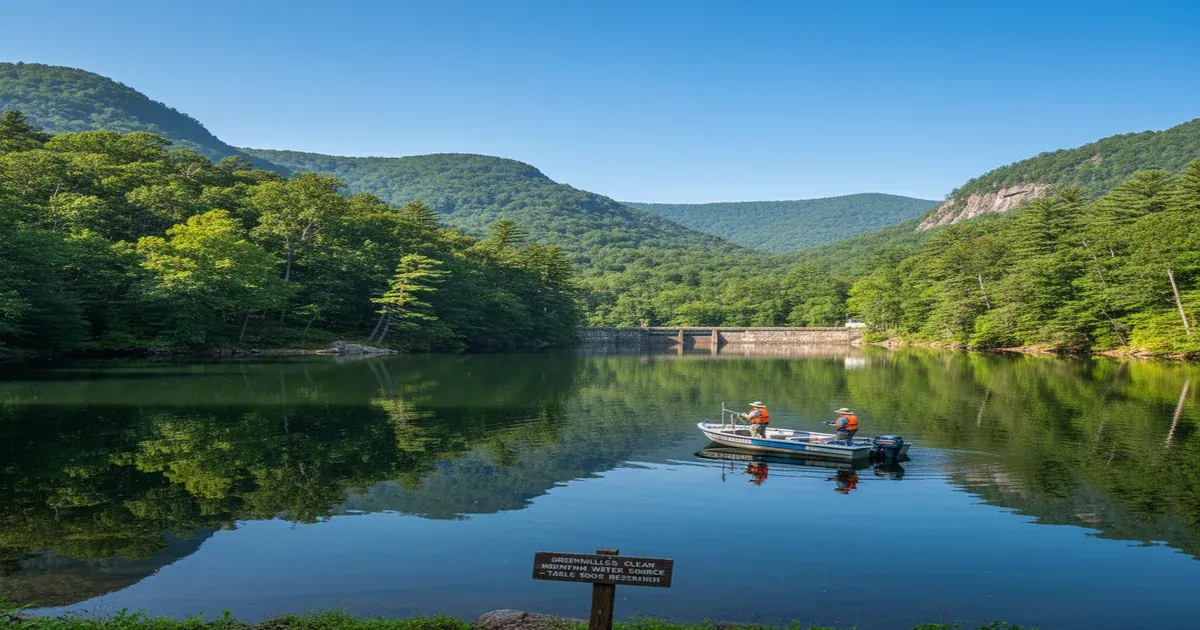
Greenville, South Carolina gets its drinking water from one of the best sources in the Southeast. The Table Rock and North Saluda reservoirs, nestled in the Blue Ridge Mountains north of the city, provide naturally clean water from a heavily forested watershed with minimal development. Greenville Water serves about 500,000 people in the Upstate region.
The source water quality is a genuine competitive advantage — one that Greenville’s rapid growth is putting under increasing pressure.
The Table Rock Advantage
Table Rock reservoir sits at about 1,200 feet elevation in the Blue Ridge foothills. Its watershed is almost entirely forested, with strict land use controls that limit development. The water quality at the intake consistently meets or exceeds all EPA standards before treatment even begins.
Greenville Water operates under enhanced surface water treatment requirements but benefits from source water that makes the treatment plant’s job relatively easy. The utility uses conventional treatment (coagulation, sedimentation, filtration) with chloramine for residual disinfection.
This protected watershed is Greenville’s most valuable natural asset. The city has invested in purchasing and protecting land in the watershed, understanding that source water protection is far cheaper than treating degraded water.
Textile Mill Legacy
Before Greenville was a booming tech and manufacturing hub, it was a textile town. Dozens of mills operated along the Reedy River and other waterways from the late 1800s through the 1990s. These operations used solvents, dyes, bleaches, and other chemicals that contaminated soil and groundwater at numerous locations.
The most notable contamination is from chlorinated solvents — trichloroethylene (TCE) and perchloroethylene (PCE) — used for degreasing in textile and other manufacturing operations. Multiple brownfield and state cleanup sites in the Greenville area have documented groundwater contamination with these compounds.
The Reedy River, which flows through downtown Greenville’s acclaimed Falls Park, has been significantly cleaned up from its mill-era degradation. But groundwater contamination beneath former mill sites persists and requires ongoing monitoring and remediation.
For Greenville Water customers, the mountain reservoir source means textile contamination doesn’t affect drinking water. But the environmental legacy is part of the city’s water story.
Growth Pressure on the Watershed
Greenville is one of the fastest-growing metros in the Southeast. The Upstate region has attracted major employers — BMW, Michelin, automotive suppliers — and the population has surged. Development pressure is creeping toward the watershed boundaries.
More development means more impervious surfaces, more stormwater runoff, more septic systems, and more demand on the water supply. Greenville Water has been clear that protecting the watershed is non-negotiable, but political and economic pressure to allow development is constant.
Climate change adds another variable. Warmer temperatures can affect water quality in reservoirs (algal growth, stratification changes), and shifting precipitation patterns could alter the reliable flow that the mountain watersheds have historically provided.
Distribution System and Lead
Greenville’s distribution system is generally in better condition than many older Eastern cities — much of the growth happened after the lead plumbing era. But older sections of downtown Greenville and some inner-ring neighborhoods do have lead connections and galvanized steel pipes.
Greenville Water has been conducting lead service line inventory and offers testing to customers. The utility’s use of chloramine rather than free chlorine helps with corrosion control. Lead testing results have been below the EPA action level.
Emerging Contaminants
The Greenville-Spartanburg Airport and Donaldson Center (a former Air Force base now used as an industrial park) have documented PFAS contamination in groundwater. The South Carolina Department of Health and Environmental Control has been monitoring the situation.
Greenville Water’s mountain source provides separation from these lowland contamination sources. But private well users in the southern Greenville County area near the airport and Donaldson Center should test for PFAS.
What Residents Can Do
- Appreciate what you have. Greenville’s water source is exceptional. Support watershed protection efforts.
- Filter for chloramine taste. A catalytic carbon filter removes chloramine more effectively than standard activated carbon.
- Test for lead if your home was built before 1986, especially in older Greenville neighborhoods.
- Private well owners: Test for solvents (TCE, PCE) if near former mill sites, and PFAS if near the airport or Donaldson Center.
- Advocate for watershed protection. The Table Rock watershed is under development pressure. It’s worth protecting.
If you’re concerned about your water quality, a certified water treatment professional can test your water and advise on the right approach.
See also our coverage of Charleston water quality and Columbia water quality.
Sources: Greenville Water, SC DHEC, EPA SDWIS, USGS, Greenville County Environmental Health