
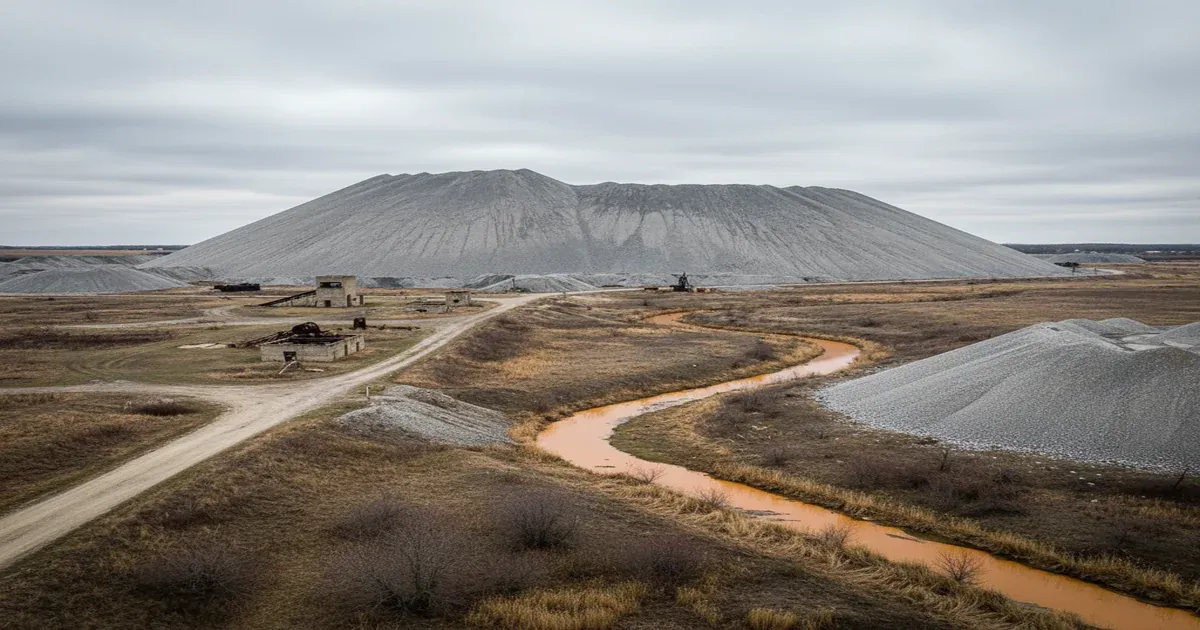
Joplin, Missouri — population about 51,000 — sits at the heart of the Tri-State Mining District, one of the most extensively mined lead and zinc regions in American history. From the 1850s through the 1970s, mines in southwestern Missouri, southeastern Kansas, and northeastern Oklahoma extracted millions of tons of lead and zinc ore.
The mines closed. The contamination stayed.
The Tri-State Mining District: A Superfund-Scale Problem
The Tri-State Mining District covers roughly 2,500 square miles across three states. The EPA has designated multiple Superfund sites within the district, including areas in and around Joplin.
The mining legacy includes:
- Chat piles — Mountains of crusite mining waste (called “chat”) containing lead, zinc, cadmium, and other heavy metals. Joplin had some of the largest chat piles in the district, though many have been removed or capped as part of Superfund cleanup.
- Mine tailings — Fine-grained waste from ore processing, spread across thousands of acres. When it rains, runoff carries metals into streams and infiltrates into groundwater.
- Open mine shafts and subsidence — The Joplin area is riddled with underground mine workings, many unmapped. These provide direct pathways for surface contamination to reach groundwater.
- Acid mine drainage — When sulfide minerals in mine waste are exposed to air and water, they produce sulfuric acid, which mobilizes heavy metals.
The EPA’s Jasper County Superfund Site specifically addresses mining contamination in Joplin’s area. Cleanup has included removing contaminated soil from residential yards, capping waste piles, and installing water treatment systems.
Groundwater Contamination
The karst limestone geology beneath Joplin — the same geology that made lead and zinc mining feasible — also makes groundwater exceptionally vulnerable to contamination:
- Lead — Dissolved lead in groundwater near mine sites regularly exceeds the EPA MCL of 15 µg/L (the action level for lead in drinking water)
- Zinc — While zinc has a secondary (aesthetic) standard of 5 mg/L rather than a health-based MCL, elevated zinc makes water taste metallic and can cause gastrointestinal issues
- Cadmium — A toxic heavy metal that accumulates in the body, found in mine waste and associated groundwater
- Manganese — Naturally elevated in the region and mobilized by mining activity
The karst system features sinkholes, caves, and underground streams that can transport contaminants rapidly over long distances. A spill or leaching event miles from Joplin can show up in local groundwater within days or weeks.
Joplin’s Municipal Water Supply
The good news: Joplin’s municipal water system does not rely on local groundwater. The city draws its water from:
- Shoal Creek and Spring River (surface water sources)
- Treated at the city’s water treatment plant with conventional processes
According to the city’s most recent Consumer Confidence Report, the treated water meets all EPA standards. The surface water sources, while not immune from mining-related runoff, are upstream of the worst contamination zones and receive full treatment before distribution.
Detected contaminants (within limits) include:
- Trihalomethanes and haloacetic acids from chlorine disinfection
- Low levels of lead at the tap (from household plumbing, not the source water)
- Detectable levels of barium and fluoride
The city has not reported violations of the Safe Drinking Water Act in recent years.
The Bigger Risk: Private Wells
Residents of Jasper County who rely on private wells face far greater exposure to mining-related contaminants. The Missouri Department of Natural Resources estimates that thousands of private wells in the Tri-State District tap into contaminated aquifers.
Key risks for private well owners:
- No monitoring requirement — Missouri doesn’t require private well testing
- Karst unpredictability — Water quality can change dramatically after rain events as contaminated surface water infiltrates quickly
- Legacy contamination — Even in areas where surface cleanup has occurred, metals persist in groundwater for decades or longer
- Multiple contaminants — Mining-affected wells often show elevated levels of several metals simultaneously, complicating treatment
The EPA has provided alternative water supplies (bottled water, connections to municipal systems) to some private well owners near the worst contamination, but the program doesn’t cover all affected wells.
Post-Tornado Complications
The devastating EF5 tornado that struck Joplin on May 22, 2011 killed 158 people and destroyed roughly one-third of the city. The rebuilding effort disturbed contaminated soils in many areas, and demolition debris was staged on sites with mining waste. While environmental monitoring was conducted during reconstruction, the tornado added another layer of complexity to Joplin’s contamination history.
What Joplin Residents Should Do
- Municipal customers — Your water is treated and tested. Review the annual CCR and note any lead results, which typically reflect household plumbing rather than source water.
- Private well owners — Test for lead, zinc, cadmium, manganese, and bacteria at minimum. The Missouri Department of Natural Resources can direct you to certified labs.
- Know your property history — Check whether your property was included in EPA’s residential soil cleanup program. The Jasper County Superfund site has detailed maps of affected areas.
- Don’t disturb chat — If you have mining waste on or near your property, don’t dig in it, drive on it, or let children play on it. Lead-contaminated dust is a significant exposure pathway.
- Consider whole-house treatment — For private wells with multiple heavy metals, a multi-stage treatment system (sediment filter + activated carbon + reverse osmosis) provides the most comprehensive protection.
Joplin has rebuilt itself remarkably after the 2011 tornado, and the community’s resilience is genuine. But the mining legacy is measured in centuries, not years, and the contamination beneath the surface won’t be cleaned up in our lifetimes.
Water quality challenges like these aren’t unique to this area. Residents in Columbia, Missouri Water Quality and St. Louis Water Quality face similar contamination concerns, while Springfield MO Water Quality deals with its own set of water infrastructure and quality issues.
If you’re concerned about your water quality, a certified water treatment professional can test your water and advise on the right treatment approach for your specific contaminants.