
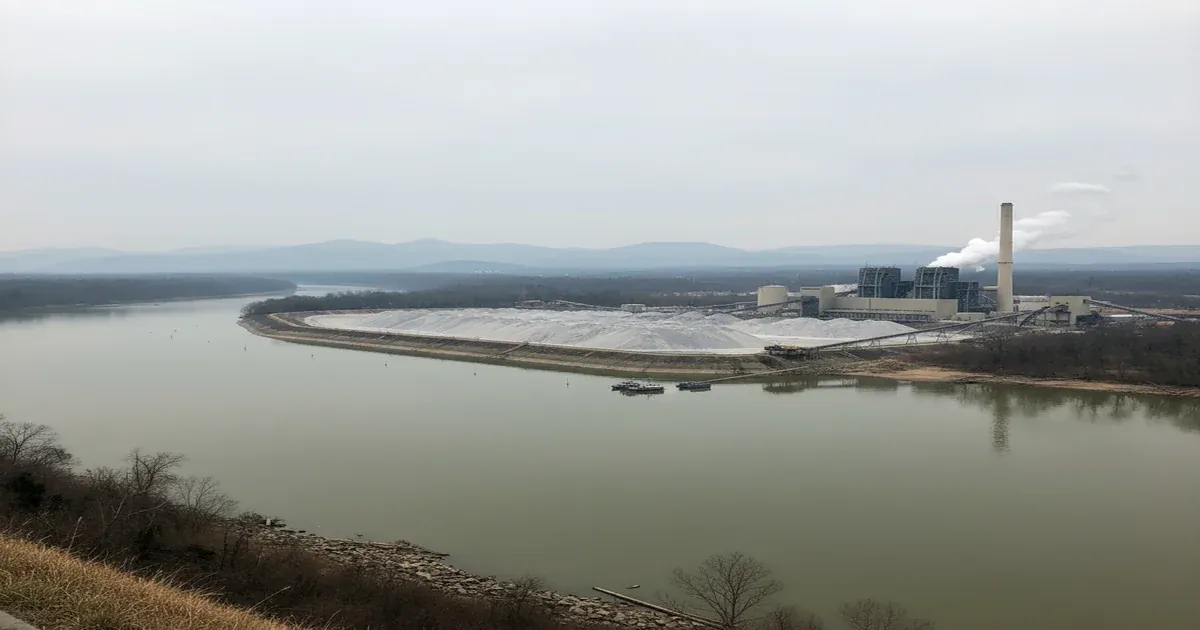
Knoxville straddles the Tennessee River in the heart of the Ridge and Valley region of East Tennessee. The city’s water — supplied by the Knoxville Utilities Board (KUB) — comes from Fort Loudoun Lake, a TVA reservoir on the Tennessee River. It’s a scenic source. It’s also downstream from some of the most consequential environmental decisions of the 20th century.
The Tennessee River: A Working River
The Tennessee River is the largest tributary of the Ohio River, draining 40,900 square miles across seven states. By the time it reaches Knoxville, it has collected runoff from Appalachian farmland, coal country, and dozens of small towns with varying wastewater treatment capabilities.
KUB’s Mark B. Whitaker Water Treatment Plant draws from Fort Loudoun Lake and can process up to 86 million gallons per day. The treatment process includes conventional coagulation, sedimentation, filtration, and disinfection with chloramines rather than free chlorine — a choice that reduces disinfection byproduct formation but requires more careful system management.
The Tennessee Department of Environment and Conservation (TDEC) has classified portions of the Tennessee River in the Knoxville reach as impaired for E. coli, siltation, and nutrients. Urban stormwater runoff and agricultural activity upstream are the primary drivers.
The Kingston Coal Ash Spill: East Tennessee’s Environmental Disaster
On December 22, 2008, a containment dike failed at TVA’s Kingston Fossil Plant, roughly 40 miles west of Knoxville. Over 5.4 million cubic yards of coal ash slurry — enough to fill 1,660 Olympic swimming pools — poured into the Emory River, a tributary of the Tennessee River.
It was the largest industrial spill in American history. The ash contained arsenic, mercury, lead, selenium, barium, and other heavy metals. The cleanup took years, cost over $1 billion, and left a devastating health toll among the workers who handled the contaminated material — many of whom later developed cancers and respiratory diseases.
While the spill’s direct path was down the Emory and Clinch rivers rather than directly through Knoxville’s intake, it exposed the fundamental vulnerability of any community drawing water from the Tennessee River system. TVA operates multiple coal and nuclear facilities along the river’s tributaries, and each one represents a potential contamination source.
Coal ash ponds remain at several TVA facilities in East Tennessee. The EPA’s Coal Combustion Residuals (CCR) rule has forced utilities to close unlined ponds and monitor groundwater, but the transition is slow and the legacy contamination at many sites is extensive.
Oak Ridge: The Nuclear Neighbor
Twenty-five miles west of Knoxville lies Oak Ridge — the “Secret City” built during World War II to enrich uranium for the Manhattan Project. The Oak Ridge Reservation encompasses three major DOE facilities: Y-12 National Security Complex, Oak Ridge National Laboratory (ORNL), and the former K-25 gaseous diffusion plant.
Decades of nuclear weapons production and research left substantial contamination across the reservation. Mercury, uranium, technetium-99, PCBs, and volatile organic compounds have been documented in soil, groundwater, and surface water on and around the DOE sites. The Clinch River — which borders the reservation and flows into the Tennessee River upstream of Knoxville — has been subject to fish consumption advisories due to PCB and mercury contamination.
The DOE’s ongoing cleanup at Oak Ridge is one of the largest environmental remediation programs in the world. While Knoxville’s water intake is downstream of the Clinch River confluence, KUB monitors for radiological and chemical contaminants that could be associated with Oak Ridge operations. To date, treated drinking water has not shown concerning levels of these contaminants — but the monitoring exists for a reason.
Karst Geology: When the Ground Is Swiss Cheese
East Tennessee sits on the Knox Group limestones and dolomites — classic karst terrain. The bedrock is riddled with sinkholes, caves, and underground channels that provide direct conduits between the surface and groundwater.
For water quality, karst geology means contamination can move fast and unpredictably. A chemical spill, leaking septic system, or agricultural runoff that reaches a sinkhole can travel miles through underground passages and emerge in springs or wells far from the original source. Conventional assumptions about groundwater filtration and travel time don’t apply in karst.
Knox County has experienced documented cases of groundwater contamination via karst pathways. Private wells in rural parts of the county are particularly vulnerable — there’s no treatment plant between the aquifer and the tap. The Tennessee Department of Health recommends annual testing for anyone relying on private well water in karst regions.
Agricultural Runoff and Development Pressure
The rapid growth of Knoxville’s suburbs — particularly in western Knox County and neighboring Loudon and Blount counties — has converted farmland and forest to impervious surfaces at a steady pace. More development means more stormwater runoff carrying petroleum, lawn chemicals, and sediment into tributaries of the Tennessee River.
Upstream agriculture contributes its own load. The French Broad River, which joins the Tennessee at Knoxville, drains intensive farming regions in western North Carolina. Nitrogen, phosphorus, and pesticides from these operations affect source water quality at KUB’s intake.
What Knoxville Residents Can Do
KUB’s treated water meets all federal drinking water standards, and the utility publishes detailed annual water quality reports. The chloramine disinfection system is effective but means residents should be aware of a few specifics:
- Don’t use tap water directly in fish tanks — chloramines are toxic to fish and aren’t removed by simply letting water stand (unlike free chlorine).
- Test older homes for lead — Knoxville’s older neighborhoods may have lead service lines or lead solder in copper plumbing.
- Private well owners: test annually — karst geology makes East Tennessee wells vulnerable to bacterial contamination and agricultural chemicals.
- Review the CCR — KUB’s Consumer Confidence Report is published annually and details all detected contaminants.
If you’re concerned about your water quality, a certified water treatment professional can help you test your water and recommend the right solution for your home.