
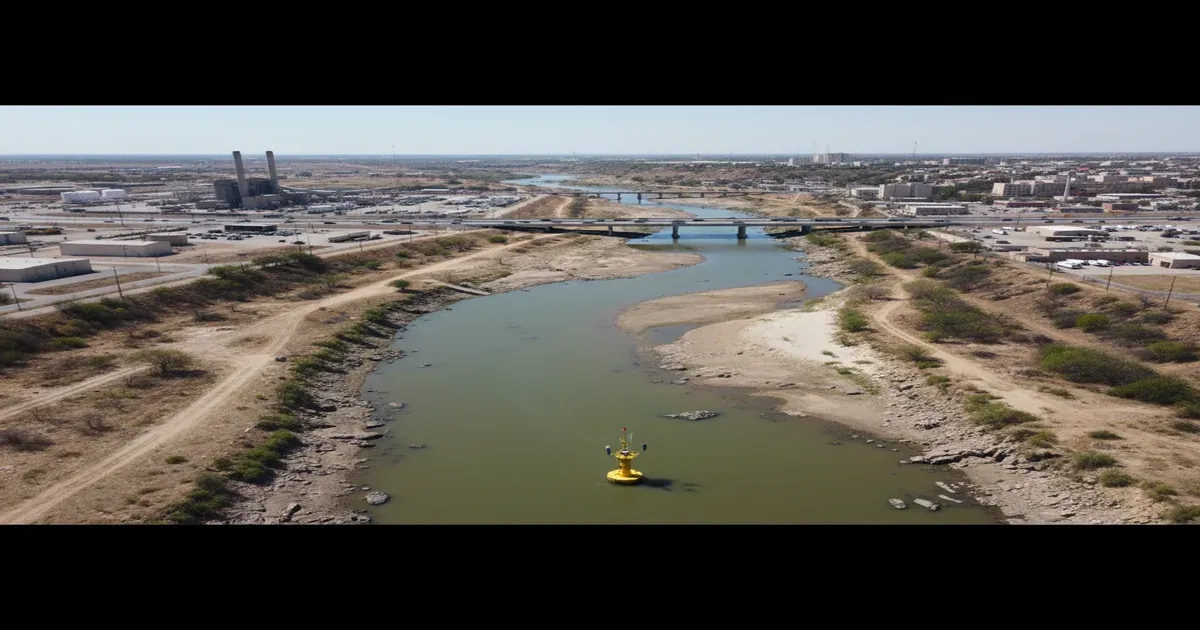
Laredo, Texas — population roughly 255,000 — is the largest inland port on the US-Mexico border and the county seat of Webb County. The city sits on the north bank of the Rio Grande, directly across from Nuevo Laredo, Tamaulipas, Mexico. It’s a trade hub, a cultural crossroads, and a city with water challenges that reflect both its geography and its position on a shared international river.
The Rio Grande is Laredo’s primary drinking water source — a challenge shared with El Paso upstream. And the Rio Grande is under pressure.
Drawing From a Stressed River
Laredo’s water utility treats approximately 40 million gallons per day from the Rio Grande, serving the city and surrounding Webb County communities. The treatment plant on the riverbank processes surface water that has traveled hundreds of miles from its headwaters in Colorado through New Mexico before reaching the Texas border.
By the time the Rio Grande reaches Laredo, it’s been drawn down by agricultural irrigation (particularly in New Mexico’s middle Rio Grande valley), municipal demands from upstream cities including El Paso and Ciudad Juárez, and evaporation in the arid climate. During drought years, the river can drop to alarmingly low flows.
The Falcon and Amistad international reservoirs upstream, jointly managed by the US and Mexico through the International Boundary and Water Commission (IBWC), provide some buffer storage. But both reservoirs have seen historically low levels during extended droughts. When storage drops, so does Laredo’s margin of safety.
Disinfection Byproducts: A Persistent Challenge
Laredo has faced recurring compliance challenges with disinfection byproducts (DBPs) — specifically total trihalomethanes (TTHMs) and haloacetic acids (HAA5). These chemicals form when chlorine used to kill pathogens reacts with organic matter in the source water.
The Rio Grande at Laredo carries significant organic loading — from upstream agricultural return flows, wastewater discharges (both US and Mexican), and natural vegetation decay in the river’s riparian zones. When this organic-rich water meets the chlorine in the treatment process, elevated DBP levels can result.
The Texas Commission on Environmental Quality (TCEQ) has issued violations to Laredo’s water system for exceeding DBP limits in distribution system monitoring points. The city has invested in treatment upgrades — including enhanced coagulation and consideration of alternative disinfectants — to reduce DBP formation. But the root cause is source water quality, and the Rio Grande’s organic loading isn’t something Laredo can control alone.
Long-term exposure to elevated TTHMs and HAA5 has been associated with increased cancer risk, according to EPA risk assessments. The regulatory limits exist to minimize this risk, and Laredo has been working to stay within them — but the geographic reality of treating organically-loaded river water in a hot climate makes it a persistent engineering challenge.
Cross-Border Contamination Concerns
The Rio Grande is an international river, and pollution flows both ways. Mexican wastewater discharges from Nuevo Laredo — a city of over 400,000 with historically inadequate treatment infrastructure — have raised concerns about raw sewage entering the river upstream of or near Laredo’s intake.
The IBWC has documented instances of inadequately treated wastewater crossing the border via the river. While Laredo’s treatment plant is designed to handle microbial contamination (that’s what the chlorination is for), high bacterial and viral loads in the source water increase treatment demands and risk.
In recent years, both US and Mexican authorities have invested in wastewater treatment upgrades in the border region. A new treatment plant in Nuevo Laredo has improved conditions. But compliance on the Mexican side remains inconsistent, and during heavy rainfall events, untreated overflows can reach the river.
Agricultural chemicals from both sides of the border also end up in the Rio Grande. Herbicides, pesticides, and fertilizers from irrigated farmland in the Rio Grande valley contribute to the organic loading and chemical mix that Laredo’s treatment plant must handle.
Infrastructure and Distribution System Challenges
Laredo has grown rapidly — the population roughly doubled between 1990 and 2020. That growth has strained water infrastructure. Some of the older distribution system pipes date to mid-20th century construction, while newer areas have modern PVC piping.
Water main breaks, pressure fluctuations, and dead-end distribution lines can affect water quality at the tap even when treatment plant output meets standards. Laredo’s water utility has been investing in pipe replacement and system upgrades, but replacing decades of infrastructure in a fast-growing city takes time and money.
The city has also expanded its water system footprint significantly to serve new development on the city’s northern and eastern edges. Long distribution runs in a hot climate can contribute to DBP formation in the pipe — chlorinated water sitting in warm pipes gives the disinfection byproduct reactions more time to proceed.
Drought Vulnerability
South Texas is semi-arid. Laredo averages about 20 inches of rainfall per year, and summer temperatures routinely exceed 100°F. The city’s dependence on the Rio Grande — with no significant groundwater backup — makes it vulnerable to extended drought.
The 2011-2014 drought pushed Falcon Reservoir to historic lows. Laredo implemented water restrictions and conservation measures. The experience highlighted the fragility of relying on a single surface water source in a region where climate models project increasing drought frequency and intensity.
Webb County does have some groundwater, but the Carrizo-Wilcox aquifer underlying the region produces brackish water that requires treatment before use. The city has explored supplemental groundwater and desalination options, but these are expensive alternatives to surface water treatment.
Water conservation has become a permanent priority. Laredo’s per capita water use has decreased through conservation programs, tiered pricing, and public awareness campaigns. But in a city that continues to grow, total demand keeps rising even as individual use falls.
What Laredo Residents Can Do
Review Laredo’s annual Consumer Confidence Report for disinfection byproduct levels and any TCEQ violations. Pay attention to the TTHM and HAA5 numbers — these are the metrics most likely to approach or exceed limits.
If you’re concerned about disinfection byproducts, a point-of-use activated carbon filter can reduce TTHM levels at the tap. For more comprehensive treatment, reverse osmosis systems remove both DBPs and a wide range of other contaminants.
During drought conditions, follow water restriction guidelines — both to conserve supply and because low-flow conditions in the distribution system can affect water quality.
If you’re on a private well in Webb County, test for total dissolved solids, nitrates, and bacterial contamination. The brackish groundwater in the region may require treatment for taste and safety.
If you’re concerned about your water quality, a certified water treatment professional can test your water and recommend solutions appropriate for Laredo’s specific challenges — including DBP reduction and TDS management.
The Bigger Picture
Laredo’s water challenges are a preview of what many border and arid-region cities will face in coming decades: an overstressed source, climate pressure on supply, cross-border coordination challenges, and rapid growth straining infrastructure.
The city has made real investments in treatment and conservation. But the fundamental constraint — dependence on a river that every upstream user also depends on, in a region getting hotter and drier — isn’t something local investment alone can solve. Federal investment in border water infrastructure, continued IBWC coordination, and regional water planning all matter for Laredo’s long-term water security.
For residents, the takeaway is practical: the water is treated and monitored, but disinfection byproducts have been a recurring issue. Know what’s in your water, invest in point-of-use treatment if it concerns you, and stay informed about the system’s performance.