
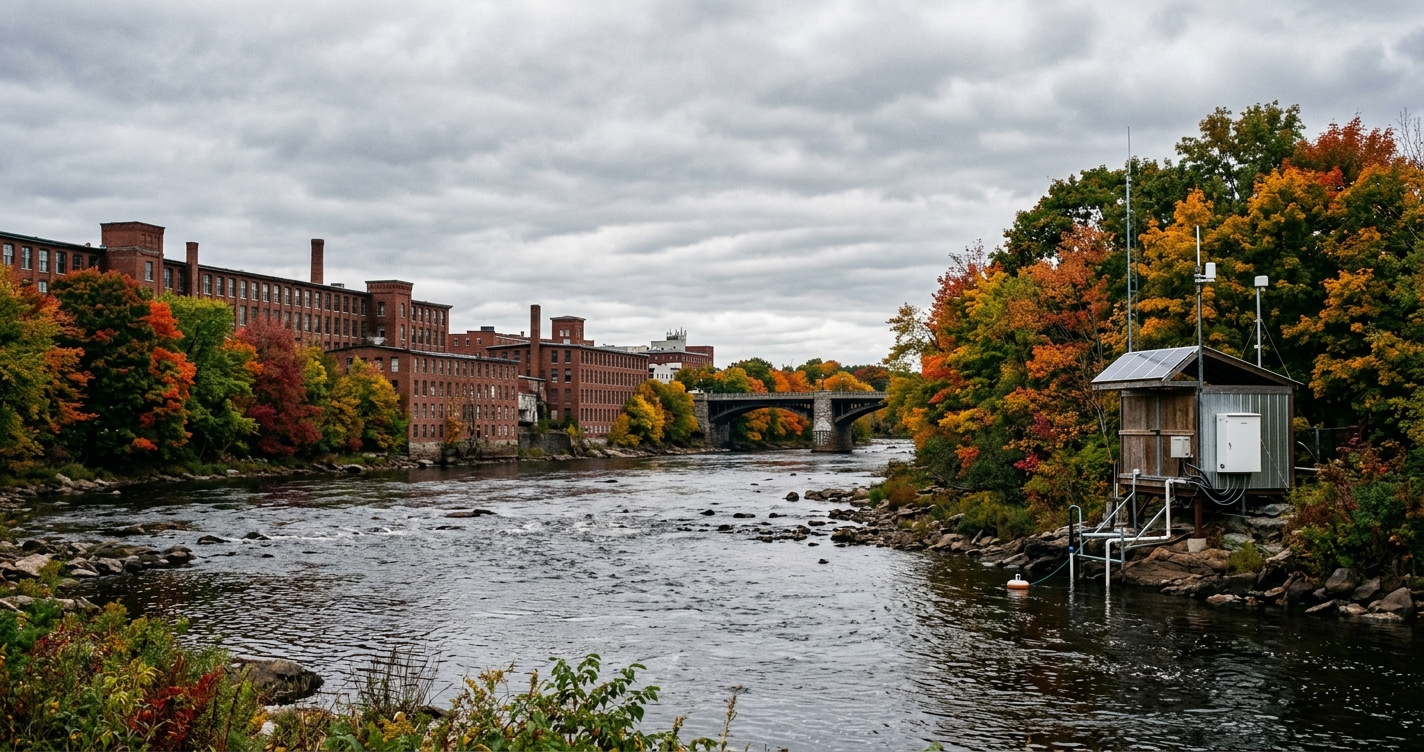
Lewiston and Auburn, Maine — twin cities with a combined population of about 60,000 — straddle the Androscoggin River in central Maine. The river powered the region’s textile and paper mills for over a century, becoming one of the most polluted rivers in America in the process.
The cities’ drinking water, wisely, comes from somewhere else entirely.
Lake Auburn: A Rare Unfiltered Supply
The Auburn Water District and Lewiston Water Division draw drinking water from Lake Auburn, a 2,260-acre lake that qualifies for filtration avoidance under EPA rules. Like Portland’s Sebago Lake, Lake Auburn is one of roughly 50 surface water supplies in the U.S. clean enough to skip full filtration.
The system uses:
- UV disinfection
- Chlorine for distribution system residual
- No filtration (by EPA waiver due to source water quality)
The watershed is carefully managed, with development restrictions and monitoring to maintain the lake’s water quality. The Auburn Water District owns significant watershed land.
But maintaining filtration avoidance status requires constant vigilance — any deterioration in source water quality could trigger a requirement to build a filtration plant, a multi-million-dollar investment.
The Androscoggin: From Disgrace to Recovery
The Androscoggin River’s pollution story is famous in environmental history. By the 1960s, the river was:
- Receiving untreated waste from multiple paper mills
- Thick with foam, discolored, and foul-smelling
- Essentially biologically dead in some reaches
Maine Senator Edmund Muskie, who grew up in Rumford on the Androscoggin, cited the river’s condition as inspiration for the Federal Water Pollution Control Act of 1972 (Clean Water Act).
The recovery since then has been dramatic:
- Paper mills have closed or installed treatment systems
- Fish have returned to the river
- Recreational use has resumed
But legacy contamination remains in river sediments — dioxin from paper mill bleaching processes, heavy metals, and other industrial chemicals. The Androscoggin is not the drinking water source for Lewiston-Auburn, but it’s the ecological and cultural heart of the community.
PFAS Biosolids: Maine’s Statewide Crisis
Maine’s PFAS contamination story is among the worst in the nation, and it centers on biosolids (sewage sludge) that were applied to farmland for decades as fertilizer. The crisis hit central Maine hard:
- Farms near Lewiston-Auburn received biosolids that have since tested positive for PFAS
- Dairy and beef operations have been affected — some forced to stop selling products
- Groundwater contamination — PFAS from biosolids has leached through soil into shallow aquifers on and near affected farms
- Maine’s 2022 biosolids ban stopped future applications, but decades of accumulated PFAS remain in soils
For Lewiston-Auburn, the concern is whether PFAS from biosolid-affected areas could migrate into the Lake Auburn watershed. The water district monitors for PFAS, and current results show compliance with Maine’s strict 20 ppt MCL.
What the Data Shows
From the Auburn Water District and Lewiston Water Division’s most recent CCRs:
- All regulated contaminants within EPA and Maine state limits
- PFAS detected at very low levels, well below Maine’s 20 ppt MCL
- No filtration required (filtration avoidance maintained)
- Disinfection byproducts within limits
- Lead at 90th percentile below action level
- No SDWA violations
What Lewiston-Auburn Residents Should Do
- Support Lake Auburn protection — The unfiltered status is a cost-saving and quality asset. Advocate for continued watershed protection.
- Private well owners — Test for PFAS, arsenic, radon, and bacteria. Central Maine’s geology and biosolids history both warrant testing.
- Near farms that received biosolids — If your property is near farmland where sludge was historically applied, PFAS testing of well water is critical. Maine DEP can help identify affected sites.
- Municipal water is excellent — Lake Auburn provides some of the cleanest drinking water in the Northeast. Review the CCR annually.
- Androscoggin recreation — The river has recovered dramatically but check current water quality advisories before swimming, especially after heavy rain.
Lewiston-Auburn’s water story has two sides: a triumph of environmental protection (Lake Auburn) and a cautionary tale of industrial pollution (the Androscoggin) and emerging contamination (PFAS biosolids). The first story provides confidence; the second provides motivation to stay vigilant.
If you’re concerned about your water quality, a certified water treatment professional can test your water and recommend appropriate solutions.