
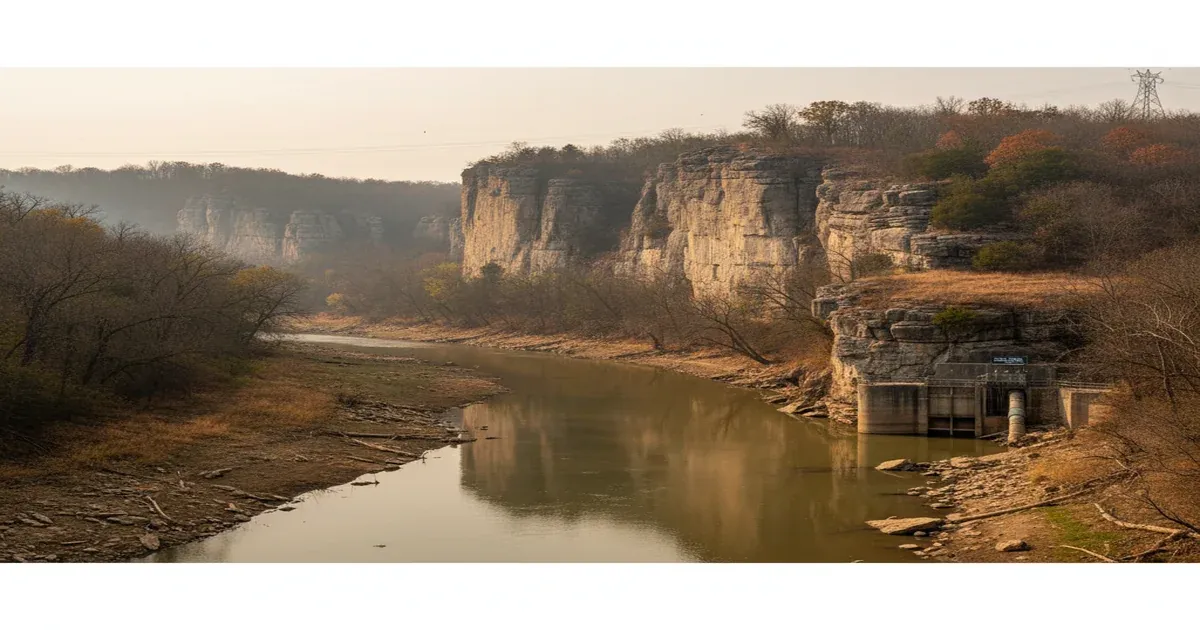
Lexington, Kentucky — the Horse Capital of the World — gets its drinking water from Kentucky American Water, which draws primarily from the Kentucky River at Pool 9 near Frankfort and from the Jacobson Reservoir. The utility serves about 310,000 people.
The Kentucky River drains a vast watershed that includes Appalachian coal country, the Bluegrass farming region, and multiple urban areas. What happens upstream determines what arrives at the intake — and a lot happens upstream.
Coal Mining Legacy
The upper Kentucky River watershed extends into eastern Kentucky’s coal mining region. Decades of surface and underground mining have left behind acid mine drainage, elevated heavy metals, and sediment in tributaries that feed the Kentucky River.
Acid mine drainage occurs when water contacts exposed coal seams and mine waste, producing sulfuric acid that dissolves heavy metals like iron, manganese, aluminum, and selenium. While the Kentucky River’s flow dilutes these contributions by the time water reaches Lexington’s intake, seasonal variations and storm events can cause spikes in metals and turbidity.
Kentucky’s Division of Water and the Office of Surface Mining oversee reclamation at former mine sites, but the legacy is enormous. Some abandoned mines have been draining acid for decades with no realistic cleanup timeline.
Agricultural Runoff: The Bluegrass Paradox
The Bluegrass Region’s famous horse farms and crop agriculture contribute nutrients, pesticides, and sediment to streams that feed the Kentucky River and Jacobson Reservoir. The irony of Lexington’s setting — gorgeous rolling farmland that also degrades source water quality — isn’t lost on the water utility.
Phosphorus and nitrogen from fertilizer and animal waste drive algal growth in the Kentucky River and its reservoirs. During warm months, algae produce taste and odor compounds (geosmin and MIB) that make the water earthy or musty-tasting. The treatment plant can handle these, but seasonal taste complaints are common.
Atrazine, a widely used herbicide in the Bluegrass Region, has historically been detected in the Kentucky River at levels that occasionally approach the EPA MCL of 3 ppb, particularly during spring runoff. Kentucky American Water uses powdered activated carbon when needed to keep atrazine levels in compliance.
Chemical Spill Vulnerability
The Kentucky River corridor has experienced chemical spills that threatened water supply. The river flows through industrial areas in Frankfort and Richmond, and transportation corridors (rail and highway) cross the watershed at numerous points.
Perhaps the most alarming example for the entire state was the 2014 Elk River chemical spill in Charleston, West Virginia — a neighboring state dealing with the same Appalachian industrial geography. While that event didn’t affect Lexington directly, it highlighted how vulnerable river-based water supplies are to upstream industrial accidents.
Kentucky American Water has invested in early warning monitoring systems upstream of its intake and maintains contingency plans for contamination events. But the fundamental vulnerability of drawing water from a river that flows through industrial and agricultural areas remains.
Infrastructure and Lead
Lexington’s water distribution includes pipes dating to the mid-1900s. Kentucky American Water has been working through lead service line inventory and replacement. The city’s older neighborhoods, particularly in downtown and the inner ring of pre-war housing, are most likely to have lead connections.
Kentucky’s childhood lead poisoning rates are higher than the national average in some counties, reflecting the combination of old housing (lead paint) and old plumbing. Testing at the tap is the only way to know your home’s lead exposure.
Drought Vulnerability
Central Kentucky experiences periodic drought, and the water supply system has limited storage relative to demand. During the 2007 drought, water restrictions were implemented and the Kentucky River fell to historic low levels. Low flow concentrates contaminants and stresses the treatment process.
The construction of new reservoir capacity has been debated for decades but faces environmental and cost hurdles. For now, the system depends on adequate rainfall to maintain supply.
What Residents Can Do
- Filter for taste. Activated carbon handles the seasonal taste and odor issues from algae and chlorine. It’s the most practical upgrade for most Lexington residents.
- Test for lead. Especially in pre-1970 housing. Kentucky American Water can help with testing.
- Watch for advisories. Chemical spill or algal bloom events may trigger notices. Follow them.
- Private well owners in Fayette and surrounding counties: Test for bacteria, nitrates, atrazine, and any relevant agricultural chemicals.
- Conserve during drought. Low river flow means harder treatment and higher risk. Conservation extends the margin of safety.
If you’re concerned about your water quality, a certified water treatment professional can test your water and recommend the right treatment.
See also our coverage of Knoxville water quality and Chattanooga water quality.
Sources: Kentucky American Water, Kentucky DEP, EPA SDWIS, USGS, Lexington-Fayette County Health Department