
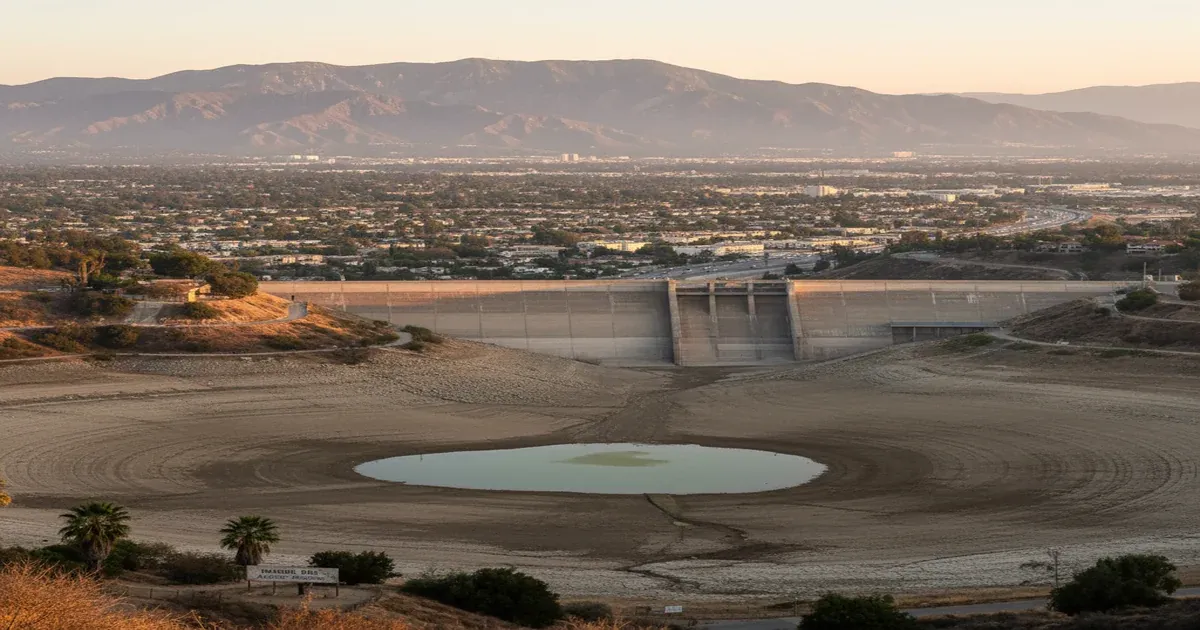
Los Angeles has always had a complicated relationship with water. The city exists in a semi-arid basin that receives about 15 inches of rain per year — far less than what’s needed to support nearly 4 million residents. The solution, dating back over a century, has been to import water from increasingly distant and increasingly strained sources.
Now add PFAS contamination in local groundwater, aging infrastructure beneath one of the country’s largest cities, and a drought cycle that keeps intensifying. LA’s water challenges are as sprawling as the city itself.
Where LA’s Water Comes From
The Los Angeles Department of Water and Power (LADWP) — the nation’s largest municipal utility — supplies water from three main sources:
- Los Angeles Aqueduct: Built in 1913, this system brings snowmelt from the Eastern Sierra Nevada (Owens Valley and Mono Basin) to LA. It once supplied the majority of the city’s water but now accounts for roughly 30-40% in normal years and much less during drought.
- Metropolitan Water District (MWD): The regional wholesaler provides imported water from the Colorado River (via the Colorado River Aqueduct) and Northern California (via the State Water Project/California Aqueduct). MWD water typically accounts for 40-60% of LA’s supply.
- Local groundwater: Pumped from the San Fernando Basin, Central Basin, and other local aquifers. Groundwater historically provided 10-15% of LA’s supply but has been targeted for expansion — until PFAS contamination complicated those plans.
This three-legged stool is inherently fragile. Two of the three sources — the LA Aqueduct and MWD imports — travel hundreds of miles through infrastructure that crosses earthquake fault zones, passes through drought-affected regions, and depends on snowpack that’s declining due to climate change.
PFAS: The Contamination That Shut Down Wells
Perhaps the most pressing current threat to LA’s water supply is PFAS (per- and polyfluoroalkyl substances) contamination in local groundwater.
PFAS contamination in the San Fernando Basin — LA’s largest local groundwater source — has been documented since the early 2000s, but the scope of the problem became clearer as testing improved. Sources include:
- Industrial discharges from aerospace and manufacturing facilities in the San Fernando Valley
- Firefighting foam (AFFF) used at airports (Burbank, Van Nuys) and military installations
- Landfill leachate from sites that accepted PFAS-containing products
The LADWP was forced to shut down or reduce pumping from multiple groundwater wells when PFAS levels exceeded California’s notification and response levels. In a city already short on local water, losing groundwater capacity pushes even more demand onto imported supplies.
The EPA finalized enforceable PFAS drinking water standards in 2024, setting maximum contaminant levels of 4 parts per trillion for PFOA and PFOS. Meeting those standards requires advanced treatment — typically granular activated carbon (GAC) or ion exchange systems — at affected well sites.
LADWP has invested in PFAS treatment at several well sites and is pursuing Superfund-style litigation against polluters to recover costs. But the treatment is expensive (millions of dollars per well site), and the contamination plume in the San Fernando Basin is extensive.
Drought: The Chronic Threat
California’s drought cycles have intensified in recent decades, and each one stresses LA’s imported water supply:
- The 2012-2016 drought was the most severe in California’s recorded history. State reservoirs hit historic lows. Governor Jerry Brown imposed mandatory statewide water restrictions for the first time.
- The 2020-2023 drought brought another round of emergency restrictions, reduced MWD allocations, and renewed urgency around water recycling and conservation.
LA has made genuine progress on conservation. Per capita water use has dropped significantly since the 1980s, driven by tiered pricing, turf replacement programs, and efficient appliances. But conservation alone can’t solve the fundamental supply problem: LA needs more water than its local sources can provide, and the imported sources are increasingly unreliable.
The Recycled Water Push
LA’s most ambitious water strategy is direct potable reuse — essentially treating wastewater to drinking water standards and putting it back into the supply. The Hyperion Water Reclamation Plant, LA’s largest wastewater facility, currently discharges about 260 million gallons per day of treated wastewater into Santa Monica Bay.
The city’s goal is to recycle 100% of that water by 2035, potentially adding a significant new local supply source. The technology exists — advanced treatment (microfiltration, reverse osmosis, UV/advanced oxidation) can produce water that exceeds drinking water standards. But the infrastructure investment is massive, regulatory approvals are complex, and public acceptance of “toilet to tap” (as critics call it) remains a political challenge.
Aging Infrastructure
Beneath LA’s streets lie approximately 7,300 miles of water mains, many dating to the early-to-mid 20th century. The system experiences hundreds of water main breaks per year, with some breaks making national news:
- High-profile breaks on Sunset Boulevard, in Hollywood, and near UCLA have sent millions of gallons of water flooding through streets — dramatic reminders of the system’s age.
- The LADWP estimates it needs to replace or rehabilitate approximately 325 miles of pipe per year to keep the system in good condition. Actual replacement rates have historically been lower.
The city has accelerated its pipe replacement program and invested in leak detection technology, but the infrastructure backlog remains substantial.
Lead in LA’s Water
Unlike many Midwest and East Coast cities, LA has relatively few lead service lines — California banned lead pipes earlier than many states, and much of LA’s residential construction occurred after lead pipes fell out of common use. However:
- Older homes (pre-1986) may still have lead solder in copper plumbing
- Brass fixtures and fittings can contain lead and leach it into water, especially with hot water or water that sits in pipes
- Schools and older commercial buildings have been found to have elevated lead levels at individual fixtures
LADWP’s annual water quality reports show system-wide lead levels well below the federal action level, but individual fixtures in older buildings can test higher.
Related Reading
- San Diego’s Imported Water and PFAS — LA’s southern neighbor is pioneering water recycling while fighting PFAS.
- San Francisco’s Hetch Hetchy Water and PFAS — Northern California’s approach to PFAS differs with watershed-sourced supply.
- Sacramento’s Water Quality and PFAS — California’s capital faces its own PFAS challenges in the Sacramento-San Joaquin Delta.
- Phoenix Water Supply Challenges — Another drought-stressed western metro competing for Colorado River water.
- PFAS Treatment: Ion Exchange vs. Activated Carbon — How treatment systems remove forever chemicals from drinking water.
What LA Residents Should Know
- Your tap water meets federal standards. LADWP’s treated water consistently passes all Safe Drinking Water Act requirements. The utility publishes detailed annual water quality reports.
- If you’re concerned about PFAS, check whether your water comes from affected groundwater sources. LADWP’s website identifies which areas are served by which supply sources.
- Conserve water. LA’s supply margins are thin. Efficient fixtures, drought-tolerant landscaping, and smart irrigation aren’t just good citizenship — they’re essential for the city’s long-term water security.
- Run your tap briefly before drinking if water has been sitting in older plumbing (pre-1986). A 15-30 second flush helps clear any lead that may have leached from solder or fittings.
- NSF-certified carbon filters can reduce PFAS, lead, and chloramine byproducts if you want additional assurance.
- Private well users in the San Fernando Valley or near industrial areas should test for PFAS, VOCs, and nitrates regularly.
If you’re concerned about PFAS, lead, or other contaminants in your drinking water, a certified water treatment professional can test your water and recommend appropriate filtration or treatment solutions.