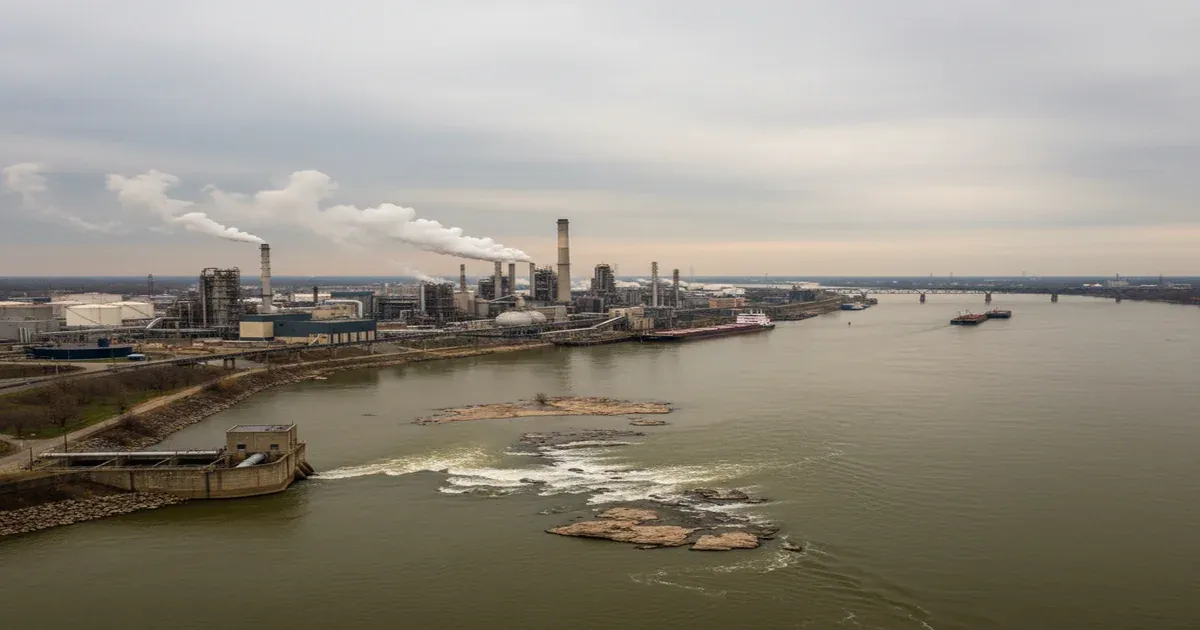
Louisville Water Company has been treating Ohio River water since 1860, making it one of the oldest continuously operating water utilities in the United States. Today, it serves approximately 850,000 people in Louisville Metro and parts of surrounding counties.
Like Cincinnati 100 miles downstream, Louisville’s water quality starts with the challenge of drawing from the Ohio River — a major waterway that collects everything from agricultural heartland runoff to industrial discharges to treated wastewater from upstream cities.
The Ohio River: Louisville’s Source and Challenge
By the time the Ohio River reaches Louisville, it’s traveled over 600 miles from Pittsburgh, passing through or collecting drainage from West Virginia, Ohio, Indiana, and Kentucky. The river carries:
- Agricultural chemicals — Herbicides, pesticides, and nutrients from farming operations across the Ohio Valley
- Treated wastewater — Effluent from dozens of upstream municipal treatment plants
- Industrial discharges — The Ohio River corridor has one of the highest concentrations of chemical manufacturing in the United States, particularly in West Virginia’s “Chemical Valley” along the Kanawha River (which joins the Ohio upstream of Louisville)
- Coal ash contamination — Multiple coal-fired power plants along the river have ash storage facilities that can leach contaminants
Louisville Water Company operates the B.E. Payne and Crescent Hill Treatment Plants, using multi-step treatment including coagulation, sedimentation, granular activated carbon (GAC) filtration, ozone, and chloramine disinfection.
Like Cincinnati, Louisville’s investment in GAC and ozone reflects the reality that Ohio River source water demands advanced treatment.
Chemical Valley’s Shadow
West Virginia’s Kanawha Valley — known as “Chemical Valley” — hosts major chemical manufacturing operations including plants owned by Dow, DuPont, Union Carbide (now part of Dow), and others. For decades, these facilities have discharged industrial chemicals into the Kanawha River, which flows into the Ohio about 250 miles upstream of Louisville.
The DuPont Washington Works plant in Parkersburg, West Virginia — the source of the infamous C8/PFOA contamination documented in “Dark Waters” — is roughly 350 miles upstream of Louisville via the Ohio River. While dilution over that distance reduces concentrations, the cumulative effect of industrial discharges across the entire Ohio River corridor affects Louisville’s source water.
The 2014 Freedom Industries MCHM chemical spill into the Elk River in Charleston, West Virginia, demonstrated how a single upstream industrial accident can threaten drinking water for communities downstream. Louisville Water Company maintains early warning monitoring systems to detect upstream contamination events.
PFAS
Louisville’s PFAS exposure comes from multiple directions:
- Ohio River source water — PFAS from upstream industrial, military, and municipal sources is present in the river at detectable levels. Louisville Water’s GAC treatment provides some PFAS removal, but not all PFAS compounds are effectively captured.
- Fort Knox — Located about 35 miles south of Louisville, Fort Knox has documented PFAS contamination from AFFF use. While Fort Knox doesn’t directly affect Louisville’s surface water supply, it contributes to regional groundwater contamination.
- Louisville Muhammad Ali International Airport — AFFF use at the airport is a potential local PFAS source.
- Industrial facilities — Louisville’s manufacturing sector includes potential PFAS sources.
Louisville Water has been testing under UCMR 5 and evaluating whether additional treatment upgrades will be needed to meet EPA’s 2024 MCLs by 2029.
Lead Service Lines
Louisville has an estimated 60,000 to 80,000 lead service lines — one of the highest totals in the Ohio River corridor. The city’s building history, with major residential construction from the 1870s through the 1940s, means older neighborhoods throughout Louisville Metro have significant lead infrastructure.
Areas with high lead service line concentrations include:
- Old Louisville — One of the largest Victorian-era neighborhoods in the country
- Germantown and Schnitzelburg — Historic neighborhoods with pre-war housing
- Clifton, Crescent Hill, and Frankfort Avenue corridor — Early 20th century development
- West Louisville neighborhoods — Portland, Russell, California — communities that also face disproportionate environmental burden from other sources
Louisville Water uses corrosion control treatment and has been building its lead service line inventory. The LCRI 10-year replacement mandate represents a multi-hundred-million-dollar commitment that the utility is beginning to plan and fund.
What Louisville Residents Should Know
- Your water is well-treated. Louisville Water’s GAC and ozone treatment are more advanced than many utilities. The Ohio River source water is challenging, but the treatment is designed for it.
- Check for lead. With one of the highest lead service line counts in the region, there’s a good chance your older home has lead connections. Contact Louisville Water for a service line check.
- Flush and filter. Run cold water before drinking in older homes. A point-of-use filter certified to NSF/ANSI 53 reduces lead effectively.
- Stay informed about upstream events. Louisville Water issues notifications when upstream spills or water quality events could affect treatment. Sign up for their alert system.
- Private well owners in Jefferson County and surrounding areas — test your water regularly. The Ohio River alluvial aquifer that some wells tap is connected to the river and can contain similar contaminants.
Related Reading
- Cincinnati Water: Ohio River and PFAS — Louisville’s upstream neighbor on the Ohio River.
- Nashville Water: Cumberland River, Lead, and PFAS — A fellow mid-South city with river-sourced water challenges.
- St. Louis Lead Service Lines and Water Quality — Another river city battling legacy lead infrastructure.
- Pittsburgh’s Lead Service Line Replacement — The Ohio River corridor’s lead pipe challenges.
The Bottom Line
Louisville’s water story is defined by its position on the Ohio River — benefiting from an abundant supply while inheriting the contamination legacy of everything upstream. The utility’s investment in advanced treatment (GAC + ozone) puts it in a strong position, but PFAS, lead infrastructure, and the ever-present risk of upstream chemical incidents mean ongoing vigilance is essential.
The lead service line replacement challenge is massive — 60,000 to 80,000 lines is among the highest in the country — and will require sustained investment over the next decade.
If you’re concerned about your water quality, a certified water treatment professional can test your water and advise on the right treatment for your home.