
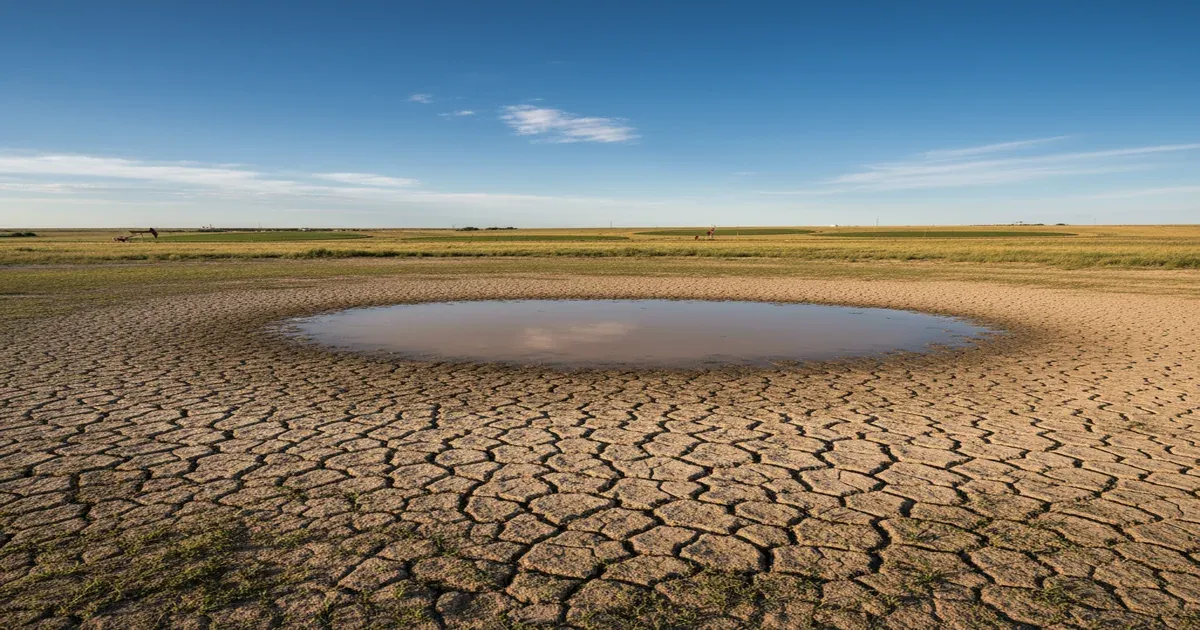
Lubbock, Texas has a water problem that can’t be fixed by treatment technology. The city sits on the southern end of the Ogallala Aquifer — the massive underground water formation that stretches from South Dakota to West Texas and makes High Plains agriculture possible. The Ogallala is being depleted faster than it recharges by orders of magnitude, and for Lubbock, the math is unforgiving.
The City of Lubbock serves about 260,000 people through a combination of Ogallala Aquifer groundwater, Lake Meredith surface water (piped 120 miles from the Canadian River in the Panhandle), and treated wastewater reuse. Water scarcity isn’t a future concern — it’s the present reality that shapes every aspect of the city’s water management.
The Ogallala Aquifer: Draining a Fossil Water Supply
The Ogallala Aquifer beneath the southern High Plains accumulated its water over millions of years. The recharge rate — how fast it refills — is essentially negligible in the Lubbock area. The precipitation that falls on the flat, semi-arid landscape mostly evaporates. What does infiltrate takes thousands of years to reach the aquifer.
Meanwhile, agricultural irrigation pumps billions of gallons annually. The Ogallala beneath the southern High Plains has declined by more than 100 feet in some areas since large-scale irrigation began in the 1940s. Some wells that once produced abundantly have gone dry.
Lubbock’s municipal wells have deeper access and higher priority than many agricultural wells, but the city has had to drill deeper over time and has taken some wells offline as production declined. The Texas Water Development Board projects that the usable lifetime of the Ogallala in parts of the southern High Plains is measured in decades, not centuries.
Nitrate Contamination: The Agricultural Legacy
Agricultural activity on the southern High Plains — cotton farming, cattle feedlots, and the concentrated dairy operations that have expanded into the region — has loaded nitrate into the shallow groundwater. Lubbock’s deeper municipal wells have some natural protection, but nitrate levels in shallower aquifer zones throughout Lubbock County frequently exceed the EPA’s 10 mg/L maximum contaminant level (MCL).
Private well owners on the fringes of the city and in surrounding communities face the highest risk. The flat topography and sandy soils of the High Plains provide little natural filtration barrier between surface contamination and the water table.
Lubbock’s municipal water treatment includes monitoring for nitrate, and the city blends sources to maintain compliance. But the underlying contamination in the regional aquifer is widespread and worsening with continued agricultural intensification.
Why nitrate matters: Nitrate above 10 mg/L causes methemoglobinemia (blue baby syndrome) in infants under six months. Adults generally tolerate higher levels, but long-term exposure is associated with health risks. Private well owners in Lubbock County should test annually.
Is Lubbock Tap Water Safe to Drink?
Lubbock’s municipal water supply meets EPA drinking water standards. The City of Lubbock Water Utilities publishes annual Consumer Confidence Reports documenting test results.
Key monitoring results:
- Nitrate — Municipal water stays below the 10 mg/L MCL through blending and monitoring. Compliance maintained.
- Total dissolved solids (TDS) — Higher than many cities due to mineral-rich Ogallala water and Lake Meredith blending. Not a health violation, but noticeable in taste.
- Lead and copper — System compliance maintained. Older homes with lead plumbing may see elevated levels at the tap.
- Disinfection byproducts — Within limits. Seasonal variation as blend ratios shift.
Why Lubbock Tap Water Tastes Different
Many Lubbock residents notice the taste of their tap water — especially seasonally. The cause is the blended supply. Lake Meredith water, piped 120 miles from the Panhandle, tends to be high in dissolved solids, particularly chlorides and sulfates leached from the region’s salt deposits.
When the blend leans more toward Lake Meredith water — often during dry periods when groundwater conservation is prioritized — the taste becomes more pronounced. Reverse osmosis filtration removes dissolved minerals completely and is the most effective solution for residents who want consistently neutral-tasting water.
Water Reuse: Lubbock’s Long-Term Strategy
Lubbock has invested in indirect potable reuse — treating wastewater to high standards and using it to recharge water supplies. The city’s water reclamation system is an important part of the long-term supply strategy.
In a water-scarce region where the primary aquifer is depleting, treating and reusing effluent that would otherwise evaporate isn’t just practical — it’s essential. Public acceptance has grown as the technology’s safety record becomes better understood.
Private Wells in Lubbock County
If you’re on a private well rather than the city system, you’re in a different situation. Shallow wells in Lubbock County face elevated risk of:
- Nitrate from agricultural fertilizers and feedlot runoff — test annually, especially if you have infants
- Bacteria — coliform and E. coli from nearby agricultural operations or well casing issues
- Naturally occurring radionuclides — the southern High Plains geology includes low-level uranium and radium in some zones
- High TDS and hardness — common throughout the region
Well owners should test annually through a Texas-certified laboratory. The Texas Commission on Environmental Quality (TCEQ) maintains a list of certified labs.
What Lubbock Residents Can Do
- Conserve. This isn’t a suggestion — it’s a survival strategy for West Texas. Every gallon saved extends the Ogallala’s viable life.
- Filter for taste and minerals. Reverse osmosis handles dissolved solids, nitrate, and taste issues completely. Under-sink RO is a practical investment for most Lubbock homes.
- Private well owners: test for nitrate annually. If you have infants or are pregnant, this is critical.
- Read your annual CCR. Available from the City of Lubbock Water Utilities. It documents everything tested in the prior year.
- Understand the long game. The Ogallala depletion is a multi-generational challenge. Supporting water conservation policy and infrastructure investment matters.
If you’re concerned about your water quality, a certified water treatment professional can test your water and help you choose the right treatment system for your specific source and concerns.
Frequently Asked Questions: Lubbock TX Water Quality
Is Lubbock tap water safe to drink? Yes — Lubbock’s municipal water meets all EPA drinking water standards. The primary issues are taste (elevated TDS and minerals from blended sources) and long-term supply sustainability, not acute safety violations.
Does Lubbock water have nitrate problems? The municipal system maintains compliance. But private well owners in Lubbock County face significant nitrate risk from agricultural activity. If you’re on a well, test annually.
Why does Lubbock water taste bad? The blended supply — Ogallala groundwater plus Lake Meredith surface water — has elevated dissolved solids, particularly chlorides and sulfates. Taste varies seasonally based on blend ratios. Reverse osmosis filtration eliminates this issue.
How long will the Ogallala Aquifer last under Lubbock? The Texas Water Development Board projects the southern High Plains aquifer has decades of viable use at current pumping rates — not centuries. Lubbock’s long-term water strategy relies increasingly on water reuse and demand reduction.
What filter is best for Lubbock water? For taste and TDS issues, reverse osmosis is the most effective option. For general filtration, a quality activated carbon system reduces chlorine and organic compounds. Private well owners with nitrate concerns need RO or an ion exchange system specifically rated for nitrate removal.
Related Reading
- El Paso Water Quality: Hueco Bolson Aquifer and Desalination
- Corpus Christi Water Quality: Refinery Corridor and Algae Challenges
- Amarillo TX Water Quality: Ogallala Aquifer and High Plains Water
Sources: City of Lubbock Water Utilities, Texas Water Development Board, Canadian River Municipal Water Authority, EPA SDWIS, USGS, TCEQ