
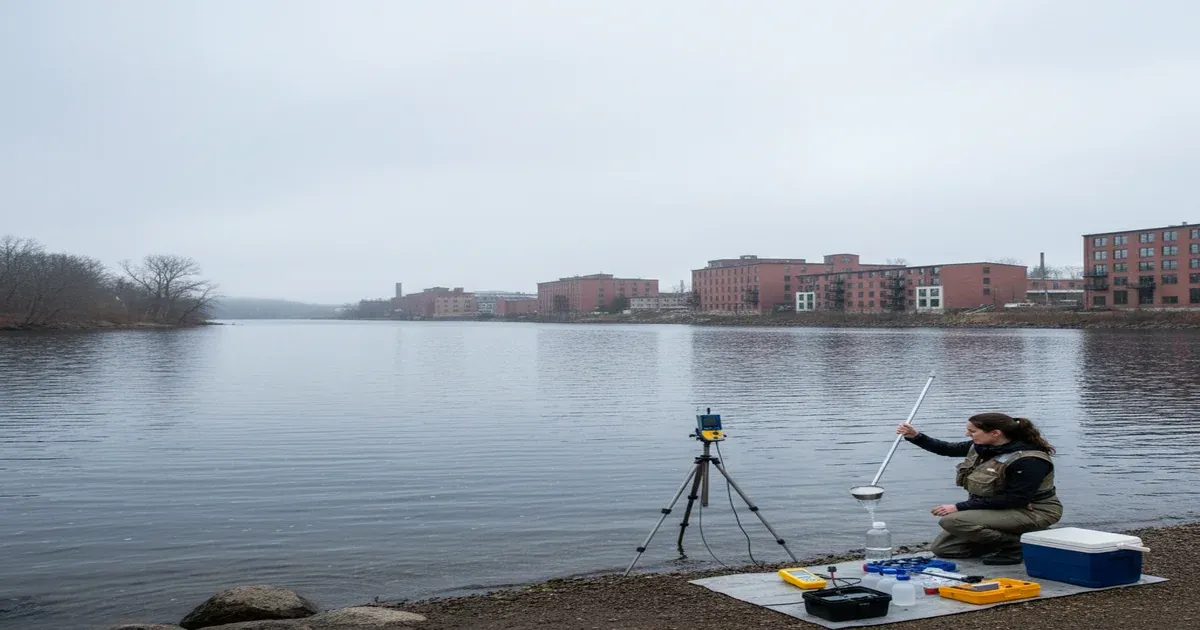
Manchester, New Hampshire — the state’s largest city at about 115,000 people — draws its drinking water from Lake Massabesic, a 2,500-acre reservoir just east of the city. The lake has served as Manchester’s water source since 1874, and the Manchester Water Works maintains aggressive watershed protection.
But Manchester doesn’t exist in isolation. Southern New Hampshire has become ground zero for one of the most significant PFAS contamination events in the country.
The Saint-Gobain PFAS Crisis
Saint-Gobain Performance Plastics operated a manufacturing facility in Merrimack, NH (about 15 miles south of Manchester) that used PFAS compounds, including PFOA, in producing coated fabrics and other industrial products. The contamination has been extensive:
- Air emissions — PFAS released through factory smokestacks settled on surrounding land and infiltrated groundwater over decades
- Groundwater contamination — Private wells within miles of the facility have tested positive for PFAS at levels far exceeding New Hampshire’s strict MCLs
- Soil contamination — PFAS deposited from air emissions has been found in soils across a wide area
- State response — New Hampshire adopted MCLs of 12 ppt for PFOA, 15 ppt for PFOS, 18 ppt for PFHxS, and 11 ppt for PFNA — among the strictest in the nation
While the Saint-Gobain facility is in Merrimack rather than Manchester, the regional impact has heightened awareness across southern New Hampshire. Manchester Water Works has tested Lake Massabesic extensively for PFAS, and results have shown detections at very low levels — well below New Hampshire’s strict limits.
Lake Massabesic: A Protected but Pressured Source
Lake Massabesic is one of New England’s best-protected water supplies. Manchester Water Works owns much of the watershed land, and public access is restricted (no swimming, no boating with motors). The water receives:
- Ozone treatment for primary disinfection
- Granular activated carbon (GAC) filtration
- UV disinfection
- Chloramine for distribution system residual
This multi-barrier approach provides excellent treatment, including some PFAS removal through the GAC filters. But the watershed faces pressures:
- Development — Auburn and parts of Hooksett (towns sharing the watershed) continue to grow, increasing impervious surfaces and potential contamination sources
- Stormwater runoff — Route 101 runs through the watershed, and road runoff carries salt, petroleum products, and microplastics
- Atmospheric deposition — PFAS from industrial and other sources deposit from the atmosphere into open water bodies statewide
Merrimack River: The Other Water Story
Manchester straddles the Merrimack River, one of the most historically polluted rivers in New England. While the river isn’t Manchester’s drinking water source, it’s central to the city’s identity and environment.
The Merrimack has improved dramatically since the Clean Water Act era, when it was essentially an open sewer. But ongoing challenges include:
- Combined sewer overflows — Manchester’s aging sewer system still overflows into the Merrimack during heavy rain events
- Upstream industrial discharge — Paper mills, manufacturing facilities, and municipal wastewater plants discharge into the river
- PFAS — The Merrimack River has shown elevated PFAS levels, particularly downstream of Merrimack and other communities affected by the Saint-Gobain contamination
Lead and Aging Infrastructure
Manchester’s water distribution system includes some of New England’s oldest pipes:
- Lead service lines — Estimates suggest thousands of lead connections exist in Manchester’s older neighborhoods, particularly in the downtown mill district and surrounding residential areas
- Main breaks — Cold New Hampshire winters and aging cast iron pipes combine for frequent main breaks
- System pressure — Hilly terrain and system age create pressure challenges in some neighborhoods
Manchester Water Works has begun its lead service line inventory as required by the revised Lead and Copper Rule, and the city has maintained corrosion control treatment to minimize lead leaching.
What the Data Shows
From Manchester Water Works’ most recent CCR:
- All regulated contaminants within EPA and New Hampshire state limits
- PFAS detected at levels well below NH MCLs
- Lead at 90th percentile below the 15 ppb action level
- Disinfection byproducts within limits
- No Safe Drinking Water Act violations
New Hampshire’s PFAS standards are significantly stricter than federal requirements, so compliance with state limits provides a higher level of protection.
What Manchester Residents Should Do
- Check your service line — Contact Manchester Water Works to determine if your home has a lead service line
- Request PFAS results — Ask specifically about PFAS testing of the finished water, not just regulatory compliance
- Filter if concerned — An NSF-certified activated carbon or reverse osmosis filter can provide additional PFAS and lead removal at the point of use
- Private well owners — If you’re on a private well in the greater Manchester area, test for PFAS. New Hampshire offers testing assistance for wells near known contamination sites.
- Flush cold water — In older homes, run the tap for 30 seconds to 2 minutes before using water for drinking or cooking
Manchester’s water treatment is genuinely advanced — the ozone/GAC/UV combination is among the best in the region. The city’s proactive approach to PFAS testing and treatment is a model. But with southern New Hampshire’s PFAS crisis still evolving, staying informed is essential.
Water quality challenges like these aren’t unique to this area. Residents in Concord, New Hampshire Water Quality and Merrimack, NH Water Quality face similar contamination concerns, while Lawrence, MA Water Quality deals with its own set of water infrastructure and quality issues.
If you’re concerned about your water quality, a certified water treatment professional can test your water and recommend solutions tailored to your specific situation.