
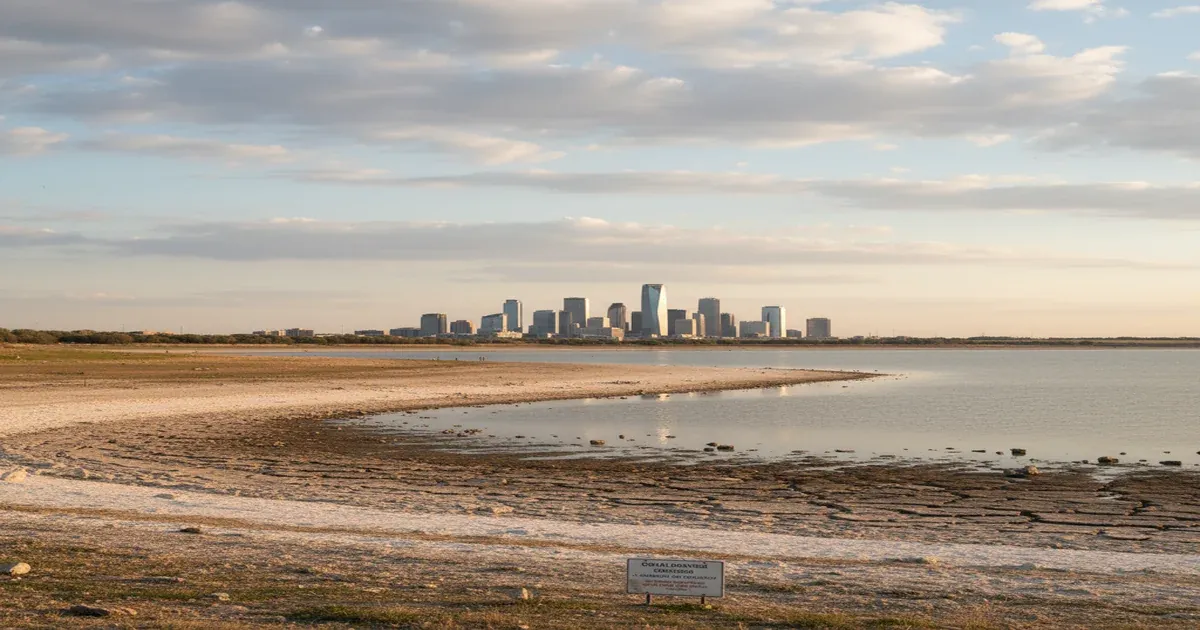
Oklahoma City has always had a complicated relationship with water. Sitting on the southern Great Plains, the city gets about 36 inches of rain annually — enough to be classified as humid subtropical, but with a catch: the rain comes in violent bursts separated by long dry stretches that can turn into severe drought.
The Oklahoma City Water Utilities Trust serves approximately 650,000 people in the metro area. Unlike cities that sit on a major river or lake, OKC has had to build an extensive network of pipelines and reservoirs to secure its supply.
A 100-Mile Pipeline for Water
Oklahoma City’s primary water sources include:
- Lake Hefner and Lake Overholser — Urban reservoirs within the metro that provide storage and some direct supply
- Canton Lake — About 100 miles northwest of the city, connected by the 100-mile Atoka Pipeline
- Lake Atoka and McGee Creek Reservoir — In southeastern Oklahoma, about 150 miles away, connected by the Atoka Pipeline system
- Lake Stanley Draper — A terminal storage reservoir in southeast OKC
The Atoka Pipeline system is one of the longest municipal water pipelines in the United States. Built in the 1960s and expanded since, it brings water from the relatively water-rich Kiamichi Mountains to the semi-arid central Oklahoma plains.
This geographic dependency means OKC’s water supply is vulnerable to drought across a wide area. If southeastern Oklahoma gets dry — as it did during the devastating 2011-2014 drought — the city’s distant reservoirs drop too.
Arsenic: A Natural Contaminant
Parts of Oklahoma have naturally occurring arsenic in groundwater and surface water, originating from geological formations that contain arsenic-bearing minerals. For OKC’s surface water supply, arsenic levels are generally well below EPA’s MCL of 10 parts per billion.
However, communities in western and central Oklahoma that rely on groundwater are more likely to encounter elevated arsenic. The Garber-Wellington Aquifer, which underlies parts of the OKC metro area, has documented arsenic levels that occasionally approach or exceed the MCL in some locations.
For residents on the municipal system, arsenic isn’t a primary concern — treatment processes address it. For private well owners in the metro fringe, it’s a contaminant worth testing for.
Drought: Oklahoma’s Defining Water Challenge
Oklahoma drought isn’t a question of if, but when and how bad:
- 2011-2014 — Exceptional drought across Oklahoma. Lake levels dropped dramatically, mandatory water restrictions were imposed, and the Atoka Pipeline operated at near-capacity to keep OKC supplied.
- 2022 — Severe drought conditions again stressed reservoir levels across the state.
- Climate projections — Central Oklahoma is expected to experience more intense drought periods interspersed with more intense storms — a challenging pattern for reservoir management.
OKC has responded with conservation programs, tiered water pricing, and long-term supply planning. The city has also invested in aquifer storage and recovery (ASR) — injecting treated surface water into the Garber-Wellington Aquifer during wet periods for later withdrawal during drought.
PFAS and Emerging Contaminants
Oklahoma’s PFAS picture is still developing. Key concerns include:
- Tinker Air Force Base — One of the largest Air Force maintenance and logistics complexes in the world, located in southeast OKC. AFFF use has contaminated groundwater on and near the base. Tinker is a Superfund site with ongoing cleanup of multiple contaminants including PFAS.
- Will Rogers World Airport — AFFF use at OKC’s primary airport is a potential PFAS source.
- Industrial sources — OKC’s petroleum, aviation, and manufacturing sectors include operations that may have used PFAS compounds.
Oklahoma DEQ has been conducting PFAS monitoring, but the state has not yet established state-level PFAS standards beyond federal requirements.
What Oklahoma City Residents Should Know
- Your water is treated and tested. OKC’s water meets all federal standards. Read the annual water quality report for specific results.
- Taste can vary seasonally. During summer, algal compounds in reservoirs can affect taste and odor. A carbon filter handles this effectively.
- Private well owners — test for arsenic, nitrates, and bacteria at minimum. If you’re near Tinker AFB, add PFAS to the list.
- Conserve water. OKC’s supply depends on rainfall hundreds of miles away. Water-efficient landscaping and indoor conservation help ensure long-term supply reliability.
- Consider a filter for drinking water. Carbon block or reverse osmosis systems address the most common quality concerns.
Related Reading
- Dallas-Fort Worth Water: PFAS and the Trinity — Oklahoma’s southern neighbor faces its own contamination challenges.
- Kansas City Water: Missouri River and PFAS — Another Plains state city navigating aging infrastructure and PFAS.
- Denver’s Water: PFAS, Lead, and Drought — How the Southern Plains’ western neighbor manages drought and water quality.
- Arsenic in Minnesota Groundwater — Naturally occurring arsenic contamination is a nationwide challenge.
The Bottom Line
Oklahoma City’s water system is a testament to engineering ambition — piping water 100+ miles across the state to supply a growing metro in a drought-prone region. The system works, but it’s vulnerable to the same climate variability that has always defined Oklahoma.
PFAS from Tinker AFB, naturally occurring arsenic in local groundwater, and the fundamental challenge of drought management will continue to shape OKC’s water future.
If you’re concerned about your water quality, a certified water treatment professional can test your water and recommend the right treatment for your situation.