
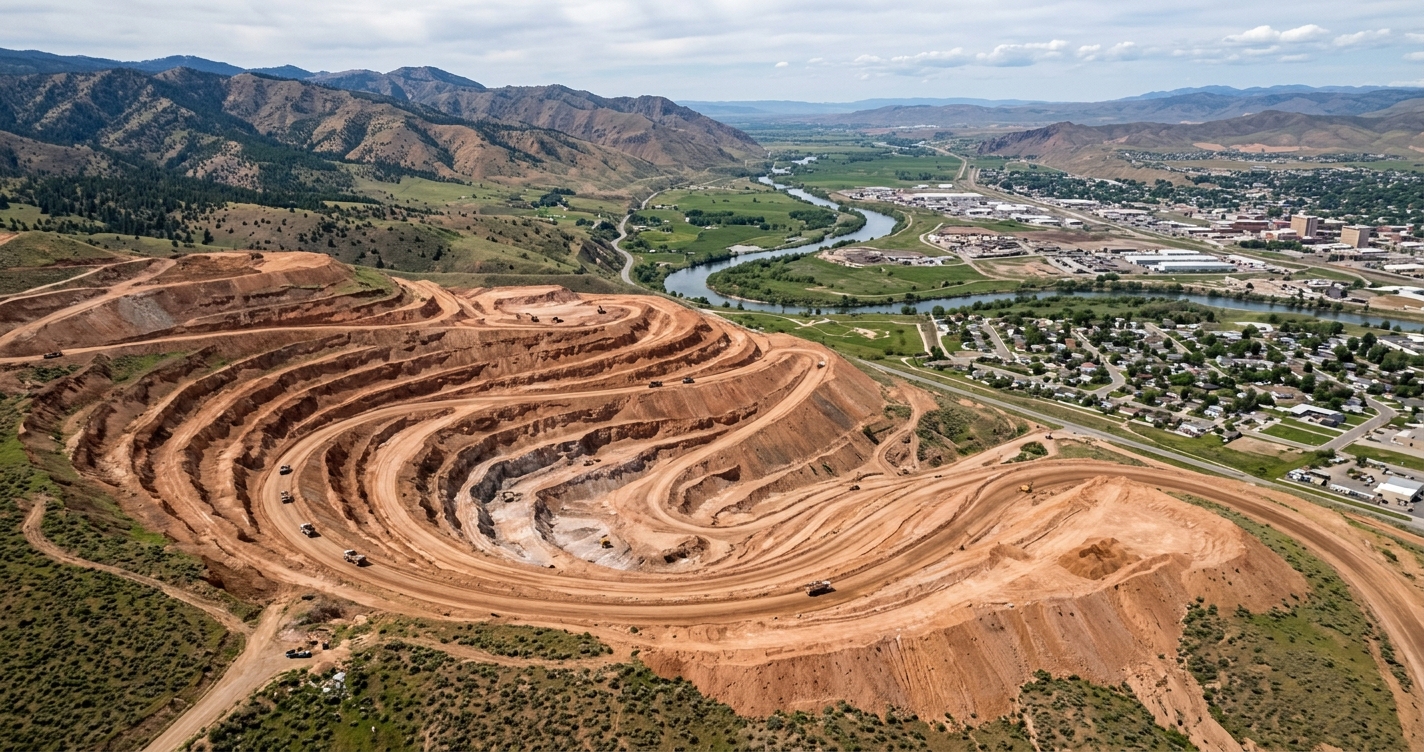
Pocatello, Idaho — population about 57,000 — is a railroad town turned university city (Idaho State University) in southeastern Idaho. The city sits at the southern end of the Portneuf Range and depends on groundwater from the Eastern Snake River Plain Aquifer, one of the most productive aquifers in the western United States.
But Pocatello has a contamination legacy that sets it apart from most Idaho cities.
FMC Corporation Superfund Site
FMC Corporation operated an elemental phosphorus plant in Pocatello from 1949 to 2001. The facility processed phosphate ore mined in southeastern Idaho into elemental phosphorus used in a wide range of products.
The contamination left behind is severe:
- Phosphorus slag — Millions of tons of slag containing phosphorus, heavy metals, and radioactive materials cover hundreds of acres at the former plant site
- Groundwater contamination — Solvents, heavy metals, and phosphorus compounds have contaminated groundwater beneath and downgradient of the facility
- Selenium — Phosphate ore in southeastern Idaho is naturally high in selenium, and processing concentrated it further. Selenium contamination in groundwater and surface water near the site is a major concern.
- Air emissions — Decades of phosphorus furnace emissions deposited contaminants across surrounding neighborhoods
The EPA listed the FMC site on the National Priorities List, and cleanup has been ongoing for decades. FMC (now part of FMC Corporation’s successor entities) has funded remediation, but the scale of the contamination makes full cleanup a multi-generational project.
Phosphate Mining: Idaho’s Other Extraction Industry
Southeastern Idaho contains one of the world’s largest phosphate deposits. Mining operations have produced phosphate ore for over a century, and the environmental impact is significant:
- Selenium contamination — Phosphate mining mobilizes selenium from geological formations. Elevated selenium levels have killed wildlife and contaminated waterways in the phosphate mining region.
- Multiple Superfund sites — Several phosphate mine sites in southeastern Idaho are on the National Priorities List due to selenium contamination
- Waste ponds — Mine waste stored in large tailings ponds can leak contaminants into groundwater
- The contamination extends beyond the mines — Selenium from mining has been detected in streams and aquifers at significant distances from active mining operations
Eastern Snake River Plain Aquifer
Pocatello draws its drinking water primarily from wells tapping the Eastern Snake River Plain Aquifer — a massive basalt aquifer that stores water from snowmelt and irrigation return flows. The aquifer is:
- Critically important — It supplies drinking water, irrigation, aquaculture, and industrial users across a huge area of southern Idaho
- Under pressure — Groundwater levels have declined in some areas due to pumping and reduced recharge from surface water irrigation
- Vulnerable to contamination — The fractured basalt allows contamination to move quickly and unpredictably through the aquifer
Idaho National Laboratory (INL), located about 50 miles north of Pocatello, has its own contamination history affecting the northern portion of the aquifer, though INL contamination hasn’t directly impacted Pocatello’s water supply.
What the Data Shows
From Pocatello’s most recent Consumer Confidence Report:
- All regulated contaminants within EPA limits
- Municipal wells are located away from the worst FMC contamination
- Selenium monitored but within limits in municipal supply
- Trihalomethanes and haloacetic acids within limits
- Lead at 90th percentile below action level
- No SDWA violations
What Pocatello Residents Should Do
- Near the FMC site — If you live near the former FMC plant, be aware of soil and groundwater contamination. Check whether your property is within the EPA’s cleanup area.
- Private well owners — Test for selenium, phosphorus compounds, and standard suite (nitrate, bacteria, heavy metals). Southeastern Idaho’s geology and industrial history warrant comprehensive testing.
- Municipal water is managed — Pocatello’s well system avoids the worst contamination zones, and treatment maintains compliance. Review the CCR annually.
- Selenium awareness — Selenium is both essential and toxic. If your well water tests elevated, treatment is available (reverse osmosis, ion exchange, activated alumina).
- Water conservation — The Eastern Snake River Plain Aquifer is a shared resource under increasing pressure. Conservation protects both supply and quality.
Pocatello’s contamination story is unique — a phosphate industry legacy that most Americans have never heard of, creating challenges that rival better-known Superfund sites. Understanding the risks is the first step toward managing them.
If you’re concerned about your water quality, a certified water treatment professional can test your water and advise on solutions.