
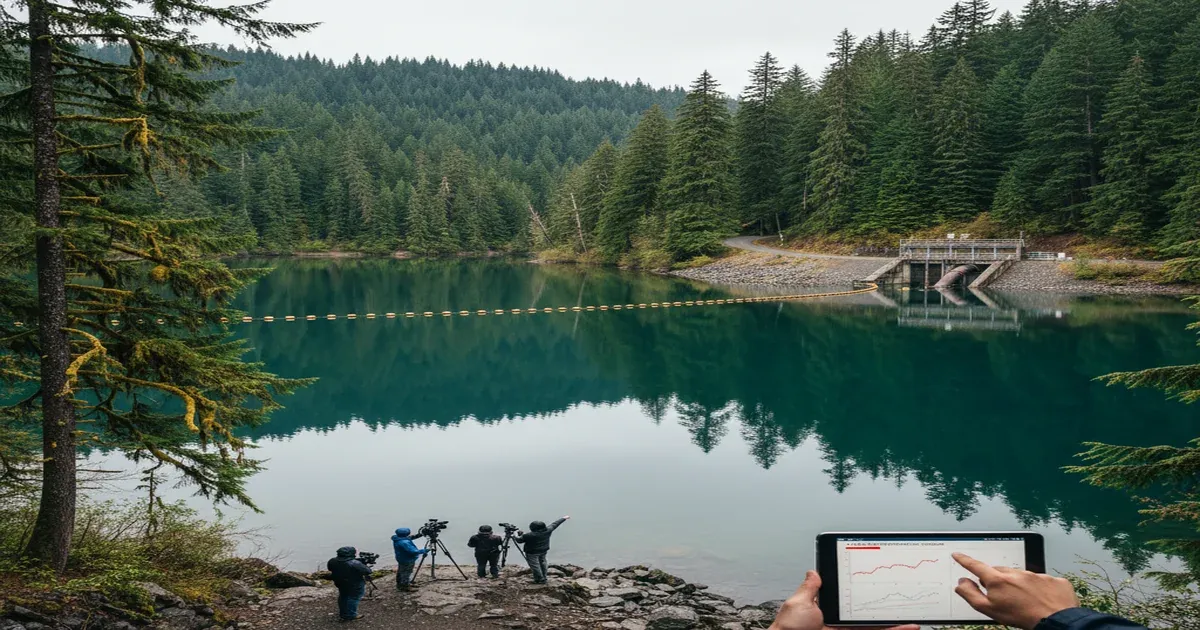
Portland, Oregon, has bragging rights that few cities can match: its drinking water comes from a virtually untouched watershed in the foothills of Mount Hood, closed to public access since 1895.
The Bull Run watershed — about 102 square miles of old-growth forest and protected land in the Mount Hood National Forest — supplies approximately 95% of Portland’s water. The Portland Water Bureau supplements with groundwater from the Columbia South Shore Well Field when needed.
Like Boston and Seattle, Portland’s source water protection is so effective that the raw water quality is exceptional. The city treats it with chlorine for disinfection, adds ammonia to form chloramines for residual disinfection in the distribution system, and adjusts pH with sodium hydroxide for corrosion control.
No filtration plant has historically been needed — Portland has operated under an EPA filtration avoidance waiver.
The Filtration Plant Debate
That waiver is about to end. After years of negotiation with the Oregon Health Authority, Portland is building a massive filtration plant — estimated to cost $2 billion or more — to treat Bull Run water before distribution.
The impetus: in 2017, EPA’s Long Term 2 Enhanced Surface Water Treatment Rule required Portland to either build a filtration plant or meet increasingly strict criteria for its avoidance waiver. Portland couldn’t consistently meet the turbidity requirements, particularly after major storms.
Cryptosporidium, a parasite that resists chlorine disinfection, is the primary public health concern driving the filtration mandate. While Portland has never had a confirmed Cryptosporidium outbreak from its water supply, the risk exists in any unfiltered surface water system.
The filtration plant project has been controversial. Critics argue the existing water is safe, the cost is excessive for ratepayers, and Portland should have fought harder to maintain its waiver. Supporters point out that climate change is increasing storm intensity and wildfire risk in the watershed — both of which degrade raw water quality and make filtration more necessary.
Construction is expected to take years, with the plant operational by the late 2020s or early 2030s. Portland ratepayers are already seeing the cost reflected in rising water bills.
Lead: The School Testing Scandal
Portland’s lead-in-water story centers on its schools. In 2016, testing revealed elevated lead levels in drinking water fixtures at schools across Portland Public Schools — in some cases, levels many times higher than EPA’s action level.
The source wasn’t lead service lines (Portland actually has relatively few, since the city’s major building period occurred after lead service lines fell out of common use). Instead, the lead came from:
- Brass fixtures and fittings — Older fountains, faucets, and plumbing fixtures containing lead alloys
- Lead solder — Used to join copper pipes in buildings constructed before 1986
- Stagnation — Water sitting in pipes overnight and over weekends accumulates lead from contact with these materials
The school testing revelations led to a citywide testing program, fixture replacements, and new protocols for flushing building water systems. But it also exposed a gap in water quality monitoring: the water leaving the treatment plant met all standards, but the water coming out of fixtures in old buildings didn’t.
Portland’s experience highlighted a national problem. Lead contamination in schools isn’t unique to Portland — it’s been found in school systems across the country. But Portland’s testing program was more transparent than most, which made it a high-profile case.
Naturally Soft, Naturally Corrosive
Bull Run water is among the softest municipal water supplies in the country — very low in calcium, magnesium, and other dissolved minerals. That’s great for taste and for avoiding scale buildup. But soft water is naturally more corrosive to metals, including lead and copper in plumbing.
The Portland Water Bureau adds sodium hydroxide to raise the water’s pH and reduce its corrosivity. This corrosion control program is critical for preventing lead leaching in the distribution system and in building plumbing.
The trade-off: Portland’s low mineral content means the water has less natural buffering capacity. Any disruption in chemical treatment could cause relatively rapid changes in water chemistry — which is why consistent, reliable corrosion control is essential.
Climate Threats to Bull Run
The Bull Run watershed faces growing climate-related risks:
- Wildfire — As Oregon’s fire seasons lengthen and intensify, the risk of a major fire in the Bull Run watershed increases. A large wildfire could devastate source water quality for years by introducing ash, sediment, and nutrients into the reservoir system.
- Changing precipitation patterns — More rain and less snow means more runoff events that spike turbidity, and less gradual snowmelt to sustain summer flows.
- Landslides — The steep, heavily forested terrain of the Bull Run is susceptible to landslides during extreme rain events, which can introduce massive sediment loads into the water supply.
These risks are a key argument for the filtration plant: as climate change makes raw water quality less predictable, having filtration as a treatment barrier becomes more important.
What Portland Residents Should Know
- Your source water is excellent. Bull Run water is genuinely exceptional in quality and taste.
- Your building plumbing matters more than the source. If you live or work in a building constructed before 1986, lead solder and brass fixtures may be introducing lead. Run the cold tap for 30 seconds before drinking after the water has been sitting.
- Get your water tested if you have concerns, especially in older buildings. The Portland Water Bureau offers free lead testing kits.
- Expect rising water bills. The $2 billion+ filtration plant will be funded through rate increases over the coming years.
- Use cold water for cooking and drinking. Hot water dissolves more lead from plumbing materials.
Related Reading
- Seattle’s Cedar River Water Quality — Portland’s Pacific Northwest neighbor also relies on protected watershed sourcing.
- San Francisco’s Hetch Hetchy Water and PFAS — Another city with pristine watershed-sourced water facing modern contamination challenges.
- Pittsburgh’s Lead Service Line Replacement — A city further along in tackling lead infrastructure replacement.
- Newark’s Lead Water Crisis — How one city’s lead crisis accelerated nationwide awareness.
The Bottom Line
Portland’s water system has benefited from more than a century of watershed protection. The Bull Run is a remarkable resource, and the water quality reflects that.
The coming filtration plant represents the end of an era — Portland will join the majority of cities that filter their surface water — but it also represents an investment in long-term resilience. As climate change increases uncertainty, having multiple treatment barriers is sound public health policy, even if the price tag is steep.
If you’re concerned about what’s in your water at the tap, a certified water treatment professional can test it and advise on whether additional treatment makes sense for your home.