
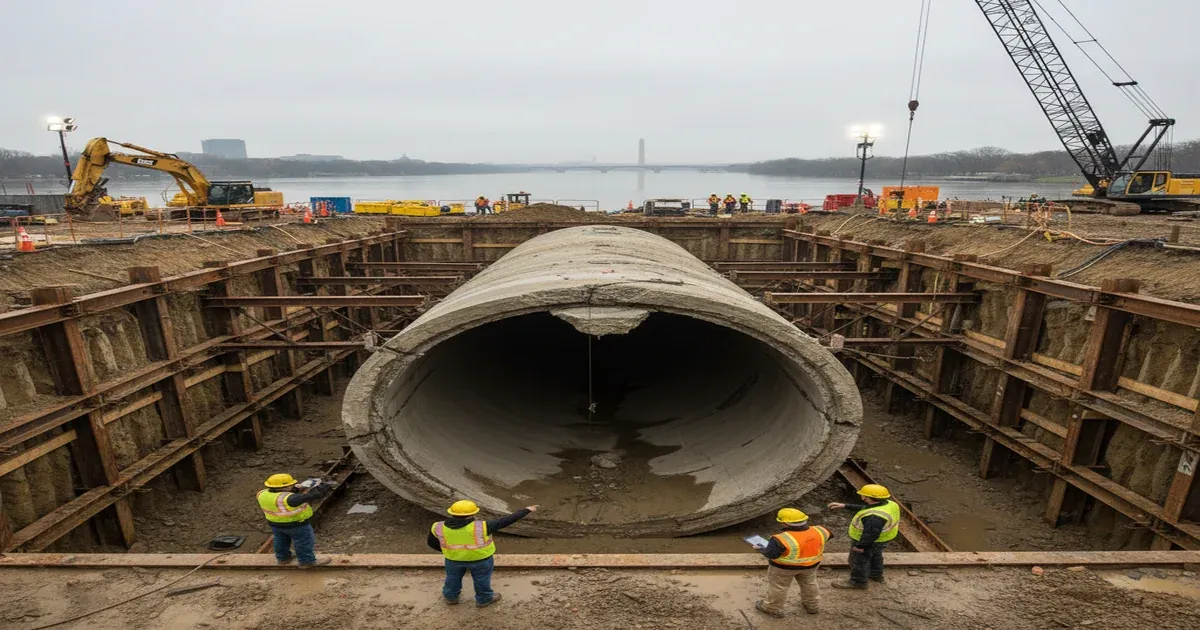
On January 19, 2026, the Potomac Interceptor — a critical 72-inch-diameter sewer pipe that carries wastewater from across the Washington, DC metropolitan area to the Blue Plains Advanced Wastewater Treatment Plant — collapsed.
What followed was one of the most significant wastewater infrastructure failures in the region’s history: an estimated 243 million gallons of untreated sewage flowed directly into the Potomac River.
What Is the Potomac Interceptor?
The Potomac Interceptor is more than 60 years old. It’s a regional workhorse, collecting wastewater from jurisdictions across the DC metro area and conveying it to Blue Plains, one of the largest advanced wastewater treatment plants in the world.
When this pipe fails, there’s no simple backup. The wastewater has to go somewhere — and in this case, it went into the river.
How the Collapse Unfolded
After the initial collapse on January 19, DC Water mobilized crews to dewater the pipe, clear debris, and assess the damage. But on February 5, a CCTV inspection revealed a far bigger problem: a massive rock dam — a single large boulder filling the entire 72-inch pipe — was blocking flow about 30 feet downstream of the original collapse.
That discovery pushed the repair timeline from weeks to four to six weeks minimum.
The Numbers Are Staggering
- 243 million gallons of untreated wastewater entered the Potomac River
- 194 million gallons of that total flowed in the first five days alone
- At peak, an estimated 40 million gallons per day entered the river — roughly 2% of the Potomac’s total daily flow
- Additional overflow events occurred on February 9 and 10, including one releasing “several hundred thousand gallons”
Environmental Impact
DC Water’s environmental monitoring found that E. coli concentrations downstream of the discharge point near Lock 10 have generally remained within EPA guidelines for recreational contact since February 1 — with the exception of one day at Fletcher’s Boathouse.
However, elevated E. coli levels persist in the drainage channel where the overflow occurred. DC Water attributed this to residual discharges and snowmelt flushing remaining wastewater from the creek bed.
The agency has been coordinating daily with federal, state, and local partners to monitor conditions and develop remediation measures.
The Federal Response
The collapse drew national attention when President Trump called for a federal response, criticizing local authorities for the failure. DC Water CEO David L. Gadis published an open letter on February 11 acknowledging the severity of the situation and calling for sustained infrastructure investment — not just in DC, but nationwide.
“The Potomac Interceptor — more than 60 years old — is a critical regional asset,” Gadis wrote. “Its failure reinforces why sustained investment and vigilance are essential.”
DC Water has committed $625 million to rehabilitate the Potomac Interceptor as part of a 10-year, $10 billion Capital Improvement Program.
What This Means for DC-Area Residents
The Potomac Interceptor collapse is a stark reminder that aging water and wastewater infrastructure poses real risks — even in the nation’s capital.
If you live in the DC metropolitan area:
- Monitor advisories. DC Water has been publishing daily updates on repair progress and water quality monitoring results.
- Be cautious around the Potomac. While downstream E. coli levels have largely returned to safe ranges, conditions near the original discharge point remain elevated.
- Test your water if you rely on a private well. Homes near the Potomac with private wells should consider testing for bacterial contamination, especially if you’re downstream of the discharge area.
- Pay attention to infrastructure bond measures. Repairs to aging systems like the Potomac Interceptor cost billions. Supporting infrastructure investment at the local and federal level is how these failures get prevented.
The Bigger Picture
The Potomac Interceptor is far from the only aging pipe in America. According to the American Society of Civil Engineers, the nation’s wastewater infrastructure earns a D+ grade, with an estimated $434 billion investment gap over the next 20 years.
DC Water’s crisis is playing out in real time, with transparency and daily updates. But thousands of smaller utilities across the country face similar risks with far fewer resources.
If you’re concerned about your water quality — whether you’re on a public system or a private well — a certified water treatment professional can test your water and recommend solutions tailored to your specific situation.
Sources: DC Water daily updates (January–February 2026), Wastewater Digest, American Society of Civil Engineers 2021 Infrastructure Report Card
Related Reading
- Baltimore’s Aging Water Infrastructure Crisis — The neighboring metro shares regional infrastructure vulnerabilities.
- Virginia Beach Water: PFAS and Military Contamination — Another mid-Atlantic water quality challenge with military origins.
- Philadelphia: Oldest Water Pipes in America — East Coast cities face common infrastructure aging patterns.
- Jackson, Mississippi Water Crisis — When aging water infrastructure reaches total system failure.