Raleigh, North Carolina, sits at the center of the Research Triangle — one of the fastest-growing metro areas in the country. The city’s population has roughly doubled since 2000, and the broader Triangle area (Raleigh-Durham-Chapel Hill) now exceeds 2 million people.
That growth has put enormous pressure on a water supply that was already under stress from nutrient pollution.
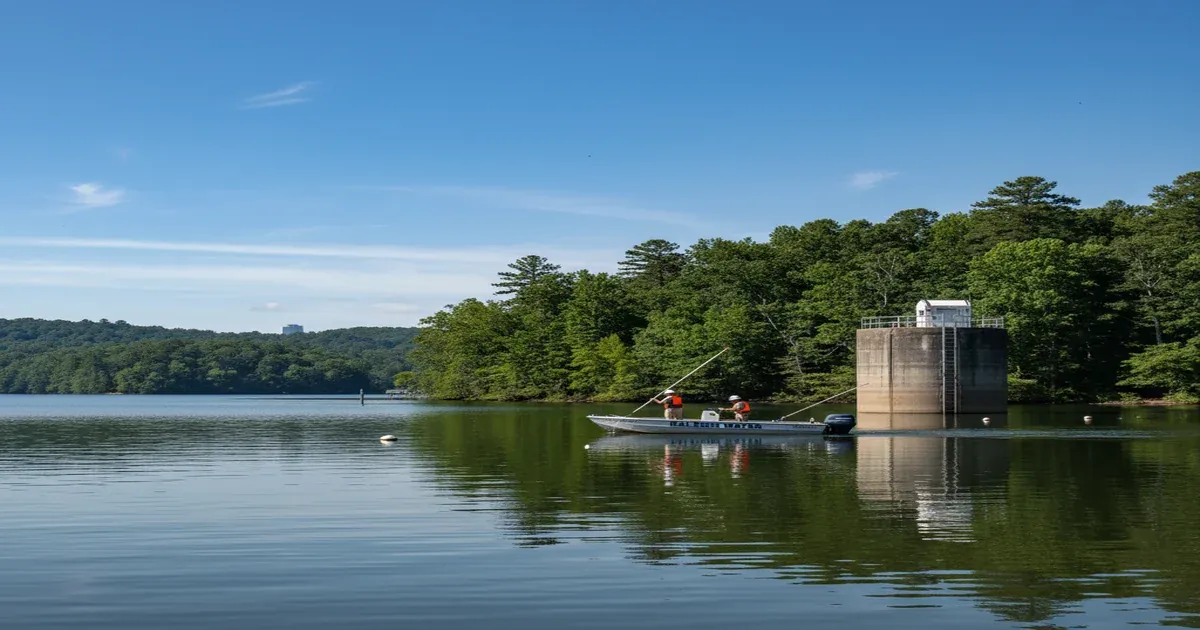
The City of Raleigh draws primarily from Falls Lake, a 12,000-acre reservoir on the Neuse River about 10 miles north of downtown. The utility also uses the Neuse River directly and Lake Wheeler and Lake Benson as supplemental sources. Raleigh’s E.M. Johnson Water Treatment Plant processes about 60 million gallons per day.
Falls Lake: Nutrient Impairment
Falls Lake has been classified as nutrient-impaired under the Clean Water Act since the early 2010s. The lake receives excessive phosphorus and nitrogen from:
- Urban stormwater — The rapidly developing watersheds north and northwest of Raleigh contribute increasing volumes of runoff carrying fertilizer, sediment, and pollutants
- Wastewater discharges — Treated wastewater from upstream communities adds nutrients to the Neuse River before it enters Falls Lake
- Agricultural runoff — Farming operations in the upper Neuse watershed contribute nitrogen and phosphorus
- Failing septic systems — Some areas in the watershed still rely on septic, which can contribute nutrients to groundwater and surface water
The result: excessive algal growth, reduced water clarity, taste and odor problems, and higher treatment costs. The Falls Lake Nutrient Management Strategy, adopted in 2011, set nutrient reduction targets for the watershed — but achieving those reductions has been slow and contentious, with municipalities, developers, and agricultural interests all pushing back on their share of responsibility.
For Raleigh’s water treatment plant, nutrient-rich source water means:
- More chemical treatment to remove algae and organic matter
- Greater risk of disinfection byproduct formation (organic matter + chlorine = THMs and HAAs)
- Periodic taste and odor episodes from algae-produced compounds
- Higher operational costs overall
PFAS: North Carolina’s Statewide Problem
As we covered in our Charlotte article, North Carolina has been at the center of the national PFAS story — primarily through the GenX contamination of the Cape Fear River near Fayetteville.
For Raleigh, the PFAS picture includes:
- Statewide contamination scope — PFAS has been detected in water systems across North Carolina, including in the Triangle region. NC DEQ has been conducting comprehensive sampling.
- Military sources — Fort Liberty (formerly Fort Bragg) about 60 miles south of Raleigh has extensive PFAS contamination. The contamination plume affects Fayetteville-area water supplies and highlights the scale of military PFAS use in North Carolina.
- Raleigh-Durham International Airport (RDU) — AFFF use at the airport is a potential PFAS source, though comprehensive sampling results are still developing.
- Industrial sources — The Triangle’s research and manufacturing sector includes operations that use PFAS compounds.
Raleigh Public Utilities monitors for PFAS under federal requirements and has reported results. NC DEQ has been more aggressive than many state agencies on PFAS investigation, driven by the GenX scandal and public pressure.
Growth: The Defining Challenge
The Triangle’s growth is astonishing by any measure:
- Population — Adding tens of thousands of residents annually
- Development — New residential, commercial, and industrial construction consuming former farmland and forest throughout Wake County
- Water demand — Growing approximately 2-3% annually, testing reservoir capacity during drought years
Raleigh has been planning for additional water supply through potential new reservoirs and regional partnerships, but permitting and building a new reservoir takes decades. In the meantime, the city relies on conservation programs and drought management protocols.
The growth creates a paradox: the development that’s driving water demand is also degrading source water quality by increasing impervious surfaces and stormwater runoff into Falls Lake’s watershed.
What Raleigh Residents Should Know
- Your water meets standards. Raleigh’s treatment is effective despite the challenged source water. Read the annual water quality report for specific results.
- Taste events are seasonal. Algae-related taste and odor in Falls Lake source water can affect treated water, especially in late summer. It’s unpleasant but not harmful. A carbon filter addresses it.
- Consider filtration if you want extra protection against DBPs, trace contaminants, or taste issues. Carbon block or reverse osmosis systems are effective.
- Check for lead. Raleigh’s older neighborhoods (pre-1986) may have lead solder. While the city has fewer lead service lines than northern cities, building plumbing is still a potential source.
- Conserve water. Falls Lake’s capacity is finite, and Raleigh’s demand is growing. Efficient fixtures, smart irrigation, and rain gardens all reduce pressure on the system.
- Private well owners in Wake County and surrounding areas — test regularly, especially for bacteria, nitrates, and any area-specific contaminants.
Related Reading
- Charlotte Water: Coal Ash and Duke Energy — North Carolina’s other major city faces industrial contamination.
- Camp Lejeune Water Contamination — North Carolina’s most notorious water contamination case.
- Virginia Beach Water: PFAS and Military Contamination — PFAS contamination is a regional Southeast pattern.
- PFAS Treatment: Ion Exchange vs. Activated Carbon — Technologies for addressing PFAS in drinking water.
The Bottom Line
Raleigh’s water story is a growth story intersecting with a source water quality story. Falls Lake’s nutrient impairment makes treatment harder and more expensive, while the growth driving that impairment shows no signs of slowing down.
North Carolina’s PFAS regulatory environment, shaped by the GenX crisis, means Raleigh residents benefit from a state that’s paying more attention to emerging contaminants than many others. But the fundamental tension between development and water quality is a long-term challenge that will require sustained investment and genuine watershed management.
If you’re concerned about your water quality, a certified water treatment professional can test your water and recommend the right approach for your home.