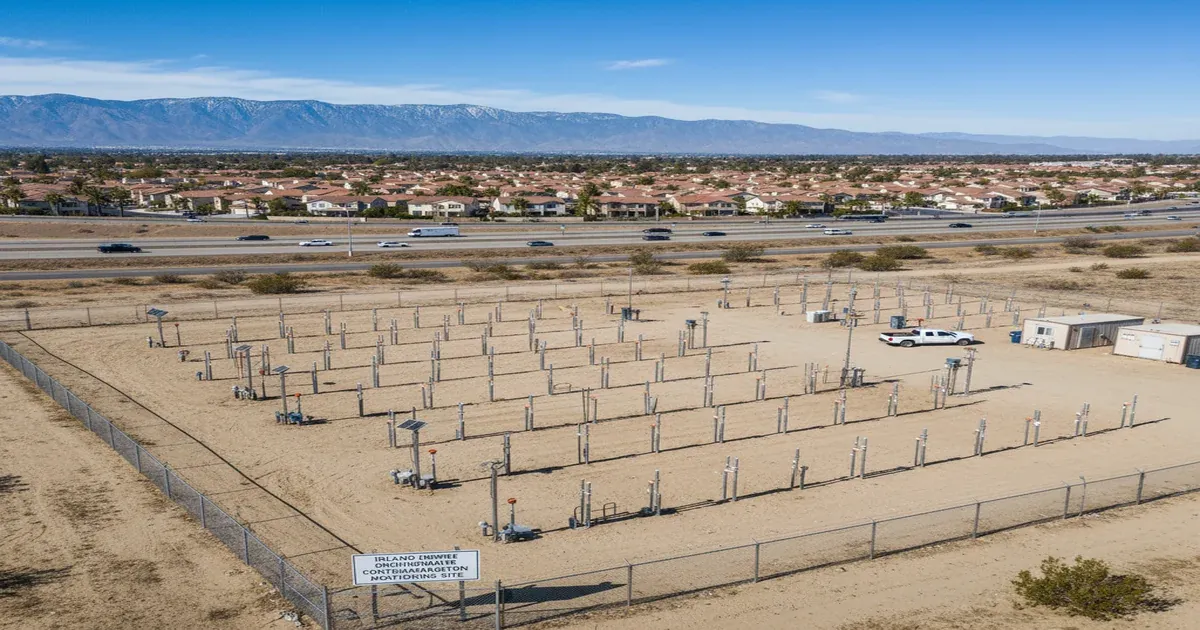
Riverside sits at the heart of Southern California’s Inland Empire, a region that grew up around military bases, aerospace manufacturing, and citrus groves. The military and aerospace legacy left something behind in the water: perchlorate, PFAS, and a long list of industrial solvents that continue to affect the city’s drinking water supply.
With a population approaching 320,000 — and the broader Inland Empire pushing past 4.6 million — Riverside’s water quality challenges aren’t just local. They’re a case study in what happens when Cold War industry meets 21st-century water demands.
Perchlorate: The Rocket Fuel Problem
Riverside has one of the most well-documented perchlorate contamination problems in the country. Perchlorate is a chemical used in solid rocket propellant, fireworks, and certain industrial processes. It dissolves readily in water and doesn’t break down easily.
The primary source of perchlorate in Riverside’s groundwater is the former operations of aerospace companies that manufactured rocket motors and propellants in the region during the Cold War era. Contamination has been detected in wells throughout the Bunker Hill Basin and surrounding groundwater areas.
California set an MCL for perchlorate at 6 ppb (parts per billion) — significantly lower than the federal action level, which has been debated for years without resulting in a formal MCL. Perchlorate interferes with thyroid function by blocking iodine uptake, which is particularly concerning for pregnant women, infants, and people with thyroid conditions.
Riverside Public Utilities has installed perchlorate treatment systems at affected wells, primarily using ion exchange technology. The treatment works, but it adds cost to every gallon of water the city delivers.
PFAS From March Air Reserve Base
March Air Reserve Base (now March Joint Air Reserve Base) sits just southeast of Riverside. Like military installations across the country, March used AFFF firefighting foam for decades during fire training and emergency response.
PFAS contamination has been detected in groundwater near the base, and plume migration is an ongoing concern. The Department of Defense has been conducting investigation and interim cleanup activities, but the process is slow.
The communities most directly affected are those in the Perris and Moreno Valley areas south of the base, but groundwater flows don’t respect municipal boundaries. Riverside’s groundwater basin connects to the broader regional aquifer system, making plume migration a monitoring priority.
The Santa Ana River Watershed
Riverside’s water supply draws from both groundwater and the Santa Ana River watershed. The river itself is one of the most heavily managed waterways in Southern California — by the time it reaches Riverside, it has passed through multiple upstream communities and their wastewater treatment plants.
The river’s flow during dry months is largely composed of treated wastewater effluent from upstream cities like San Bernardino, Redlands, and Highland. This “indirect potable reuse” is common in Southern California but means Riverside’s surface water supply carries whatever contaminants survive upstream treatment processes — including pharmaceuticals, hormones, and PFAS.
Riverside has invested in advanced treatment at its water facilities, including granular activated carbon and blending strategies to manage contaminant levels.
Nitrates and Agricultural Legacy
Before the Inland Empire was a sprawl of subdivisions and distribution centers, it was citrus country. Decades of fertilizer application pushed nitrates into the shallow aquifer, and those elevated levels persist in some wells.
Additionally, dairy operations in the region — historically concentrated in Chino and Norco — contributed significant nitrogen loading to the groundwater. While many dairies have relocated or closed, the contamination they left behind continues to affect water quality downstream.
What Riverside Residents Should Know
- Check your provider. Not all Riverside residents are served by Riverside Public Utilities. Western Municipal Water District, Eastern Municipal Water District, and several smaller agencies also serve parts of the metro area. Water quality varies by provider and well source.
- Ask about perchlorate. If you’re served by wells in the Bunker Hill Basin or nearby, perchlorate treatment should be in place. Your annual water quality report will show the levels.
- Monitor PFAS developments. California is actively tightening PFAS regulations. New response levels and notification requirements will generate more data about what’s in Riverside’s water.
- Consider filtration. Reverse osmosis at the tap handles perchlorate, PFAS, nitrates, and industrial solvents — the full spectrum of Inland Empire water contaminants.
- Run your tap. If you’re in an older home, let the water run for 30-60 seconds before drinking or cooking, especially in the morning. This flushes water that’s been sitting in contact with household plumbing.
If you’re concerned about your water quality, a certified water treatment professional can test your supply and recommend the right system for Riverside’s specific mix of contaminants. Between perchlorate, PFAS, and the usual California drought pressures, knowing what’s in your water is worth the investment.
Related Reading
- South Gate CA: Industrial Contamination Legacy
- Los Angeles Water: PFAS and Drought Challenges
- San Diego Water: Imported Supply, PFAS, and Water Recycling
- Colorado PFAS: Military Base Contamination Nationwide
Sources
- California State Water Resources Control Board perchlorate and PFAS monitoring data
- Riverside Public Utilities annual water quality reports
- Department of Defense PFAS investigation records for March ARB
- Santa Ana Regional Water Quality Control Board basin plan
- USGS groundwater quality assessments for the Upper Santa Ana River Basin