
Rochester sits at the southern shore of Lake Ontario, where the Genesee River meets one of the Great Lakes. The city’s drinking water comes directly from that lake — drawn through intake pipes that extend roughly a mile offshore. It’s a massive, reliable source. But reliable doesn’t automatically mean clean.
Lake Ontario: A Great Lake With Great Concerns
The Monroe County Water Authority and the City of Rochester both pull from Lake Ontario, serving over 500,000 people in the metro area. The lake itself carries the accumulated runoff of farms, cities, and industrial operations across its entire watershed — including everything that flows down from Lake Erie through the Niagara River.
Harmful algal blooms (HABs) have become an increasing concern in Lake Ontario’s embayments. These blooms produce microcystins, the same toxins that shut down Toledo’s water supply in 2014. While Rochester’s open-water intakes are less vulnerable than shallow nearshore systems, the city’s treatment plants must remain vigilant as bloom frequency and intensity increase with warming water temperatures.
The EPA’s most recent assessments have flagged Lake Ontario for phosphorus loading and microplastic contamination — both driven by agricultural runoff and urban stormwater from the broader Great Lakes basin.
Eastman Kodak: A Chemical Legacy
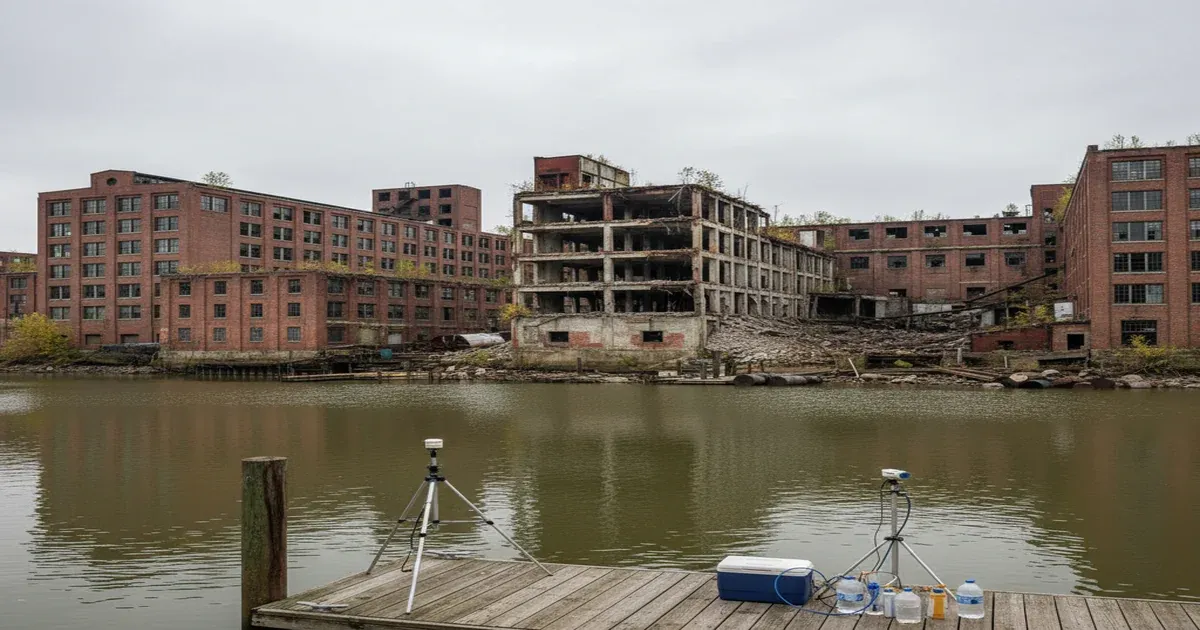
For over a century, Eastman Kodak was Rochester’s largest employer and its defining institution. At its peak, the Kodak Park complex covered over 1,300 acres along the Genesee River, processing millions of gallons of chemical-laden wastewater daily.
The environmental footprint is substantial. Kodak Park is a designated EPA Superfund site, with documented contamination including methylene chloride, trichloroethylene (TCE), and heavy metals in soil and groundwater. The Rochester-area portion of the Genesee River has been subject to fish consumption advisories due to PCB and mirex contamination — chemicals that persist in sediment for decades.
While Kodak’s direct discharges to the river have ceased, contaminated groundwater plumes continue migrating through the subsurface. The cleanup at Kodak Park has been ongoing since the 1990s and remains active under EPA oversight.
Lead Service Lines: Rochester’s Quiet Crisis
Like many northeastern cities built in the late 1800s and early 1900s, Rochester has thousands of lead service lines connecting water mains to homes. The city estimated roughly 17,000 lead service lines remained in its system as of recent inventories, though the actual number may be higher — many lines have never been definitively identified.
Rochester’s water is treated with orthophosphate to create a protective coating inside lead pipes, reducing lead leaching into tap water. This approach — the same corrosion control method Pittsburgh and many other cities use — is effective but not foolproof. Any disruption to water chemistry, main breaks, or construction activity near old lead lines can temporarily spike lead levels at the tap.
The city has been accelerating its lead service line replacement program, but at current funding levels, full replacement will take years. Homes built before 1986 are most likely to have lead plumbing, and residents in older neighborhoods like the 19th Ward, JOSANA, and Upper Falls should test their water regularly.
Combined Sewer Overflows
Rochester operates a combined sewer system — meaning stormwater and sewage flow through the same pipes. During heavy rain events, the system overflows, discharging untreated sewage directly into the Genesee River and ultimately Lake Ontario.
Monroe County’s Pure Waters district has invested hundreds of millions in CSO abatement, including storage tunnels and treatment upgrades. But combined sewer overflows remain a reality in Rochester, particularly during the intense summer storms that have become more frequent with changing climate patterns.
These overflows don’t directly affect treated tap water, but they degrade the source water quality in Lake Ontario and the Genesee River, adding to the treatment burden over time.
The Genesee River: More Than Scenery
The Genesee River runs through the heart of Rochester, but it’s also a conveyor of agricultural runoff from the Southern Tier. Upstream farms contribute nitrogen, phosphorus, and pesticide residues that flow north through the city. The river’s three waterfalls within city limits — including the iconic High Falls — aerate the water but don’t remove chemical contaminants.
The New York State DEC has classified sections of the Genesee as impaired for phosphorus, pathogens, and legacy industrial chemicals. Fish advisories remain in effect for certain species caught in the river within Monroe County.
What Rochester Residents Can Do
The city’s treated water generally meets all federal standards, and annual Consumer Confidence Reports are available from both the City of Rochester and Monroe County Water Authority. But meeting minimum standards and having truly clean water aren’t the same thing.
Practical steps for Rochester residents:
- Test your water — especially if your home was built before 1986 or you’re unsure about your service line material. Free lead testing kits are available through the city.
- Run your tap for 30 seconds to 2 minutes each morning before drinking, especially if you have lead plumbing. This flushes standing water that may have accumulated lead overnight.
- Check your CCR — the annual Consumer Confidence Report details every detected contaminant and its level relative to federal limits.
- Consider point-of-use filtration — NSF-certified filters rated for lead removal provide an additional layer of protection.
If you’re concerned about your water quality, a certified water treatment professional can help you test your water and recommend the right solution for your home.