
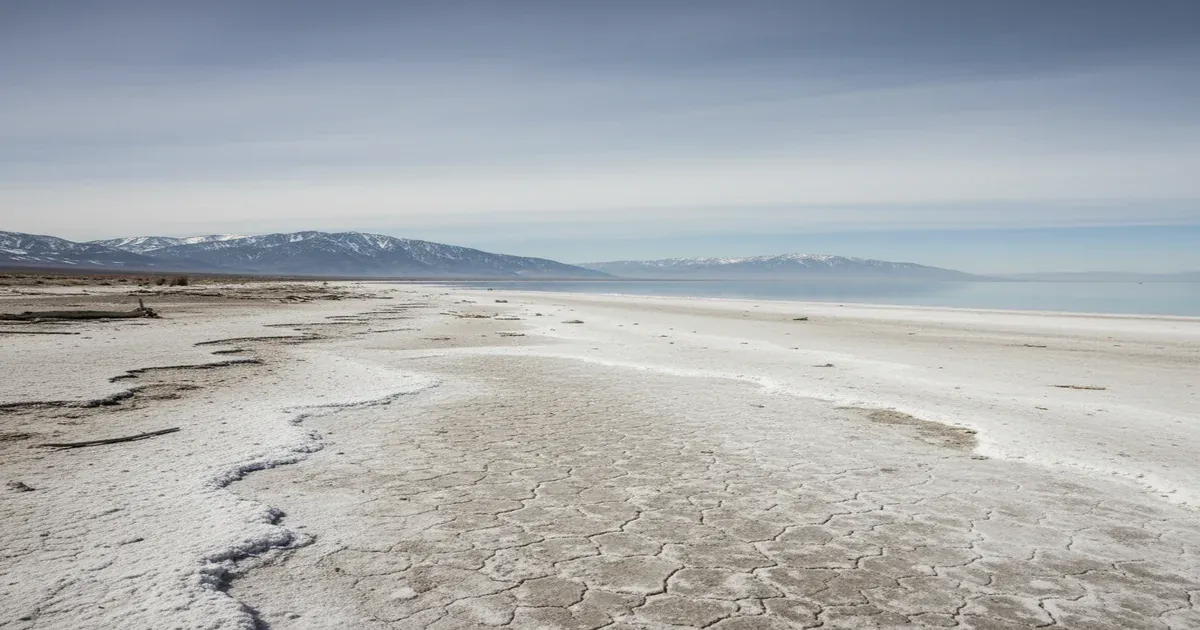
Salt Lake City sits in one of the most dramatic water landscapes in the United States. To the east, the Wasatch Mountains rise 7,000 feet above the valley floor — their snowpack providing the drinking water that sustains 1.2 million people in the Salt Lake metro area. To the west, the Great Salt Lake is shrinking toward ecological collapse, exposing toxic lakebed dust that threatens public health across the entire region.
Salt Lake City Department of Public Utilities draws from three protected mountain watersheds — City Creek, Parleys Creek, and Big Cottonwood Creek — supplemented by the Deer Creek and Jordanelle reservoirs on the Provo River system. It’s high-quality mountain water, treated at four water treatment plants.
But the water picture in Utah’s capital is far more complicated than pristine snowmelt might suggest.
The Great Salt Lake Crisis
The Great Salt Lake has lost approximately two-thirds of its water volume since 1987. In 2022, it hit its lowest recorded level. This isn’t primarily a drinking water issue — the lake is too saline for consumption — but the environmental consequences directly affect Salt Lake City’s public health and water infrastructure.
Toxic dust: As the lakebed is exposed, the dried sediments contain arsenic, mercury, and other heavy metals concentrated by decades of mining and industrial runoff. Wind events can loft this toxic dust across the Salt Lake Valley, creating air quality emergencies and depositing contaminants on surfaces, soil, and surface water.
Ecosystem collapse: The lake supports brine shrimp and brine fly populations that are the foundation of a massive migratory bird ecosystem. Collapse of the lake ecosystem would have cascading environmental effects across the region.
Snowpack connection: The Great Salt Lake contributes to lake-effect snowfall that supplements Wasatch snowpack — the same snowpack that provides drinking water. A smaller lake means less lake-effect snow, potentially reducing the water supply.
Utah’s legislature has taken steps to send more water to the Great Salt Lake, including funding water rights acquisition and conservation incentives. But the fundamental problem — too much water being diverted for agriculture, industry, and municipal use before it reaches the lake — requires systemic changes that are politically difficult.
PFAS: Hill Air Force Base
Hill Air Force Base, located about 30 miles north of Salt Lake City near Ogden, is one of the largest Air Force bases in the western United States — and one of Utah’s most significant PFAS contamination sites.
Decades of AFFF use for firefighting training and emergency response have contaminated groundwater beneath and around the base. The contamination plume affects:
- Drinking water wells in communities near the base, including parts of Layton, Clearfield, and South Weber
- The Weber River watershed — contaminated groundwater discharges to surface water in some areas
- Agricultural land — PFAS-contaminated groundwater used for irrigation raises questions about bioaccumulation in crops
The Air Force has provided bottled water and treatment systems to some affected properties, but full remediation of the groundwater plume is expected to take decades.
For Salt Lake City proper, the primary water supply comes from mountain watersheds that are largely unaffected by Hill AFB’s contamination. But the broader Wasatch Front — the urban corridor running from Provo to Ogden — has multiple PFAS sources, and the shared aquifer system means contamination can migrate.
Climate Change and Snowpack
Salt Lake City’s water future is inseparable from climate change in the Mountain West:
- Declining snowpack — Average snowpack in the Wasatch Mountains has decreased significantly over the past several decades. Warmer winters mean more precipitation falls as rain rather than snow, and the snow that does accumulate melts earlier.
- Earlier runoff — Peak snowmelt runoff is shifting earlier in the spring, reducing the natural storage effect that keeps water flowing into reservoirs through the summer.
- Drought — Utah has experienced severe drought conditions in recent years, with 2021 being one of the driest years on record. Reservoir levels dropped sharply, and the state imposed emergency water conservation measures.
- Increased demand — The Salt Lake metro area is one of the fastest-growing in the western US, with Utah consistently ranking among the highest-growth states. More people means more demand on a shrinking supply.
Salt Lake City has responded with conservation programs, water reuse initiatives, and infrastructure investments. But the long-term trajectory — less snow, more demand — is a fundamental challenge that conservation alone can’t solve.
Water Quality at the Tap
Salt Lake City’s treated water is generally high quality, benefiting from mountain source water with low natural contamination. However:
- Hardness — Water from some sources has moderate to high hardness from dissolved calcium and magnesium. Many residents use water softeners.
- DBPs — Chlorine disinfection combined with natural organic matter from mountain streams produces some disinfection byproducts. Levels are monitored and managed within EPA limits.
- Seasonal turbidity — Spring snowmelt and rainstorms can spike turbidity in mountain streams, requiring treatment plant adjustments.
- Uranium and radium — Some groundwater sources in the broader Salt Lake Valley contain naturally occurring radioactive materials at levels that require monitoring.
Private Wells Along the Wasatch Front
Many communities along the Wasatch Front rely on private wells or small water systems tapping valley-fill aquifers. These wells face risks from:
- PFAS — especially near Hill AFB, airports, and industrial areas
- Nitrates — agricultural and urban sources contribute nitrate contamination in some areas
- Arsenic — naturally occurring in some formations along the valley margins
- VOCs — from former industrial sites, dry cleaners, and gas stations
Utah’s Division of Drinking Water provides guidance for well owners, but testing responsibility falls on the property owner.
What Salt Lake City Residents Should Know
- Your mountain water is excellent. SLC’s Wasatch watershed sources produce some of the cleanest raw water in the western US.
- Conserve water seriously. Utah has some of the highest per capita water use in the nation, driven by lawn irrigation in a desert climate. The long-term supply math doesn’t work at current consumption rates.
- Consider a filter for taste improvement or as an extra precaution. Carbon filters address chlorine taste and reduce DBPs.
- Support Great Salt Lake conservation. The lake’s decline is a public health and environmental emergency that affects everyone in the Salt Lake Valley.
- Private well owners — test regularly, especially if you’re near Hill AFB or in areas with known groundwater contamination. Test for PFAS, nitrates, and arsenic.
- Prepare for drought. Water restrictions have become increasingly common in Utah. Xeric landscaping and efficient irrigation are investments that pay for themselves.
Related Reading
- Denver’s Water: PFAS, Lead, and Drought — A neighboring Mountain West city balancing quality and supply pressures.
- Las Vegas Water: Drought and the Colorado River — The West’s water scarcity challenge extends across the entire region.
- Phoenix Water Supply Challenges — Desert water management under extreme growth pressure.
- Colorado PFAS Military Base Contamination — Military installations across the Mountain West share PFAS contamination patterns.
The Bottom Line
Salt Lake City’s water system starts with an exceptional natural resource — mountain snowmelt from the Wasatch Range. But climate change is reducing that resource, population growth is increasing demand, and the Great Salt Lake’s decline threatens to create a cascading environmental and public health emergency.
The PFAS contamination from Hill AFB adds a contamination dimension that affects communities across the northern Wasatch Front. And Utah’s historically high per capita water consumption means the region needs to fundamentally rethink its relationship with water if it wants the supply to last.
If you’re concerned about your water quality, a certified water treatment professional can test your water and recommend the right approach for your home and location.