The Big Picture
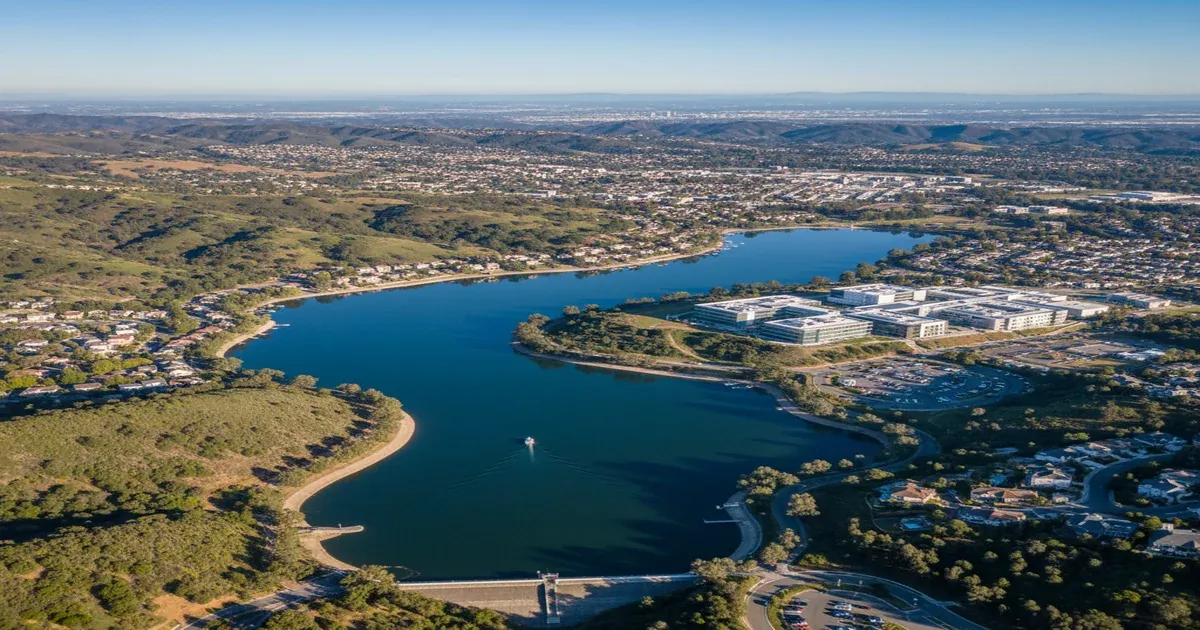
San Jose — the largest city in the Bay Area and the heart of Silicon Valley — serves roughly one million residents through San Jose Water Company and the Santa Clara Valley Water District. The city’s drinking water comes from a blend of imported surface water (primarily from the Sacramento–San Joaquin Delta via the State Water Project and federal Central Valley Project), local reservoirs, and groundwater wells.
That mix of sources means San Jose’s water quality depends on conditions hundreds of miles away — and closer to home, on the health of the Santa Clara Valley’s groundwater basin.
Chromium-6: The Erin Brockovich Contaminant
California has some of the nation’s strictest water quality standards, and for good reason. San Jose’s groundwater has historically contained elevated levels of hexavalent chromium (chromium-6), the contaminant made famous by the Erin Brockovich case.
Chromium-6 occurs naturally in Bay Area geology, but industrial contamination has added to background levels in some areas. California set a public health goal of 0.02 parts per billion (ppb) for chromium-6 — far below the federal standard. The Environmental Working Group’s analysis of San Jose Water Company testing data found chromium-6 levels that, while meeting federal legal limits, exceeded California’s health-based guidelines.
The state has been working toward an enforceable Maximum Contaminant Level (MCL) for chromium-6 since the original standard was withdrawn in 2017 following legal challenges. A revised MCL is expected in 2026, which could require additional treatment for some San Jose water sources.
PFAS: An Emerging Concern
Like many California cities, San Jose faces growing scrutiny over per- and polyfluoroalkyl substances (PFAS) — the “forever chemicals” found in firefighting foam, nonstick coatings, and thousands of consumer products.
The Santa Clara Valley has multiple potential PFAS sources: Moffett Federal Airfield (a former Naval Air Station), multiple electronics manufacturing sites, and commercial airports. The California State Water Resources Control Board has been ordering testing statewide, and results have shown detectable PFAS levels in some Bay Area water systems.
California adopted notification levels for PFOA — similar to challenges faced in San Francisco and Sacramento (5.1 ppt) and PFOS (6.5 ppt) — among the strictest in the country. Any water system detecting PFAS above these levels must notify customers, even though no federal MCL existed until the EPA’s 2024 rule set limits at 4 ppt for PFOA and PFOS individually.
Drought and Water Supply Pressure
San Jose’s water supply is fundamentally shaped by drought. The city relies heavily on imported water — during severe drought years like 2021–2022, the State Water Project allocation dropped to as low as 5% of requested supplies.
The Santa Clara Valley Water District has invested heavily in water recycling and groundwater recharge to buffer against drought. The Silicon Valley Advanced Water Purification Center, opened in 2014, treats wastewater to near-drinking-water quality for groundwater recharge. The district has also expanded its recycled water distribution system for non-potable uses.
Still, population growth and climate change put ongoing pressure on the system. San Jose’s population has grown by roughly 100,000 since 2010, and climate models project more frequent and severe droughts in California’s future.
Disinfection Byproducts
San Jose Water Company uses chloramine (a combination of chlorine and ammonia) for disinfection — a common practice in large California systems. While chloramine is effective and produces fewer taste and odor complaints than free chlorine, it does create disinfection byproducts (DBPs) including haloacetic acids (HAAs) and trihalomethanes (TTHMs).
Testing data shows San Jose’s DBP levels generally remain within federal limits, though they can spike during warmer months when organic matter in source water increases. The EPA’s Maximum Contaminant Levels are 60 ppb for HAA5 and 80 ppb for TTHMs.
Residents with home aquariums should be aware that chloramine is toxic to fish and cannot be removed by simply letting water sit — unlike free chlorine, chloramine is stable (see our guide on chlorine in drinking water) and requires chemical treatment or catalytic carbon filtration to remove.
What About Lead?
San Jose’s water leaves the treatment plant essentially lead-free. Lead in tap water comes from the pipes, solder, and fixtures in individual buildings — particularly those built before 1986 when lead solder was banned.
San Jose Water Company’s lead and copper testing has consistently met the EPA’s action level of 15 ppb for lead at the 90th percentile. However, individual homes — especially older homes in neighborhoods like Willow Glen, Japantown, and parts of East San Jose — may have lead service lines or lead solder that can leach into water, particularly when water sits stagnant in pipes.
California’s AB 100 (2023) required all water systems to begin inventorying lead service lines, and San Jose Water Company is in the process of completing this inventory.
What Residents Can Do
If you live in San Jose and want to know exactly what’s in your tap water, start with your utility’s annual Consumer Confidence Report — San Jose Water Company publishes theirs every spring. You can also request a free or low-cost water test through the utility.
For additional peace of mind:
- Run the tap for 30 seconds to 2 minutes before drinking if water has been sitting for several hours — this flushes any metals that may have leached from pipes
- Consider a certified water filter — NSF-certified filters can remove chromium-6, PFAS, lead, and disinfection byproducts depending on the type
- If you have a private well in the Santa Clara Valley, test annually for nitrates, chromium-6, and VOCs — groundwater contamination from industrial sites is well-documented in parts of the valley
- Check California’s PFAS investigation map at the State Water Board website to see if contamination has been found near your address
If you’re concerned about your water quality, a certified water treatment professional can test your water and advise on solutions tailored to the specific contaminants in your area.
Sources
- San Jose Water Company, 2024 Consumer Confidence Report
- Santa Clara Valley Water District, Water Supply and Infrastructure Reports
- California State Water Resources Control Board, PFAS Investigation
- Environmental Working Group, Tap Water Database
- EPA SDWIS, San Jose Water Company compliance records
- U.S. Geological Survey, Santa Clara Valley Groundwater Basin studies