
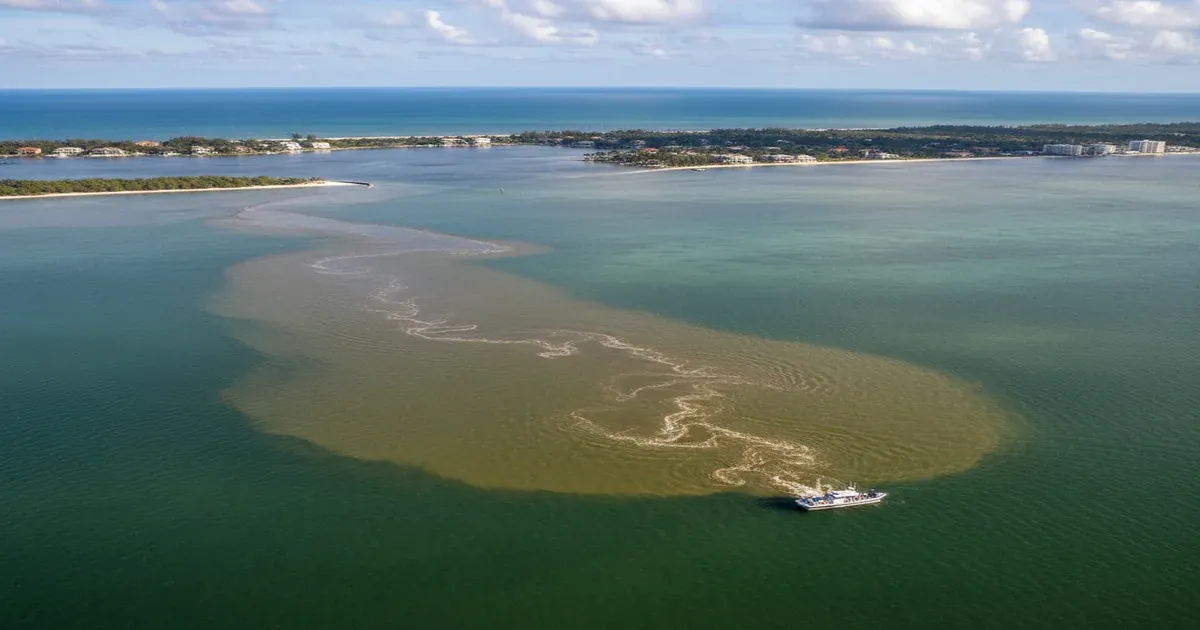
On March 1, 2026, approximately 14,000 gallons of raw wastewater spilled directly into Sarasota Bay after a connector on a 14-inch force main broke near West John Ringling Causeway Park.
The City of Sarasota filed a report with the Florida Department of Environmental Protection (FDEP) confirming the discharge. City crews were alerted when water was spotted surfacing in the park — a telltale sign that something underground had failed.
What Caused the Spill?
Investigators found that soil erosion — likely caused by past hurricane activity — had shifted a concrete vault that housed a 2-inch air-release valve. The shifting broke the saddle attached to the force main, creating a breach that allowed untreated wastewater to flow freely into the bay.
Force mains are pressurized pipes that push wastewater from pump stations to treatment plants. Unlike gravity sewers, when a force main breaks, the contents don’t just sit in the pipe — they come out under pressure.
Air-release valves are small but critical components. They let trapped air escape from pressurized pipes to prevent damage. When the vault shifted and broke the saddle connection, it turned a routine valve into a point of failure.
The Cleanup
City crews responded by:
- Installing a repair clamp to stop the discharge
- Applying lime to the affected area to neutralize bacteria
- Washing down the spill zone
- Vacuuming remaining wastewater for proper disposal at the city’s treatment plant
- Posting warning signs at the site
Water sampling is underway to assess any lasting environmental impact on the bay.
A Pattern in Florida
This isn’t an isolated incident. Sarasota and other Florida coastal communities have dealt with a string of wastewater system failures in recent years, many traced back to hurricane damage that weakened underground infrastructure in ways that aren’t immediately visible.
Hurricanes don’t just knock down trees and flood streets. The storm surge, soil saturation, and ground movement they cause can shift buried vaults, crack pipe connections, and erode the soil that supports force mains — sometimes causing failures months or years after the storm passes.
For communities built on sandy coastal soils, this is a recurring vulnerability. Underground infrastructure that looked fine during a post-storm inspection can deteriorate slowly until something gives way.
Related Reading
- Sarasota Water Quality: Wastewater and Red Tide — The broader context of Sarasota’s wastewater challenges.
- Sarasota Water Quality: Wastewater Spills History — Previous wastewater incidents that set the stage.
- Tampa Water: Desalination and PFAS — Tampa Bay area water infrastructure challenges.
- Jackson, Mississippi Water Crisis — What happens when water infrastructure reaches complete failure.
What Sarasota Bay Residents Should Know
- Check local advisories. The FDEP and city are monitoring water quality in the bay near the spill site. Avoid contact with water near West John Ringling Causeway Park until testing confirms it’s safe.
- Watch for recurring spills. If you live near force main routes or pump stations, pay attention to any unusual wet spots, odors, or surfacing water in parks and rights-of-way — these can indicate underground breaks.
- Well water users should test. If you have a private well in the Sarasota area, especially near the bay or coastal infrastructure corridors, periodic bacterial testing is a good idea. Wastewater spills can contaminate shallow aquifers.
- Support infrastructure investment. Aging and hurricane-damaged wastewater systems need proactive maintenance and replacement — not just emergency repairs after a spill.
The Infrastructure Challenge
Florida’s rapid population growth has put enormous strain on wastewater systems that were often built decades ago for smaller communities. Add repeated hurricane damage, rising sea levels, and coastal soil erosion, and you have a recipe for more incidents like this.
The 14,000 gallons that entered Sarasota Bay on March 1 are a relatively small spill compared to some Florida incidents. But each one represents a failure point in a system that’s supposed to keep untreated sewage out of the environment — and each one adds up.
If you’re concerned about your water quality in the Sarasota area or anywhere in Florida, a certified water treatment professional can test your water and advise on filtration or treatment options suited to your specific situation.
Sources: City of Sarasota FDEP report (March 2026), Wastewater Digest, WJHG, Sarasota Observer