
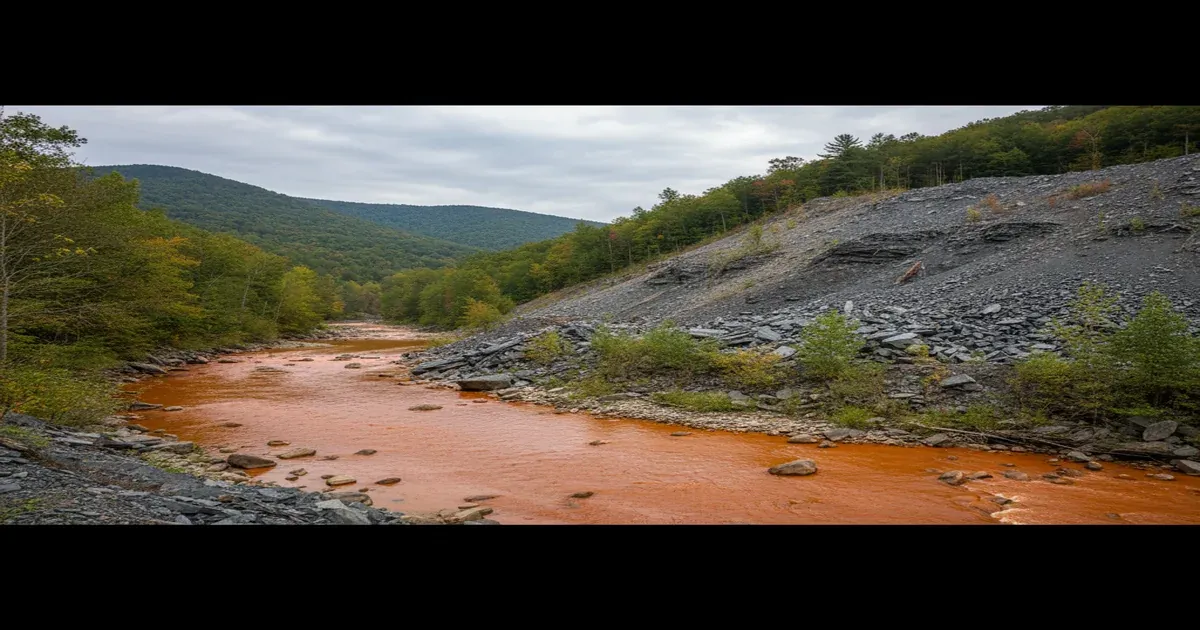
Scranton sits in northeastern Pennsylvania’s Lackawanna Valley, a landscape that was fundamentally reshaped by anthracite coal mining. From the early 1800s through the mid-20th century, coal was king here — and the mines dug deep into the earth beneath the city and surrounding communities. When the mines closed, they filled with water, creating vast underground pools of acidic, metal-laden water that continue to discharge into surface streams and affect groundwater more than half a century later.
For a city of 77,000 that depends on surface water reservoirs for its drinking supply, the mining legacy isn’t just history. It’s a daily water treatment reality.
Pennsylvania American Water
Scranton’s drinking water is supplied by Pennsylvania American Water, which operates a system of reservoirs in the hills above the city:
- Lake Scranton (primary)
- Elmhurst Reservoir
- Lake Henry
- Dunmore Reservoirs
These surface water sources are located in the relatively undeveloped upper watersheds above the most intensively mined areas, which helps protect source water quality. But the watersheds aren’t pristine — abandoned mines, their drainage, and associated contamination are present throughout the region.
Treatment includes conventional coagulation, sedimentation, filtration, and chloramine disinfection, with additional steps for managing iron, manganese, and pH variability that can be influenced by mine drainage in the broader watershed.
Acid Mine Drainage: The Persistent Problem
Acid mine drainage (AMD) is the defining environmental challenge of Pennsylvania’s coal region. When coal mines are abandoned and fill with water, the exposure of iron sulfide minerals (pyrite) to water and oxygen creates sulfuric acid. This acidic water dissolves heavy metals from surrounding rock and discharges to surface streams through mine openings, seeps, and springs.
The classic AMD signature includes:
- Low pH (acidic water, sometimes pH 2-4)
- Elevated iron — producing the orange-red staining visible in affected streams
- Elevated manganese — causing black deposits and water discoloration
- Elevated aluminum — toxic to aquatic life at elevated concentrations
- Sulfate — from the oxidation of pyrite
In the Lackawanna Valley, AMD has severely impacted the Lackawanna River and many of its tributaries. Roaring Brook, Leggetts Creek, and other streams show visible evidence of AMD contamination. The Lackawanna River itself has been the subject of extensive restoration efforts — and has improved dramatically from its worst years — but abandoned mine discharges continue to degrade water quality.
Underground Mine Pools
Beneath Scranton and surrounding communities, abandoned mine voids have filled with water, creating interconnected underground pools that hold billions of gallons. These mine pools pose several risks:
Uncontrolled discharge: When mine pools reach certain levels, they discharge to surface streams through mine openings and fractured rock. These discharges are unpredictable and can carry heavy metals, acidity, and sediment.
Subsidence: The abandoned mines create ground instability. Subsidence events — where the surface collapses into mine voids — can damage water mains, sewer lines, and building foundations. In 1959, the Knox Mine Disaster in nearby Port Griffith occurred when mining too close to the Susquehanna River floor caused a catastrophic inrush of river water into the mines.
Groundwater contamination: The acidic, metal-laden water in mine pools contaminates the surrounding aquifer, making groundwater in mined areas generally unsuitable for drinking without treatment. This is why Scranton relies on surface reservoirs rather than groundwater wells.
The Lackawanna River Restoration
The Lackawanna River has been the focus of one of Pennsylvania’s most successful AMD remediation efforts. The Lackawanna River Corridor Association (LRCA) and state and federal agencies have implemented:
- Passive treatment systems — constructed wetlands and limestone channels that neutralize acidity and precipitate metals from mine drainage before it reaches the river
- Mine sealing — closing mine openings to reduce oxygen entry and slow AMD formation
- Stream restoration — reconstructing stream channels, banks, and riparian buffers
The results have been remarkable. Sections of the Lackawanna that were biologically dead in the 1980s now support trout populations. But the restoration is ongoing, and many tributaries remain severely impacted by AMD.
Lead and Aging Infrastructure
Scranton’s water distribution system dates to the late 1800s, making it one of the older systems in Pennsylvania. Lead service lines and lead solder are present throughout the system, particularly in neighborhoods built before 1930.
Pennsylvania American Water conducts Lead and Copper Rule sampling and uses corrosion control treatment to reduce lead leaching. The utility is working on the service line inventory required under the revised Lead and Copper Rule. Given the age of Scranton’s infrastructure, lead service line replacement is a major long-term undertaking.
Manganese and Iron
Even in treated water, the legacy of mining can affect water quality aesthetics. Iron and manganese from AMD-influenced source water can cause:
- Brown or orange discoloration at the tap if treatment doesn’t fully remove these metals
- Metallic taste from elevated iron
- Black staining on fixtures from manganese
Pennsylvania American Water manages these issues through treatment optimization, but customers in some areas may notice occasional discoloration, particularly after water main maintenance or flushing operations.
Radon in Groundwater
Northeastern Pennsylvania has naturally elevated radon levels due to its geology. For households on private wells — particularly in areas outside the PA American Water service area — radon in well water is an additional concern. Radon is a radioactive gas that can dissolve in groundwater and be released into home air when water is used.
The EPA has proposed (but not finalized) an MCL of 300 picocuries per liter for radon in water, with an alternative MCL of 4,000 pCi/L for states with multimedia mitigation programs. Private well owners in the Scranton area should test for radon as part of a comprehensive water quality assessment.
What Scranton Residents Should Know
- PA American Water’s treated water meets EPA standards. The reservoir-based system avoids the worst AMD contamination. But if you notice discoloration or metallic taste, contact the utility — it may indicate a local distribution issue.
- If you’re on a private well, testing is critical. Test for iron, manganese, pH, sulfate, and metals in addition to standard bacteria and nitrate. AMD influence can vary dramatically from one well to the next depending on proximity to abandoned mines.
- Lead is a concern in older homes. Flush your tap before drinking, especially after periods of non-use. Consider a certified lead-removal filter, particularly if your home predates 1930.
- Test for radon if you’re on a private well. Radon in water is an underappreciated exposure pathway in northeastern Pennsylvania.
- Water softeners and iron/manganese filtration are common needs for private well owners in the region. A water treatment professional can design a system matched to your specific water chemistry.
If you’re concerned about your water quality, a certified water treatment professional can test your water and recommend the right treatment. In coal country, where the geology itself has been altered by 150 years of mining, knowing your water chemistry is essential.
Related Reading
- Pittsburgh Lead Service Line Replacement
- Philadelphia: Oldest Water Pipes in America
- Syracuse NY Water Quality: Onondaga Lake Legacy
- Rochester NY Water Quality: Lead and PFAS
Sources
- Pennsylvania American Water annual Consumer Confidence Reports for Scranton
- Pennsylvania DEP abandoned mine drainage program records
- Lackawanna River Corridor Association restoration reports
- USGS mine drainage studies in the Lackawanna Valley
- EPA radon in drinking water proposed rulemaking
- Pennsylvania DEP Lead and Copper Rule compliance data