
Seattle has some of the best drinking water in America. That’s not marketing — it’s hydrology.
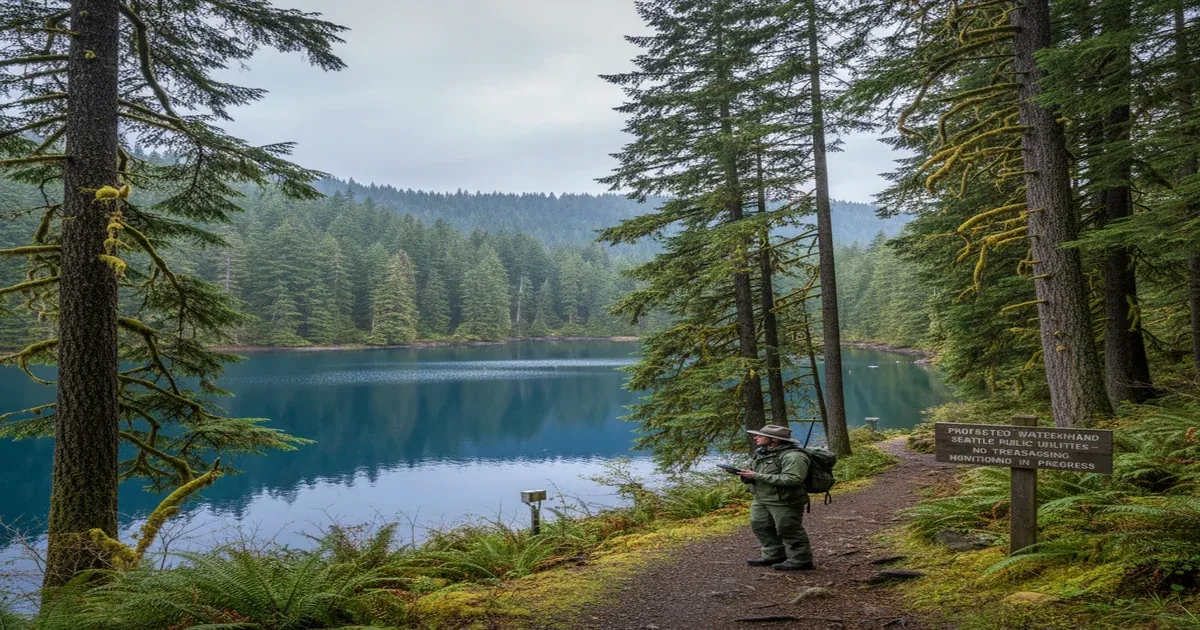
Seattle Public Utilities (SPU) draws from two protected mountain watersheds in the Cascade Range: the Cedar River watershed (about 90,000 acres) and the South Fork Tolt River watershed (about 12,500 acres). These watersheds have been closed to public access for over a century. No homes, no farms, no industry. Just forests, rivers, and rain.
Like Boston’s Quabbin system, this deliberate source water protection means the raw water arriving at Seattle’s treatment facilities is exceptionally clean. SPU treats it with ozone and UV disinfection, adjusts pH for corrosion control, adds fluoride, and chlorinates for residual disinfection.
The system serves about 1.5 million people across Seattle and 27 wholesale customer cities and water districts.
Lead: Old Pipes in a Young-Feeling City
Seattle feels like a new city. Tech headquarters, construction cranes, modern condos. But much of the residential infrastructure is older than it looks.
Seattle’s major residential building periods — 1890s through 1950s — coincide exactly with the era when lead was standard for water service lines and plumbing solder. Neighborhoods like Capitol Hill, Central District, Beacon Hill, Ballard, Fremont, Wallingford, and Georgetown have significant concentrations of older homes with potential lead plumbing.
SPU estimates that approximately 25,000 to 30,000 lead service lines may exist in its system. The utility has been building a service line inventory as required under EPA’s LCRI and has begun targeted replacement.
Seattle’s naturally soft water (low mineral content from mountain sources) tends to be more corrosive to lead than harder water. SPU addresses this through pH adjustment and corrosion control treatment, which has kept system-wide lead levels below EPA’s action level.
But individual homes can test significantly higher than the system average — especially if they have lead service lines, lead solder, or brass fixtures, and particularly when water has been sitting in pipes overnight.
PFAS: Lower Risk, But Not Zero
Seattle’s protected mountain watersheds are relatively free from the industrial and military PFAS sources that plague other regions. There are no military bases, airports, or industrial facilities within the Cedar River or Tolt watersheds.
However, PFAS is an ambient environmental contaminant at this point. Trace levels have been detected in surface water and precipitation across the Pacific Northwest. SPU monitors for PFAS as part of its water quality testing program and has reported levels well below federal and state standards.
Washington State has been proactive on PFAS regulation. The Department of Ecology has established action levels for PFAS in drinking water, and the Department of Health requires public water systems to test and report PFAS results.
For Seattle residents on the SPU system, PFAS is not currently a significant concern. But residents on smaller water systems or private wells in the greater Puget Sound area — especially near Joint Base Lewis-McChord, Naval Station Everett, or commercial airports — face higher PFAS risk and should check their system’s testing results.
Climate and Supply Reliability
Seattle gets a lot of rain. But the rain comes mostly between October and April. Summer water supply depends on snowpack in the Cascades melting slowly through the dry months — and climate change is disrupting that pattern.
Key concerns:
- Declining snowpack — Warmer winters mean more precipitation falls as rain instead of snow. The snow that does fall melts earlier. This shifts the timing of water availability away from summer peak demand.
- Drought years — The Pacific Northwest has experienced several significant drought years in the past decade, straining reservoir storage. 2015 was particularly severe, with record-low snowpack and mandatory water restrictions.
- Wildfire risk — As conditions dry and warm, the Cedar River and Tolt watersheds face increasing wildfire risk. A major fire in the watershed could devastate source water quality for years, similar to what Denver has experienced after Front Range fires.
- Growing demand — The Puget Sound region’s population continues to grow, increasing pressure on water resources.
SPU has invested in reservoir expansion, water conservation programs, and emergency interconnections with other utilities. But the long-term trend lines point toward tighter margins between supply and demand.
What Seattle Residents Should Know
- Your source water is excellent. The Cedar and Tolt watersheds produce some of the cleanest drinking water in the country.
- Your pipes may not be. If you live in a home built before 1985 (when lead solder was banned), or before the 1950s (when lead service lines were common), your plumbing may introduce lead that isn’t in the source water.
- Check your service line. SPU is building a service line inventory and offers resources to help you determine what connects your home to the water main.
- First-draw flush. Run cold water for 30 seconds to 2 minutes before using it for drinking or cooking if you suspect lead plumbing. This is especially important first thing in the morning.
- Consider a filter for drinking water — especially in older homes. An NSF/ANSI 53-certified filter handles lead effectively.
- Conserve water. Seattle’s summer supply is more constrained than most residents realize. Low-flow fixtures, efficient irrigation, and rain gardens all help.
Related Reading
- Portland’s Bull Run Water System and Lead Concerns — Seattle’s Pacific Northwest neighbor faces similar infrastructure aging issues.
- Sacramento’s Water Quality and PFAS in the Delta — Another West Coast city navigating PFAS contamination in its water supply.
- San Francisco’s Hetch Hetchy Water and PFAS — Like Seattle, San Francisco benefits from protected watershed sourcing.
- PFAS Treatment: Ion Exchange vs. Activated Carbon — How the treatment technologies work for emerging contaminants.
The Bottom Line
Seattle’s water system is a testament to the value of watershed protection. A hundred years of keeping the Cedar River watershed closed to development has paid dividends that no treatment plant can replicate.
The remaining challenges — lead in aging distribution infrastructure, climate pressure on supply reliability, and the ever-expanding list of emerging contaminants — are real but manageable. Seattle starts from a position of strength that most cities would envy.
If you want to know exactly what’s in your home’s water, a certified water treatment professional can test it and advise on whether any additional filtration or treatment makes sense for your specific situation.