
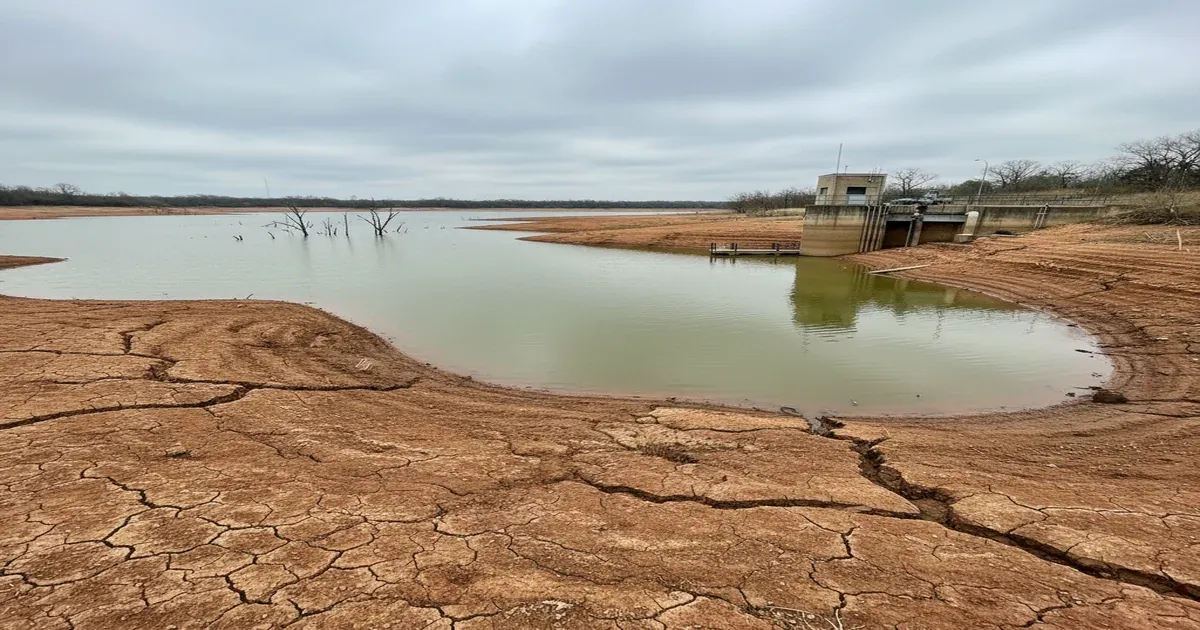
Shreveport sits on the banks of the Red River in northwestern Louisiana, but the city doesn’t drink from that river. Instead, Shreveport’s 180,000-plus residents get their tap water from Cross Lake — a 8,600-acre reservoir on the western edge of the city that has served as the primary drinking water source since 1926.
Cross Lake has been reliable for a century. Whether it can stay that way is a growing question.
Cross Lake: A Reservoir Under Stress
Cross Lake was created by damming Cross Bayou, a tributary of the Red River. The watershed is relatively compact — about 100 square miles — and increasingly developed. As Shreveport’s western suburbs have expanded, impervious surface area in the Cross Lake watershed has grown, sending more stormwater runoff into the reservoir.
That runoff carries nitrogen and phosphorus from lawns, parking lots, construction sites, and remaining agricultural land. The nutrient loading has fueled recurring algal blooms in Cross Lake, particularly during the warm months that stretch from April through October in northwest Louisiana. While the blooms haven’t produced the kind of microcystin crisis that hit Toledo in 2014, the trend is concerning.
The Shreveport Water and Sewerage Department treats Cross Lake water through a conventional process: coagulation, flocculation, sedimentation, filtration, and chloramine disinfection. Disinfection byproducts — specifically trihalomethanes (TTHMs) and haloacetic acids (HAA5) — have historically tested near the upper range of federal limits during summer months, when warmer water and higher organic matter loading from algae increase byproduct formation.
The Louisiana Department of Health monitors Shreveport’s compliance with Safe Drinking Water Act standards. The city has generally met those standards, but the margin has been thin at times, particularly for TTHMs. Upgrades to the treatment plant, including enhanced coagulation and potential conversion to ozone or UV disinfection, have been discussed but face funding constraints.
Lead and Aging Infrastructure
Shreveport’s water distribution system includes infrastructure dating to the early 1900s. Like many Southern cities of that era, lead service lines and lead-soldered copper pipes were standard installation for decades.
The city has been working on a lead service line inventory as required by the EPA’s revised Lead and Copper Rule. Estimates suggest thousands of lead service lines remain in service, concentrated in Shreveport’s older neighborhoods — particularly in the Allendale, Ledbetter Heights, and Cedar Grove areas.
Shreveport adds orthophosphate to its treated water as a corrosion inhibitor, which helps reduce lead leaching from pipes. The city’s 90th percentile lead levels have tested below the federal action level of 15 ppb. But infrastructure age creates problems beyond lead: main breaks are frequent, and each break risks introducing contaminants into the distribution system and disrupting the corrosion control chemistry that keeps lead in check.
The American Society of Civil Engineers has consistently rated Louisiana’s water infrastructure poorly, and Shreveport’s system is no exception. Deferred maintenance and capital investment shortfalls mean the city is playing catch-up on pipes that should have been replaced decades ago.
The Red River: Industrial Corridor
While Shreveport doesn’t draw drinking water from the Red River, the river’s condition affects the broader water environment. The Red River corridor in the Shreveport-Bossier City area hosts petroleum refineries, chemical manufacturing, and natural gas processing facilities — the industrial backbone of northwest Louisiana’s economy.
These operations discharge treated wastewater under EPA permits, but spills and upsets occur. The Red River’s naturally high salt content — a geological characteristic of its upper reaches in Texas and Oklahoma — adds to the challenge. Groundwater in the Red River alluvial aquifer, which some smaller systems and private wells tap, can carry elevated levels of chlorides, sulfates, and in some areas, naturally occurring arsenic.
The Haynesville Shale natural gas formation underlies much of the Shreveport area. Hydraulic fracturing operations, which expanded dramatically in the late 2000s and 2010s, raised concerns about groundwater contamination from drilling fluids and produced water. The Louisiana Department of Natural Resources has documented some cases of well water contamination near drilling operations, though the scale of impact remains debated.
Environmental Justice and Water Affordability
Shreveport’s water quality challenges intersect with equity issues. The city’s poverty rate exceeds 25%, and water and sewer bills have risen significantly in recent years as the utility works to fund infrastructure repairs.
Predominantly Black neighborhoods in north and central Shreveport tend to have the oldest infrastructure and the longest water main runs — meaning water sits in aging pipes longer before reaching the tap. Longer residence time can increase lead exposure and disinfection byproduct levels.
Water shutoffs for nonpayment have been a recurring issue, raising questions about access to safe drinking water as a fundamental right. Louisiana’s water assistance programs have been limited compared to some states, though federal funding from the Bipartisan Infrastructure Law has begun to flow toward lead line replacement and treatment upgrades.
What Shreveport Residents Can Do
Shreveport’s water meets federal standards, but the thin margins on disinfection byproducts and the aging infrastructure warrant proactive steps:
- Run your tap for 30 seconds to 2 minutes before drinking, especially in the morning — this flushes standing water that may have accumulated lead from pipes.
- Use cold water for cooking and drinking — hot water leaches more lead from plumbing.
- Check your address against the city’s lead service line inventory when it becomes available.
- Consider activated carbon filtration — it reduces both lead and disinfection byproducts.
- Private well owners near the Red River or gas fields should test for chlorides, arsenic, and methane.
If you’re concerned about your water quality, a certified water treatment professional can help you test your water and recommend the right solution for your home.