
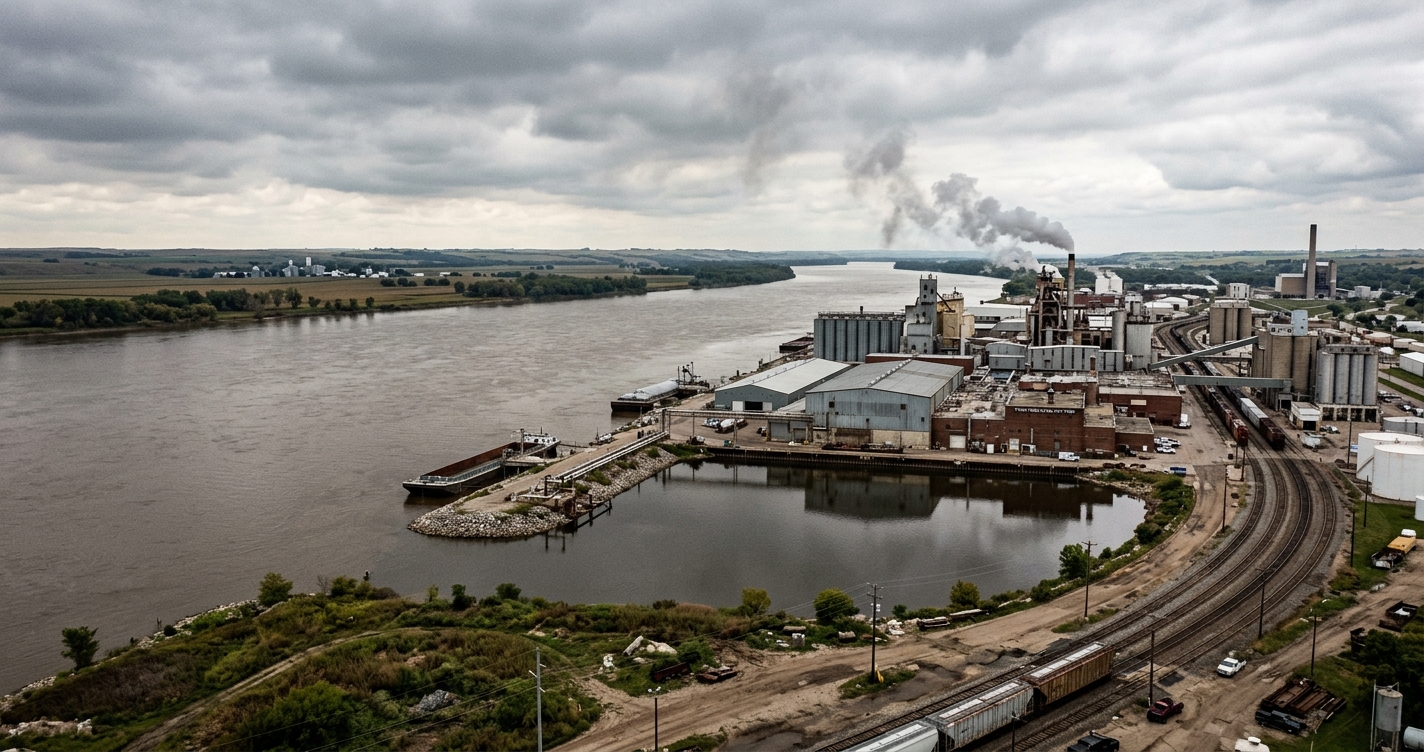
Sioux City, Iowa — population about 85,000 — sits where Iowa, Nebraska, and South Dakota converge at a bend in the Missouri River. The city is a major meatpacking center (Tyson Foods, Seaboard Triumph Foods, and others operate massive processing plants here) and a regional hub for one of America’s most productive agricultural regions.
That economic activity has consequences for the river that provides the city’s drinking water.
Missouri River: Three States of Runoff
The Missouri River at Sioux City has already traveled over 1,500 miles from its headwaters in Montana, collecting runoff from:
- Bakken oil country — North Dakota’s oil production generates brine spills and produced water contamination that enters the Missouri watershed
- South Dakota agriculture — Corn, soybeans, and cattle operations contribute nitrate, phosphorus, and sediment
- Nebraska feedlots — The state’s massive cattle feeding industry concentrates animal waste that washes into tributaries
- Iowa agriculture — Intensive row crop farming with heavy fertilizer application adds nitrate from the east
By the time the Missouri reaches Sioux City, it’s carrying a complex mixture of agricultural chemicals, sediment, and industrial residues.
Meatpacking: Sioux City’s Economic Engine and Environmental Challenge
Sioux City is one of the most concentrated meatpacking regions in the United States. The industry provides thousands of jobs but generates enormous volumes of wastewater:
- Processing plant discharges — Meatpacking wastewater contains blood, fat, proteins, nitrogen, phosphorus, and sanitizing chemicals
- These discharges are treated before release, but permitted levels of nitrogen and phosphorus still contribute to river nutrient loading
- Odor and air quality — While not directly a water quality issue, the rendering and processing operations affect quality of life
- Spills and upsets — Processing plant wastewater system failures can release inadequately treated waste into the sewer system and ultimately into waterways
The Iowa Department of Natural Resources regulates these discharges under Clean Water Act permits, but the cumulative impact of multiple large plants in a concentrated area is significant.
Nitrate: Iowa’s Universal Problem
Like every Iowa city, Sioux City deals with nitrate in its source water:
- The Missouri River carries nitrate from agricultural operations across multiple states
- Seasonal peaks during spring runoff can push source water nitrate levels toward the EPA MCL
- Sioux City’s water treatment manages nitrate through blending and treatment adjustments
Infrastructure and Flooding
Sioux City’s location at the Missouri River makes it flood-prone:
- The 2011 Missouri River flood — Sustained high water from massive upstream snowmelt and rainfall kept the Missouri above flood stage for months, straining levees and water infrastructure
- Combined sewer system — Older parts of Sioux City have combined sewers that overflow during heavy rain
- Aging pipes — Like most Midwestern cities, Sioux City has an aging distribution system needing ongoing replacement
What the Data Shows
From Sioux City’s most recent Consumer Confidence Report:
- All regulated contaminants within EPA limits
- Nitrate managed below MCL through treatment
- Atrazine and other agricultural chemicals detected at low levels
- Disinfection byproducts within limits
- Lead at 90th percentile below action level
- No SDWA violations
What Sioux City Residents Should Do
- Municipal water is treated — The Missouri River source requires significant treatment, and Sioux City’s plant manages it. Review the CCR annually.
- Private well owners in Woodbury County — Test for nitrate, bacteria, and agricultural chemicals annually. Iowa’s agricultural intensity makes private well testing essential.
- Flood awareness — Keep emergency water supplies. Missouri River flooding can affect the entire water system.
- Point-of-use filtration — If you’re concerned about source water quality, an activated carbon or reverse osmosis system provides additional removal at the tap.
- Infant precaution — During high nitrate periods, well owners should use bottled water for infant formula preparation.
Sioux City’s tri-state location means its water quality is determined by land use decisions in three states. That’s both a challenge and a reminder that water quality is always a regional, not just a local, issue.
If you’re concerned about your water quality, a certified water treatment professional can test your water and advise on appropriate solutions.