
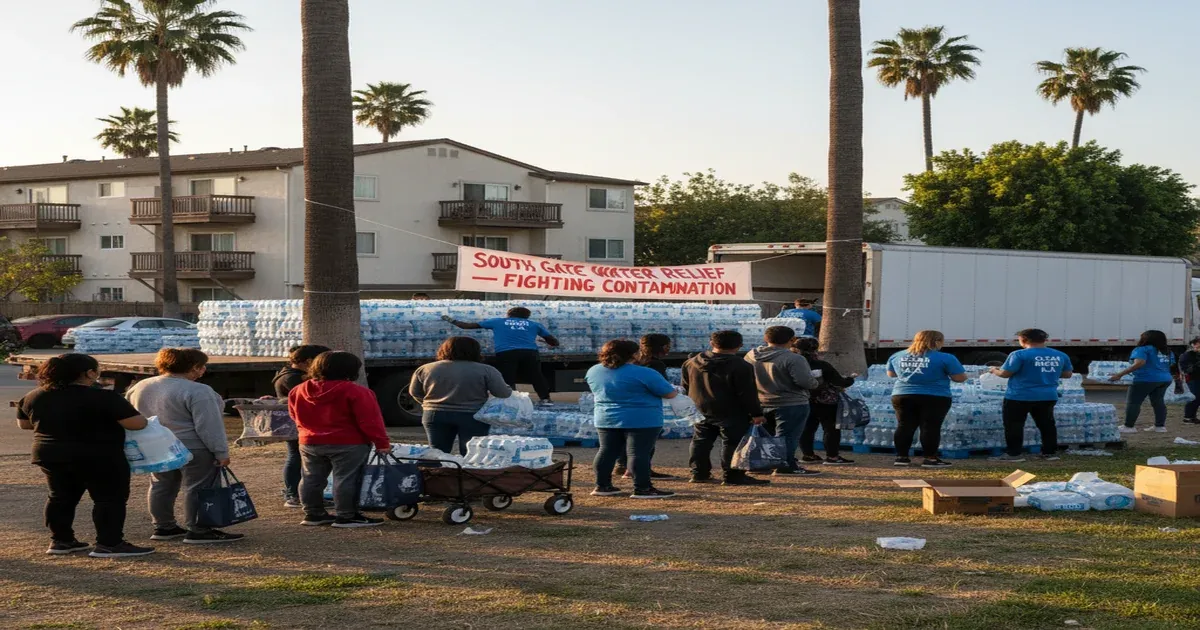
South Gate sits in the industrial heartland of southeast Los Angeles County. For most of the 20th century, this stretch of the LA basin was home to steel mills, auto plants, chemical manufacturers, and metalworking shops. The jobs are mostly gone. The contamination they left behind is not.
Today, South Gate’s roughly 95,000 residents get their water from a combination of groundwater wells drawing from the Central Basin aquifer and imported water from the Metropolitan Water District. Both sources have quality concerns — but it’s the groundwater that carries the heaviest industrial fingerprint.
The Industrial Legacy
South Gate’s contamination story starts with its geography. The city sits in the Central Basin, a massive groundwater reservoir that underlies much of southeast LA County. For decades, the industries operating above that basin discharged waste with little regulation.
Key industrial contaminants found in the Central Basin include:
- Chromium-6 (hexavalent chromium): Used in metal plating and industrial processes, chromium-6 has been detected in Central Basin groundwater. California set a public health goal of 0.02 ppb for chromium-6, though the enforceable MCL has been a subject of ongoing legal and regulatory battles.
- Trichloroethylene (TCE) and tetrachloroethylene (PCE): Industrial solvents widely used in metalworking and dry cleaning. Multiple Superfund and state cleanup sites in the area target these chemicals.
- Nitrates: Elevated from a combination of industrial discharge and aging urban infrastructure.
- 1,2,3-Trichloropropane (TCP): A legacy pesticide contaminant found in some Central Basin wells. California set an MCL of 5 ppt in 2017.
Superfund Sites in the Area
The broader southeast LA County region has multiple contamination sites that affect or have the potential to affect South Gate’s water supply:
The Montrose Chemical Corporation Superfund site in nearby Torrance contaminated a wide area with DDT and PCBs. While the primary contamination pathway was through the Palos Verdes Shelf, the site illustrates the scale of industrial contamination in the LA basin.
The San Fernando Valley Superfund sites — while north of South Gate — demonstrate how contamination plumes can migrate through the basin’s interconnected aquifer system.
Closer to home, several state-managed cleanup sites in Huntington Park, Lynwood, and Commerce target industrial solvent plumes that affect the Central Basin groundwater South Gate draws from.
Water Quality Today
South Gate’s water provider, the City of South Gate Water Division, blends groundwater with imported Metropolitan Water District supplies. This blending helps dilute contaminant levels, and the city treats its well water before distribution.
Recent water quality reports show the city generally meets state and federal standards for regulated contaminants. However, some concerns persist:
- Chromium-6 levels have been a recurring issue across Central Basin cities. While utilities treat to meet the MCL, many public health advocates argue the standard isn’t protective enough.
- Disinfection byproducts — formed when chlorine reacts with organic matter during treatment — have occasionally approached regulatory limits in distribution system samples.
- PFAS testing is relatively new for many Central Basin water providers. As California implements stricter notification and response levels, some wells may require additional treatment or removal from service.
The Imported Water Factor
When groundwater quality is compromised, imported water picks up the slack — but it comes with its own challenges. Metropolitan Water District water comes from the Colorado River and the State Water Project (Northern California). Both sources have been stressed by drought, and the Colorado River carries naturally elevated levels of total dissolved solids, chromium, and other minerals.
South Gate’s reliance on a blend of local and imported water means the city’s water quality can shift depending on the proportion of each source in use at any given time.
What Residents Should Know
- Read the annual water quality report. The City of South Gate publishes a Consumer Confidence Report each year. Look for chromium-6, nitrate, and disinfection byproduct levels specifically.
- Understand your pipes. South Gate’s housing stock includes many older homes built before lead service line regulations. If your home was built before 1986, consider having your tap water tested for lead, regardless of what the city reports at the treatment plant.
- Consider point-of-use filtration. A reverse osmosis system can reduce chromium-6, nitrates, and most industrial contaminants to near-zero levels. It’s the most effective single investment you can make for your household’s water quality.
- Stay informed on PFAS. California is actively tightening PFAS regulations. New testing requirements may reveal contamination that wasn’t previously monitored.
If you’re concerned about your water quality, a certified water treatment professional can test your tap water and recommend the right system for South Gate’s specific contaminant profile. The industrial legacy of southeast LA County makes proactive testing especially worthwhile.
Related Reading
- Los Angeles Water: PFAS and Drought Challenges
- Riverside CA Water Quality: Perchlorate and PFAS Contamination
- Fresno Water Quality: Nitrate and 1,2,3-TCP in the Valley
- Stockton CA Water Quality: Delta Water and Nitrate Issues
Sources
- City of South Gate Annual Water Quality Report
- California State Water Resources Control Board Central Basin monitoring data
- EPA Superfund site records for the LA basin region
- California Office of Environmental Health Hazard Assessment chromium-6 public health goal
- Metropolitan Water District water quality reports