
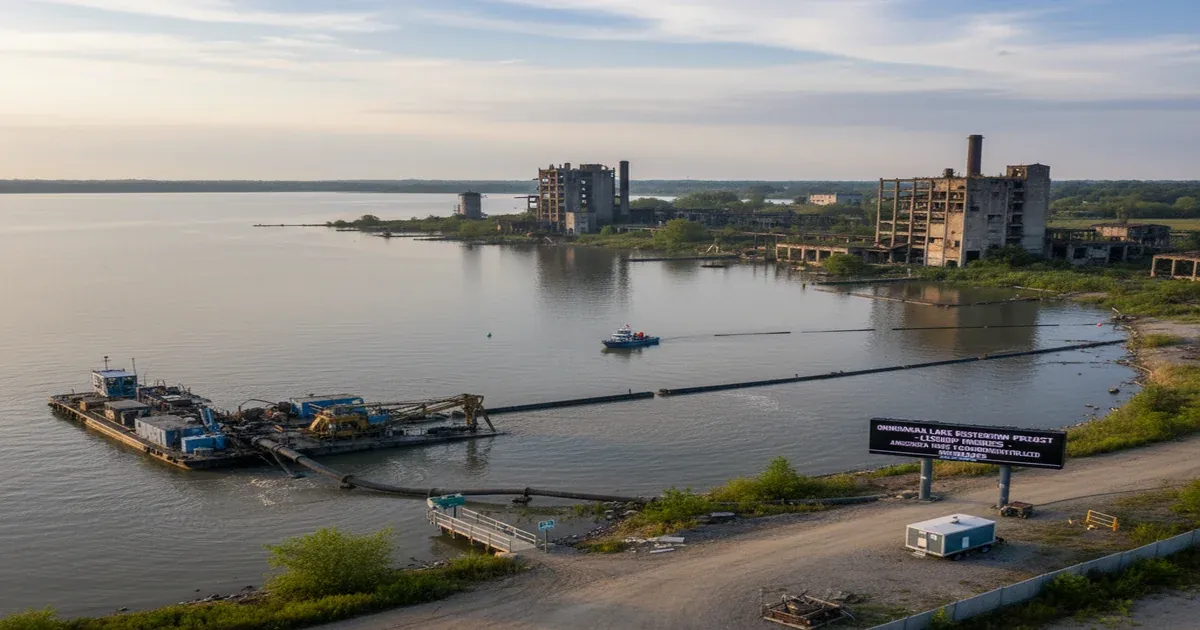
Syracuse has a tale of two lakes. Skaneateles Lake, 20 miles southwest of the city, provides some of the purest municipal drinking water in the country — so clean it’s one of only a handful of surface water supplies in the U.S. exempt from filtration requirements. Then there’s Onondaga Lake, sitting at the city’s northern doorstep, which spent most of the 20th century as one of the most polluted bodies of water in America.
Understanding both lakes is essential to understanding Syracuse’s water quality story.
Skaneateles Lake: Syracuse’s Crown Jewel
Skaneateles Lake is a Finger Lake — one of the long, deep, glacier-carved lakes of central New York. At 16 miles long and 300 feet deep, it holds roughly 1.6 trillion gallons of exceptionally clean water. The watershed is predominantly forested and agricultural, with strict land use controls enforced by the City of Syracuse to protect water quality.
The city’s water supply has been drawn from Skaneateles Lake since 1894. The treatment is minimal by design: chlorination for disinfection and fluoridation for dental health. No filtration plant. No coagulation. The water is naturally that clean.
This isn’t just marketing — the EPA granted Syracuse a filtration avoidance determination under the Surface Water Treatment Rule, meaning the agency agreed that Skaneateles Lake’s water quality and the city’s watershed protection program are sufficient to make filtration unnecessary. Only about 50 systems in the entire country have this designation.
That said, the determination comes with conditions. The city must maintain rigorous watershed monitoring, respond quickly to any contamination events, and demonstrate that turbidity and pathogen levels remain consistently low. A harmful algal bloom event on Skaneateles Lake in 2017 — a first for the lake — raised alarms and prompted the city to invest in enhanced monitoring and emergency treatment capabilities, including a temporary microcystin treatment system.
Climate change is the long-term wildcard. Warmer lake temperatures and changing precipitation patterns could increase the frequency and severity of algal blooms, potentially threatening the filtration avoidance status that makes Syracuse’s water system both efficient and cost-effective.
Onondaga Lake: America’s Most Polluted Lake
While Syracuse drinks from Skaneateles, the city lives beside Onondaga Lake — and for decades, that proximity was a public health and environmental disaster.
From the early 1900s through the 1980s, the Allied Chemical Corporation (later Honeywell) operated a soda ash and chlor-alkali plant on the lake’s southwestern shore. The facility discharged an estimated 165,000 pounds of mercury into Onondaga Lake, along with vast quantities of calcium chloride waste that fundamentally altered the lake’s chemistry.
At its worst, Onondaga Lake was so contaminated that swimming was banned in 1940 and fishing was banned in 1970. The lake’s sediment contained mercury concentrations hundreds of times above background levels. The Superfund listing came in 1994, and the cleanup — overseen by EPA and executed largely by Honeywell — became one of the most expensive and complex in the Superfund program’s history.
The remediation involved dredging and capping contaminated sediment across 700 acres of lake bottom, combined with habitat restoration. Honeywell spent over $1 billion on the cleanup. Swimming was allowed again in 2015 for the first time in 75 years. Fish consumption advisories, while relaxed for some species, remain in effect for others due to residual mercury and PCBs in the food chain.
Onondaga Lake doesn’t supply drinking water and never did — but its contamination affected groundwater in the Syracuse area and demonstrated the scale of industrial pollution that a single facility can inflict over decades.
Combined Sewer Overflows: The Ongoing Challenge
Syracuse operates one of the older combined sewer systems in New York State. During rain events, the combined flow of stormwater and sewage can exceed the capacity of the Metropolitan Syracuse Wastewater Treatment Plant, resulting in discharges of partially treated or untreated sewage into Onondaga Creek, Harbor Brook, and ultimately Onondaga Lake.
Onondaga County has been under a federal consent judgment since 1988 — the Amended Consent Judgment (ACJ) — requiring massive investments in CSO abatement. The county has spent over $600 million on a combination of gray infrastructure (storage tanks, expanded treatment capacity) and green infrastructure (rain gardens, permeable pavement, bioswales).
The investment has reduced CSO volume significantly — by some estimates, over 95% of the annual overflow volume has been eliminated. But complete elimination in a city that receives over 40 inches of precipitation annually, with aging infrastructure and increasing storm intensity, remains a generational project.
Lead Service Lines
Like other upstate New York cities, Syracuse has an aging water distribution system with lead service lines. The city’s inventory is still being completed, but estimates suggest several thousand lead service lines remain.
Syracuse adds orthophosphate for corrosion control, and lead levels at the tap have tested below federal action levels. But the city’s housing stock — much of it built before 1930 — means lead plumbing is common, and any disturbance to the system (main replacement, water chemistry changes, service interruptions) can temporarily increase lead exposure.
New York State’s lead service line replacement mandate applies to Syracuse, and the city has been developing a prioritized replacement plan using federal infrastructure funding.
What Syracuse Residents Can Do
Syracuse residents are fortunate to have one of the best source water supplies in the country. The key concerns are lead in older homes and the long-term protection of Skaneateles Lake:
- Test for lead — free testing is available through the city, especially important for homes built before 1986.
- Run your tap for 30-60 seconds before drinking if your home has lead plumbing.
- Support watershed protection — Skaneateles Lake’s quality depends on responsible land use in the watershed.
- Don’t assume unfiltered means untreated — the water is chlorinated and fluoridated; if you prefer to remove chlorine taste, a simple carbon filter works.
If you’re concerned about your water quality, a certified water treatment professional can help you test your water and recommend the right solution for your home.