Topeka sits along the Kansas River — known locally as the Kaw — in northeastern Kansas. The river drains approximately 60,000 square miles of Kansas and parts of Nebraska and Colorado, flowing through some of the most intensively farmed cropland in the United States. That makes the Kansas River simultaneously an essential water source for Topeka’s 127,000 residents and a conduit for every agricultural chemical applied upstream.
The result is a drinking water system that works hard — and spends heavily — to keep up with what the river delivers.
Atrazine: The Seasonal Surge
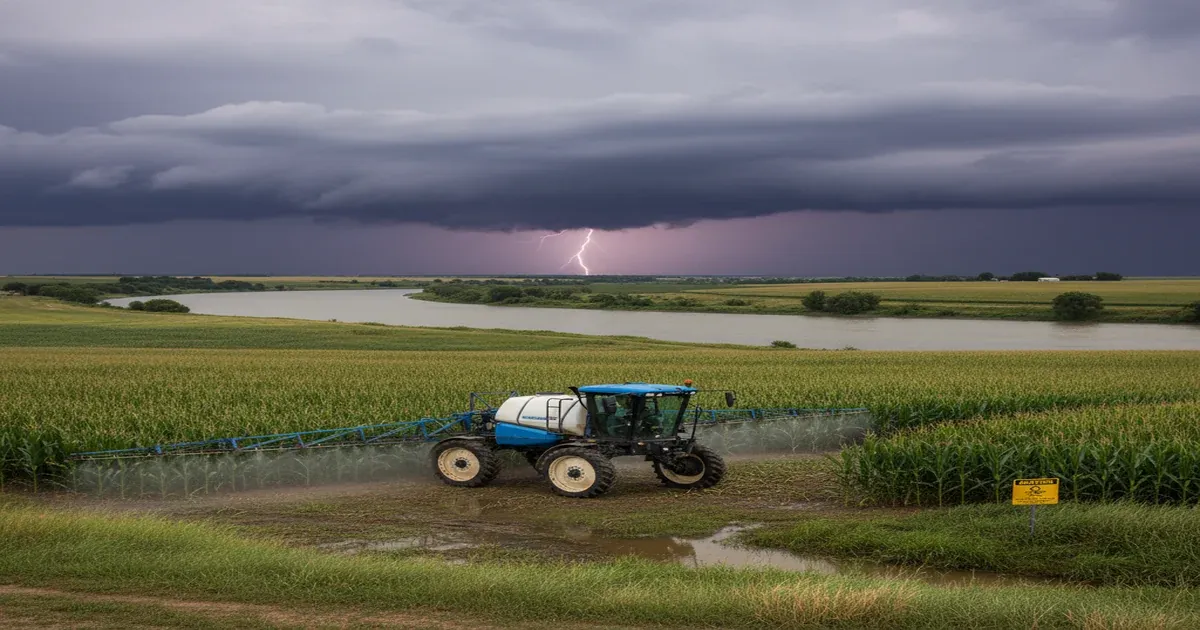
Atrazine is one of the most widely used herbicides in American agriculture, applied primarily to corn and sorghum fields. Kansas is a major producer of both crops, and the Kansas River watershed receives heavy atrazine application every spring.
The pattern is predictable: farmers apply atrazine in April and May, spring rains wash it off fields and into streams, and by late May through June, atrazine concentrations in the Kansas River spike. The EPA’s maximum contaminant level for atrazine is 3 micrograms per liter, measured as a running annual average.
Topeka’s water treatment system — operated by the City of Topeka — has dealt with atrazine peaks that exceed the MCL on a daily basis during spring runoff, even though the annual average typically remains in compliance. The city uses:
- Powdered activated carbon (PAC) added during high-atrazine periods to adsorb the chemical before it reaches finished water
- Seasonal treatment adjustments that increase chemical usage during spring and early summer
- Source water monitoring that provides early warning of atrazine spikes
The cost of atrazine removal adds significantly to water treatment expenses. Topeka and other Kansas River cities have argued — with limited success — that agricultural best management practices upstream could reduce treatment costs for downstream communities.
Harmful Algal Blooms and Cyanotoxins
The same nutrient loading that drives the atrazine problem also fuels harmful algal blooms in Kansas reservoirs and the Kansas River itself. Phosphorus and nitrogen from fertilizer runoff, livestock operations, and wastewater promote cyanobacteria growth during warm months.
Kansas has experienced significant HAB events in recent years:
- Milford Lake, a major reservoir in the Kansas River system, has experienced repeated cyanobacteria blooms producing microcystin, a liver toxin
- Clinton Lake and Perry Lake, which provide supplemental water storage for the Kansas River system, have also experienced HABs
- The Kansas River itself can develop cyanobacteria populations during low-flow, warm conditions
For Topeka’s water treatment, cyanotoxins represent an additional treatment challenge on top of atrazine and other agricultural chemicals. The city monitors for microcystin and cylindrospermopsin and adjusts treatment accordingly.
Kansas has adopted the EPA’s health advisory levels for microcystin: 0.3 micrograms per liter for children under six and 1.6 micrograms per liter for adults. These aren’t enforceable standards, but they guide treatment decisions and public notification.
Infrastructure Age and Lead
Topeka’s water distribution system includes infrastructure dating to the early 20th century. Like many mid-sized Midwestern cities, Topeka faces:
- Lead service lines in older neighborhoods, particularly in areas developed before 1950
- Aging water mains that experience breaks, reducing pressure and potentially allowing contaminant intrusion
- Combined sewers in older parts of the city that overflow during heavy rain, discharging untreated wastewater
The city has been working on lead service line identification and replacement, complying with the EPA’s revised Lead and Copper Rule requirements. Topeka’s corrosion control treatment uses orthophosphate to reduce lead leaching from pipes and fixtures.
Source Water Protection
The Kansas River’s water quality is largely determined by what happens upstream — and Topeka has limited control over that. The watershed’s major contributors to source water challenges include:
Agricultural runoff: Cropland covers the majority of the Kansas River watershed. In addition to atrazine, the river carries sediment, nitrogen, phosphorus, and other pesticides from farm fields.
Livestock operations: Kansas is a major beef cattle state, and concentrated animal feeding operations (CAFOs) in the watershed contribute nutrients and bacteria to surface water.
Municipal wastewater: Cities upstream of Topeka discharge treated wastewater to the Kansas River and its tributaries. While these discharges meet permit requirements, they add nutrients and trace contaminants (pharmaceuticals, PFAS) to the river.
Stormwater: Urban areas in the watershed contribute metals, petroleum products, and other pollutants through stormwater runoff.
The Kansas Water Office and the Kansas Department of Health and Environment manage source water protection programs, but the scale of the agricultural watershed makes meaningful improvement slow.
PFAS: The Emerging Question
Kansas has been slower than some states to address PFAS contamination, but testing is expanding. The Kansas River watershed includes military installations (Fort Riley, Forbes Field) and industrial operations that have used PFAS-containing products.
Topeka’s water utility has conducted PFAS testing in compliance with EPA’s UCMR 5 (Unregulated Contaminant Monitoring Rule). Results have shown detectable but low levels of several PFAS compounds. As EPA finalizes enforceable PFAS standards, Topeka and other Kansas River cities will need to evaluate whether additional treatment is needed.
What Topeka Residents Should Know
- Topeka’s treated water meets EPA standards, but atrazine levels peak during spring runoff. The annual average stays in compliance, but if you want to minimize exposure during peak periods (May–June), a point-of-use activated carbon filter provides additional protection.
- Check your home’s age. Pre-1950 homes may have lead service lines or lead solder. Contact the City of Topeka’s Water Division to check your service line material.
- Flush before drinking if water has been sitting for several hours, particularly in older homes. Run cold water for 30 seconds to clear pipe-contact water.
- Activated carbon filtration is the most cost-effective home treatment for Topeka’s mix of concerns — it handles atrazine, cyanotoxins, disinfection byproducts, taste, and odor. Reverse osmosis adds nitrate and lead removal.
If you’re concerned about your water quality, a certified water treatment professional can test your water and recommend the right system. In a city that draws from one of the most agricultural rivers in the country, knowing what’s in your water is smart practice.
Related Reading
- Kansas City Water Quality: Missouri River and PFAS
- Wichita Water Quality: Equus Beds Aquifer and PFAS
- Des Moines Water Quality: Nitrate and Agriculture
- Oklahoma City Water Quality: Arsenic and Drought
Sources
- City of Topeka Annual Water Quality Reports
- USGS Kansas River water quality monitoring data
- Kansas Department of Health and Environment source water assessments
- EPA UCMR 5 PFAS testing results
- Kansas Water Office harmful algal bloom reports
- EPA Lead and Copper Rule compliance data for Topeka