
A Dual-Source System
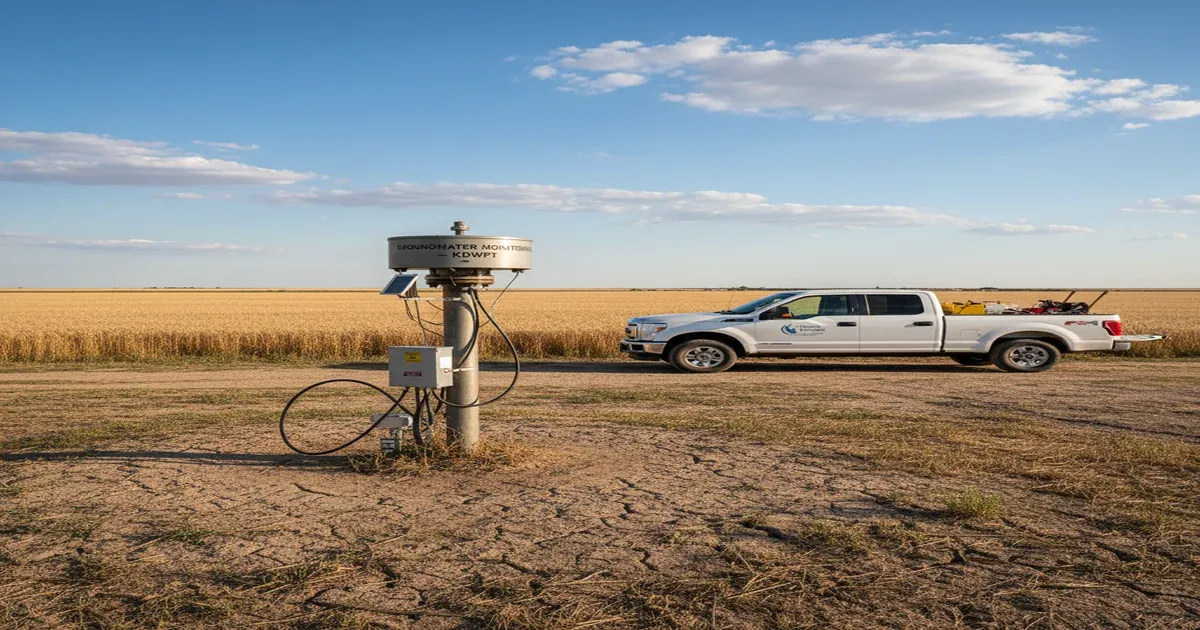
The City of Wichita serves approximately 400,000 people through a water system that draws from two primary sources: the Equus Beds Aquifer (a massive underground reservoir north of the city) and Cheney Reservoir (a surface water impoundment about 25 miles west).
This dual-source approach gives Wichita flexibility — when one source faces quality or quantity issues, the city can shift reliance to the other. But both sources face their own challenges, and the long-term sustainability of Wichita’s water supply is an active concern.
The Equus Beds: Kansas’s Underground Reservoir
The Equus Beds Aquifer is one of the most important groundwater resources in Kansas. It stretches roughly 60 miles along the Arkansas River valley and provides water for Wichita, surrounding communities, and agricultural irrigation.
The aquifer faces two primary threats:
Chloride Intrusion
The most pressing concern is chloride contamination advancing from the Burrton oil field area to the northwest. Historical oil production activities left behind brine (extremely salty water from deep geological formations) that has been migrating through the Equus Beds for decades.
Chloride levels in some monitoring wells near the contamination front have exceeded 250 mg/L — the EPA’s secondary standard for taste — and the plume continues to move toward Wichita’s well field. The city has responded with an Aquifer Storage and Recovery (ASR) project that recharges the aquifer with treated surface water from the Little Arkansas River, creating a hydraulic barrier to slow the chloride advance.
The ASR project is innovative — one of the largest of its kind in the country — but it’s a defensive measure. If the chloride plume reaches the city’s production wells, those wells would have to be taken offline or the water blended to maintain acceptable quality.
Nitrate from Agriculture
Kansas is agricultural country — sharing the nitrate challenges that plague Des Moines —, and the Equus Beds Aquifer is surrounded by cropland and feedlots. Nitrate contamination from fertilizer application and livestock operations is detected in monitoring wells throughout the aquifer, though levels in Wichita’s production wells have generally remained below the EPA’s MCL of 10 mg/L.
The concern is the long-term trend. As agricultural intensification continues and legacy nitrate percolates deeper into the aquifer, maintaining safe nitrate levels in production wells may require treatment or additional source blending.
Cheney Reservoir: Nutrient and Sediment Challenges
Cheney Reservoir is Wichita’s surface water supply, but it has its own quality issues. The reservoir’s watershed includes agricultural land that contributes sediment, nutrients (nitrogen and phosphorus), and pesticides through runoff.
Nutrient loading has caused algal blooms in Cheney Reservoir, including potential harmful algal blooms (HABs) that can produce cyanotoxins. The reservoir is managed through a watershed protection program that works with upstream farmers to reduce runoff, but controlling non-point source pollution from agriculture is inherently difficult.
Wichita’s Cheney water treatment plant uses conventional treatment to handle the variable source water quality, including powdered activated carbon for taste and odor control during algal events.
PFAS: McConnell Air Force Base
McConnell Air Force Base, located in southeast Wichita, is a known source of PFAS contamination. The base — home to the 22nd Air Refueling Wing — used AFFF for firefighting training over decades, and PFAS has been detected in groundwater beneath and near the installation.
The Air Force has been conducting investigations and providing bottled water or connecting affected residents to municipal water where private wells are contaminated. The PFAS plume at McConnell is being characterized, and remediation planning is underway.
Wichita’s municipal wells are not currently affected by the McConnell PFAS plume, but ongoing monitoring is essential given the aquifer’s hydraulic connectivity.
Kansas has not adopted state-level PFAS drinking water standards, relying on the EPA’s 2024 federal MCLs. The new limits of 4 ppt for PFOA and PFOS individually will require continued monitoring and potential treatment if contamination migrates toward production wells.
Lead and Infrastructure
Wichita’s water distribution system includes aging components, and some older neighborhoods have lead service lines. The city uses optimized corrosion control treatment and has met the EPA’s action level for lead in 90th percentile testing.
The city’s lead service line inventory is underway under the revised Lead and Copper Rule. Older neighborhoods in North Wichita, Riverside, and College Hill are most likely to have lead service lines based on housing age.
What Makes Wichita’s Situation Unique
Wichita’s water challenges illustrate a common theme across the Great Plains: the intersection of agricultural economy, energy industry legacy, military contamination, and limited water resources.
The Equus Beds Aquifer is not infinite. Between agricultural pumping, urban demand, and the advancing chloride plume, the long-term productivity of the aquifer is uncertain. The ASR program buys time, but the fundamental math — more water going out than coming in — requires long-term demand management and potentially new supply development.
What Residents Can Do
- If you’re on City of Wichita water, your water meets all EPA standards. Review the annual Consumer Confidence Report for current data
- If you’re on a private well near McConnell AFB, get your water tested for PFAS. Contact the Air Force’s environmental office or Kansas DHE for guidance
- For private wells anywhere in the Equus Beds area, test annually for nitrates, chloride, and bacteria
- Consider a certified water filter — reverse osmosis is the most comprehensive option for nitrate, PFAS, and chloride reduction
- For older homes, flush the tap before drinking, especially in the morning, and use cold water for cooking
- Conserve water — Wichita’s long-term supply depends on sustainable use of the Equus Beds Aquifer
If you’re concerned about your water quality, a certified water treatment professional can test your water and recommend solutions appropriate for Wichita’s specific water chemistry.
Sources
- City of Wichita Water Utilities, Annual Water Quality Reports
- Kansas Department of Health and Environment, Drinking Water Program
- USGS, Equus Beds Aquifer and Chloride Monitoring Studies
- Wichita ASR Project Reports, Equus Beds Groundwater Management District
- Department of Defense, McConnell AFB PFAS Investigation
- EPA SDWIS, Wichita water system compliance records