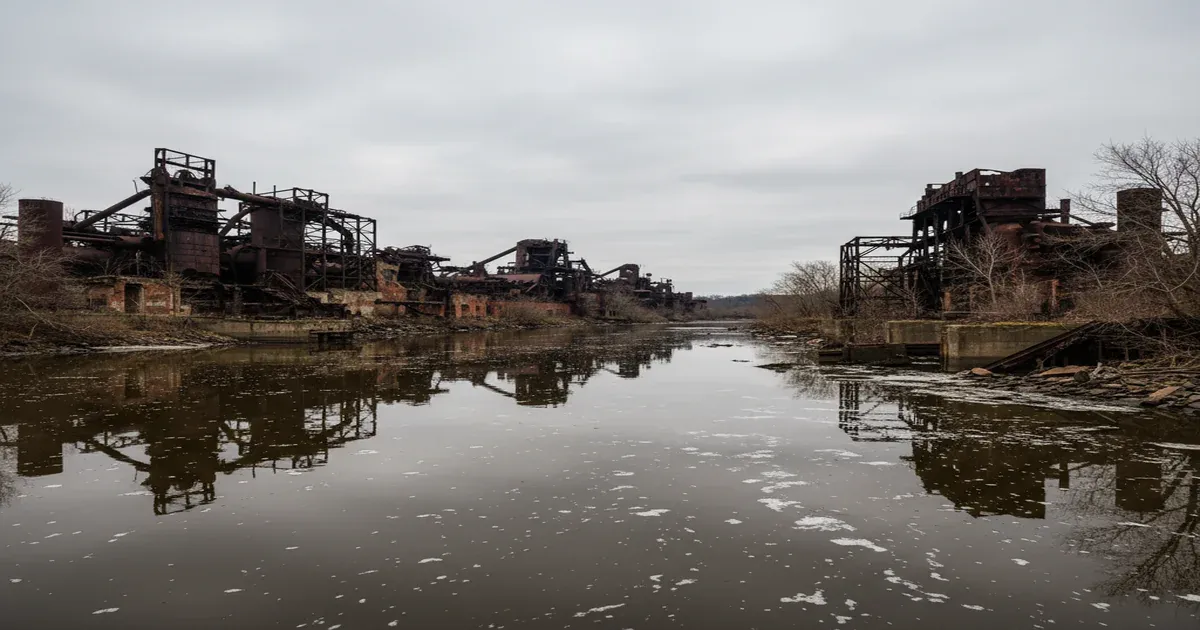
Youngstown was once the heart of American steel production. At its peak in the mid-20th century, the mills along the Mahoning River employed tens of thousands and made the city synonymous with industrial might. When the mills closed in the late 1970s and 1980s — the event locals still call “Black Monday” — they left behind more than unemployment. They left contaminated soil, polluted groundwater, and an environmental legacy that the city is still dealing with nearly half a century later.
Today, roughly 60,000 people live in Youngstown proper, with the metro area serving around 540,000. Their drinking water comes primarily from the Meander Reservoir, supplemented by other surface water sources — but the industrial past casts a long shadow over water quality in the region.
The Steel Industry’s Environmental Footprint
For over a century, steel mills lined the Mahoning River through Youngstown and neighboring communities. The operations generated enormous quantities of waste:
- Slag dumps containing heavy metals (chromium, manganese, lead, zinc) that leach into soil and groundwater
- Coke plant emissions depositing polycyclic aromatic hydrocarbons (PAHs) across the landscape
- Process water discharges carrying acids, heavy metals, oils, and suspended solids directly into the Mahoning River
- Coal tar and petroleum products from coke ovens and fuel storage
The Mahoning River was essentially an industrial sewer for decades. A 1969 assessment found the river so polluted that it was considered biologically dead through much of the Youngstown reach. While water quality has improved significantly since the Clean Water Act, contaminated sediments remain in the riverbed and legacy pollutants continue to leach from former mill sites.
Meander Reservoir and Water Treatment
Youngstown’s primary drinking water source is the Meander Reservoir, a 2,700-acre impoundment on Meander Creek in Trumbull County. The reservoir sits upstream of the worst industrial contamination, giving it a cleaner starting point than the Mahoning River itself.
The Mahoning Valley Sanitary District operates the water treatment system, which serves Youngstown and several surrounding communities. Treatment includes:
- Conventional coagulation, flocculation, and sedimentation
- Filtration
- Chlorine disinfection
- Corrosion control treatment for lead and copper
The treated water consistently meets EPA drinking water standards. However, the source water faces its own pressures — agricultural runoff contributes nutrients that can fuel algal growth, and development in the watershed increases stormwater pollutant loading.
Lead Service Lines: An Aging Infrastructure Problem
Like many Rust Belt cities, Youngstown has a significant number of lead service lines. The city’s housing stock is heavily concentrated in pre-1950 construction, when lead pipes were standard.
The combination of older housing and population decline creates a particular challenge:
- Vacancy rates are among the highest in Ohio — abandoned homes with stagnant water in lead pipes can affect water quality for neighboring properties when water use patterns change
- Revenue decline from population loss makes it harder to fund infrastructure replacement
- Low property values mean homeowners have fewer resources for private-side pipe replacement
Youngstown has been working on lead service line inventory and replacement under the EPA’s revised Lead and Copper Rule. The city’s 90th percentile lead levels have generally been below the 15 ppb action level, but individual homes — particularly those with lead service lines and stagnant water — can see much higher readings.
Superfund and Brownfield Sites
The Youngstown area is home to multiple contaminated sites under federal and state oversight:
Mahoning River industrial corridor: Multiple former mill sites along the river are in various stages of assessment and remediation. The Ohio EPA’s Voluntary Action Program and the EPA’s Brownfields program have been primary vehicles for cleanup.
Sharon Steel/Fairmont Coke Works: One of the larger contamination sites in the area, with soil and groundwater contamination from steel and coke production. Remediation has included soil capping, groundwater monitoring, and institutional controls.
Commercial Shearing Superfund site: Located in nearby Youngstown, this former metalworking facility contaminated groundwater with trichloroethylene (TCE) and other volatile organic compounds. EPA remediation includes a groundwater pump-and-treat system.
These sites collectively represent a patchwork of contamination that, while managed, remains a long-term concern for groundwater quality in the region.
The Mahoning River Today
The Mahoning River has improved dramatically since its industrial nadir. Fish populations have returned, and the river supports recreational use in some reaches. But challenges remain:
- Combined sewer overflows (CSOs) discharge untreated sewage and stormwater into the river during heavy rain events. Youngstown’s aging combined sewer system can’t handle peak flows, and the cost of separation or storage is massive.
- Contaminated sediments in the riverbed continue to release pollutants. Dredging or capping these sediments is technically feasible but expensive.
- Nutrient loading from agricultural areas upstream contributes to periodic water quality degradation.
For residents who don’t rely on the Mahoning for drinking water, these issues still matter — the river’s health reflects the overall environmental quality of the region and affects property values, recreation, and quality of life.
What Youngstown Residents Should Know
- Municipal water from Meander Reservoir meets EPA standards, but if you’re in an older home (pre-1950), check whether you have lead service lines or lead solder in your plumbing. Contact your water utility for information.
- Flush your tap before drinking if water has been sitting for several hours. Run cold water for 30 seconds to 2 minutes to clear water that’s been in contact with pipes.
- Private wells in the Mahoning Valley should be tested regularly. If you’re near a former industrial site, test for volatile organic compounds and heavy metals in addition to standard bacteria and nitrate.
- Consider a point-of-use filter certified for lead reduction (NSF/ANSI 53). Pitcher filters with lead certification are an affordable option; under-sink reverse osmosis systems provide the most comprehensive protection.
If you’re concerned about your water quality, a certified water treatment professional can test your water and advise on the right solution. In a city with Youngstown’s industrial history, understanding what’s in your water isn’t just prudent — it’s essential.
Related Reading
- Akron OH Water Quality: Rubber Industry Legacy
- Cleveland Water Quality: Lead Pipes and Lake Erie
- Pittsburgh Lead Service Line Replacement
- Dayton OH Water Quality: Buried Valley Aquifer
Sources
- Ohio EPA Mahoning River watershed assessment data
- EPA Lead and Copper Rule compliance records for Youngstown
- EPA Superfund and Brownfields program records for Mahoning County
- Mahoning Valley Sanitary District annual water quality reports
- Ohio EPA Combined Sewer Overflow monitoring data